Updated March 11
In response to the Department of Education’s probe into a potential FERPA violation by the NSLVE, Tisch College said it would comply with the department’s request to temporarily pause the publication of future NSLVE reports but requested a swift end to the investigation.
“NSLVE, by design, complies with FERPA. For years, NSLVE has measured student civic participation and shared findings that provide evidence-driven resources to support civic learning and improve instruction on campuses,” a statement from Tisch College reads. “Tufts has requested a swift review and conclusion to the investigation and looks forward to resolving this matter with the department.”
“On February 20, Tufts University sent a detailed response, with documentation, to the department, defending the NSLVE study, its FERPA compliance, and the university’s commitment to civic engagement,” the statement reads.
According to the statement, the department had informed more than 1,000 schools not to use reports from the NSLVE. Tisch College explained that participation in the study was voluntary and included only “de-identified data.”
“As Tufts explained in its response to the department, NSLVE is a longitudinal nonpartisan study, that seeks to understand whether students vote, not who they vote for,” they wrote.
Two weeks after the U.S. Department of Education launched an investigation into a possible student privacy violation by Tufts University, the scope of the federal inquiry remains an open question for the university and its civic engagement efforts.
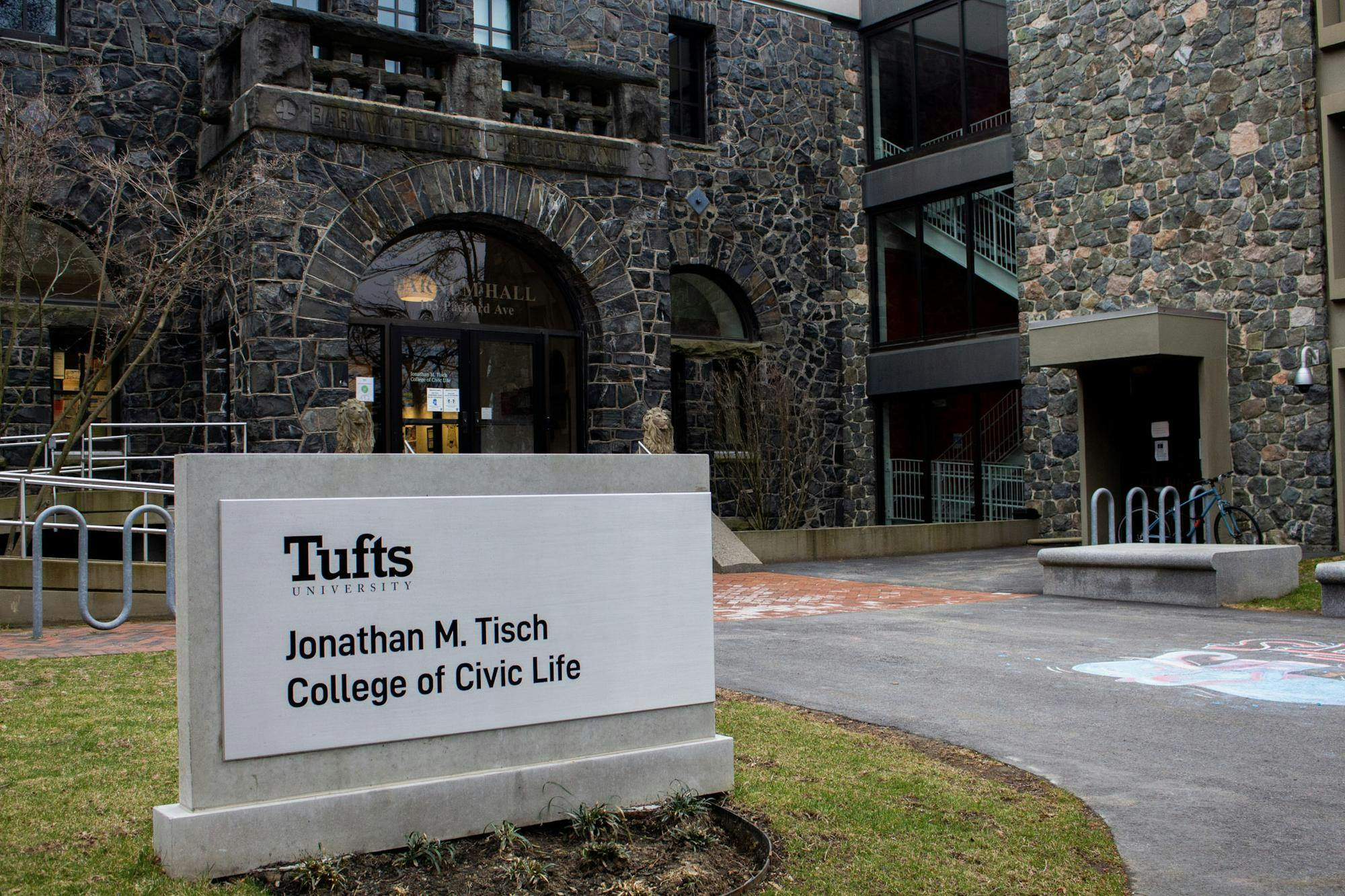
The investigation was initiated by the Student Privacy Policy Office — a sector of the Education Department that creates and enforces regulations to protect student privacy — and aims to look into allegations against the National Study of Learning, Voting and Engagement, housed in Tufts’ Jonathan M. Tisch College for Civic Life.
The Student Privacy Policy Office alleges that the NSLVE violated the Family Educational Rights and Privacy Act, a 1974 law that requires any educational institution funded by the Education Department to protect students’ “education records” and prevents a school from disclosing any personally identifiable information without the student’s consent.
It adds that the investigation stems from “multiple reports alleging that the process of compiling NSLVE data involves illegally sharing college students’ data with third parties to influence elections,” according to an Education Department press release.
Patrick Collins, executive director of media relations at Tufts, told the Daily that the university was preparing documents to respond to the investigation.
Tufts receives funding from the federal government for its financial aid program, which includes Title IV policies such as the Federal Direct Loan Program, Pell Grants and Supplemental Educational Opportunity Grants.
The NSLVE is a nonpartisan project that analyzes student political engagement across more than 1,000 U.S. universities. As of 2024, the NSLVE has been run by the Center for Information & Research on Civic Learning and Engagement, an independent research organization focused on youth civic engagement in the United States based out of Tisch College.
The study has enabled universities around the country to track progress in facilitating voting registration while informing civic learning in universities since 2016.
According to the NSLVE’s website, Tufts’ Office of Information Security has stated that its data handling methods meet privacy protocols. The processing of anonymous student data is done through the National Student Clearinghouse, a Virginia-based nonprofit organization independent from the university.
In a statement to the Daily, the NSC said it was aware of the investigation and would continue to adhere to all legal regulations mandated by the Education Department.
“The National Student Clearinghouse is aware of the Student Privacy Policy Office’s investigation into NSLVE and will cooperate fully with the investigation. We continue to uphold our commitment to compliance with the Family Educational Rights and Privacy Act,” the NSC wrote.
It added that the NSLVE’s intentions were entirely nonpartisan and geared toward supplying trusted data and useful services to educational institutions.
“NSLVE is designed to encourage student civic engagement rather than advance any political agenda, and we are presently reviewing our involvement to ensure the continued integrity and impartiality of our services to institutions,” the NSC wrote.
The NSC matches limited student enrollment records with publicly available voting files through third-party data firms, including Catalist and L2, which specialize in the compilation of large-scale data. Such third-party organizations provide depersonalized data used by NSLVE researchers to analyze aggregated data trends rather than individual student behaviors.
In its formal investigation letter, the Education Department referenced the NSC, Catalist and L2, raising concerns about the organizations’ sharing of student data.
Deborah Schildkraut, a professor in the Department of Political Science, trusts that the NSLVE followed all the legal mandates when analyzing student data.
“My assumption is that Tisch and the partners that they work with on this project have probably done everything they’re supposed to do legally to maintain student privacy and stay within the policies of their different institutions,” she said. “They do research all the time. They know how to work with [Institutional Review Boards].”
She hypothesized that the Education Department’s allegations that the NSLVE was attempting to influence elections may stem from young voters’ trend toward the Democratic Party.
“There’s the image that young people tend to lean left or support Democrats more,” Schildkraut said. “So any efforts that are aimed at getting more young people to vote, I guess, if one wanted to, could say that that might be an attempt to influence an election, but I don’t know how you encourage more people to vote otherwise.”
Schildkraut believes the investigation could have underlying political motives, given the administration of President Donald Trump’s focus on universities.
“It’s hard to say that there isn’t a political motive given the current administration's interest in targeting universities for a range of things, and also the Republican Party’s interest in changing voting policies that create more barriers for people to be able to vote,” Schildkraut said.
The findings of the investigation have not yet been released by the Education Department.