
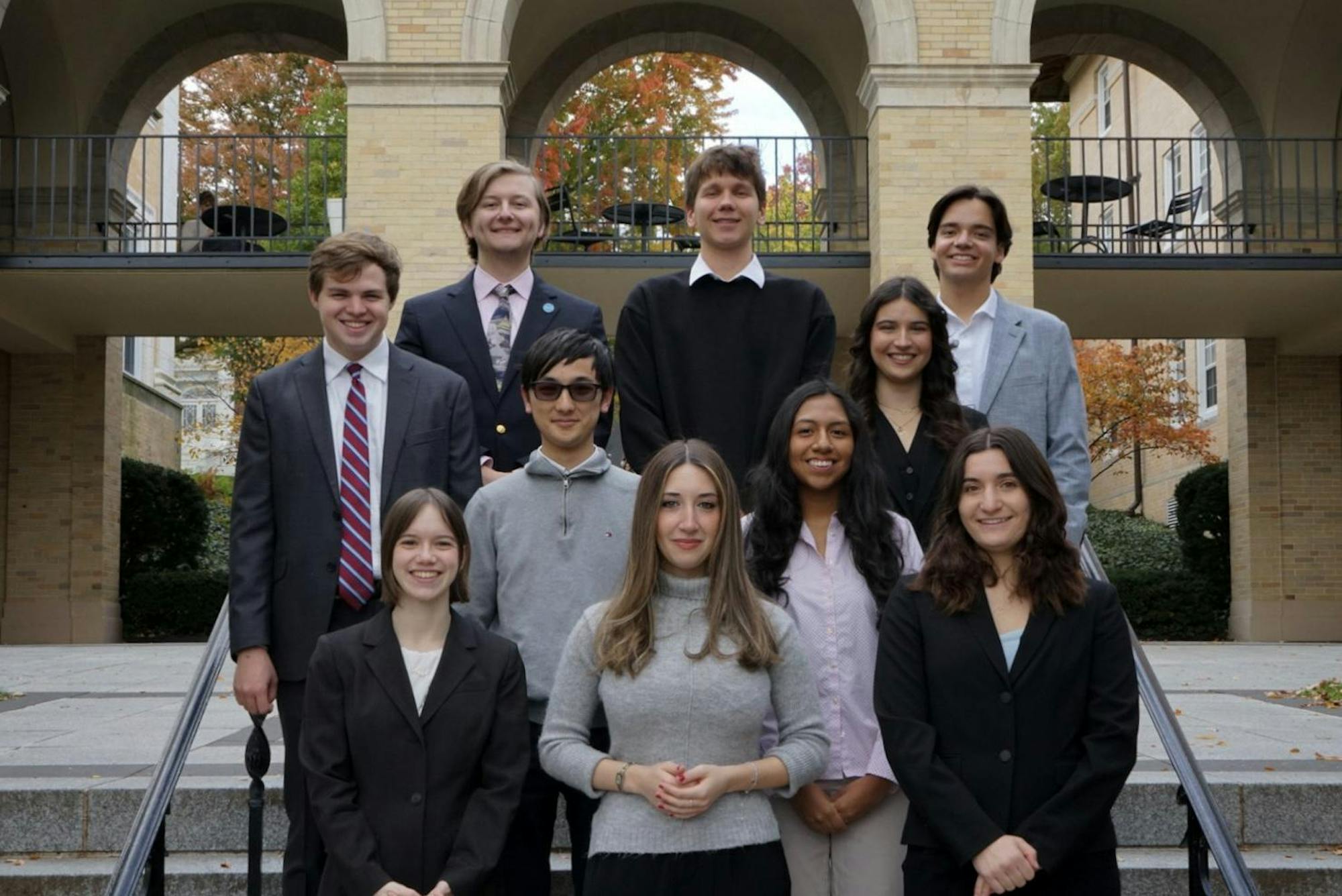
Ever wondered what it would be like if a group of 16-year-olds were tasked with solving some of the world’s largest problems? Well, you’re in luck, because Tufts Model United Nations is hosting its 10th annual conference for high school students across the country from Feb. 27 to March 1.
Celebrating “A Decade of Diplomacy,” TUMUN’s three-day conference will involve intricately-crafted general assemblies and crisis committees commonly found at a Model UN conference, in addition to some new, modified committees.
What is Model UN? According to sophomore Zoe Levine, TUMUN secretary general, it is a space for students to dip their toes in the waters of international politics and learn how to have productive debates.
“Model UN is an incredibly valuable space to engage in discourse on global issues with an emphasis on collaboration and building long-term solutions through negotiating processes,” Levine said. “[Students’] ability to insightfully analyze other perspectives is what is ultimately valued and leads toward resolution. … People aren’t so much as competing to be right, but competing to facilitate discussion.”
Typically, at a Model UN conference, each student or ‘delegate’ acts as a representative of a particular country with a stake in a conflict or topic that the committees are covering. The conferences TUMUN often hosts or competes in have a similar set-up — with a little twist.
“Instead of representing a country, [the delegates] represent an individual who has some particular role in a decision-making body,” junior Reece Christian, TUMUN vice president and treasurer, said. “The typical example is like a presidential cabinet, and everyone represents some cabinet secretary. … It gives people a little more freedom to explore their interests.”
Given the complexities of these conferences, joining a college Model UN team can seem like a daunting task; however, several members of TUMUN had no experience as delegates prior to joining.
“I was really big into speech and debate in high school, and I wasn’t as interested in the debate scene in college but I wanted a similar outlet for public speaking,” Christian said. “Model UN appealed to me for that … in a little bit less [of a] high-competitive, high-stakes environment.”
For those who have been part of Model UN since their high school or even middle school years, getting to be on the planning and hosting side of these conferences for younger students has given them a new perspective.
“In planning the conference this year, we examined — very closely — feedback we’ve received from delegates and advisors in all years past,” Levine said. “That as a whole is very cyclical, where now we’re instilling that knowledge and that capability in these students who could go on to produce this learning opportunity in however many years when they’re in college for other students as well.”
TUMUN Fundraising Chair Nicholas Pizzo is a first-year who was an active member of Model UN in high school. Leading his first crisis committee at this upcoming event, he is eager to see a conference from the other side.
“I’ll be really interested to see if the delegates go in the same direction I think that they’re gonna go,” Pizzo said. “The only thing I could really say … is I think I’m not gonna be able to predict that, which I’m excited for.”
In a little over a week, more than 150 students from not only the Massachusetts and New England area, but also a few hours’ plane ride away, will gather for a weekend of lively debate, resolution writing, crisis planning and even a ‘delegate dance.’
“We start Friday night with our opening ceremonies, and then we have six sessions of committee [that will] mostly be delegate-driven,” Pizzo said. “For Saturday, which is our big day, we start around 10 [a.m.], and we’ve got three big sessions that go throughout the day until about 9 p.m. And in between that, we’ve got breaks for lunch and dinner.”
The committees will include a general assembly revolving around the World Health Organization, an ad hoc committee for which students get no preparation materials prior to the conference, crisis committees — one of which is based on the hit show “Severance” — and a modified crisis committee. This is a new addition that TUMUN is implementing this year, as a middle ground between the more relaxed debate style of general assembly and the typical fast-paced crisis committee.
“The procedure is intentionally modified so that students who have never experienced a crisis committee before could actively engage with and participate in debate in a meaningful way to them, and grow their skill set so that they could do more intensive committees in future conferences,” Levine said.
To commemorate TUMUN’s 10th anniversary conference, the club decided to take on a philanthropy partnership with Haley House — a nonprofit organization that provides support, goods and resources for those facing food insecurity and housing struggles.
“Their mission really resonated with us, and giving back to the greater Boston area, given the location we will be hosting these students, was really important,” Levine said.
Levine emphasized that TUMUN’s goal for this conference was to make it accessible to as many students as possible.
“We were working with very limited resources and trying to incentivize, and also make traveling and committing to our conference as easy as possible so that school administration, logistics, finances … and all of those different aspects of attending a conference wouldn’t be a barrier … for any student who wanted to engage with all of the issues we’re going to be examining through debate,” Levine said.
The upcoming conference also creates a volunteer opportunity for Tufts students, as event staff are not required to be members of Model UN.
“All of our staffers will be chairing committees or moderating debate and also supporting delegates who might have questions so that they don’t need to necessarily disrupt the flow of debate, but could present their inquiry in a more private way,” Levine said. “So that’s why it’s really important we have as many people as possible.”
“If any readers are interested in staffing, it’s open to all people,” Pizzo said. “No requirement of any previous Model UN experience. We’ll work with them and make sure that they’re ready to get going and have a great conference as well.”



