
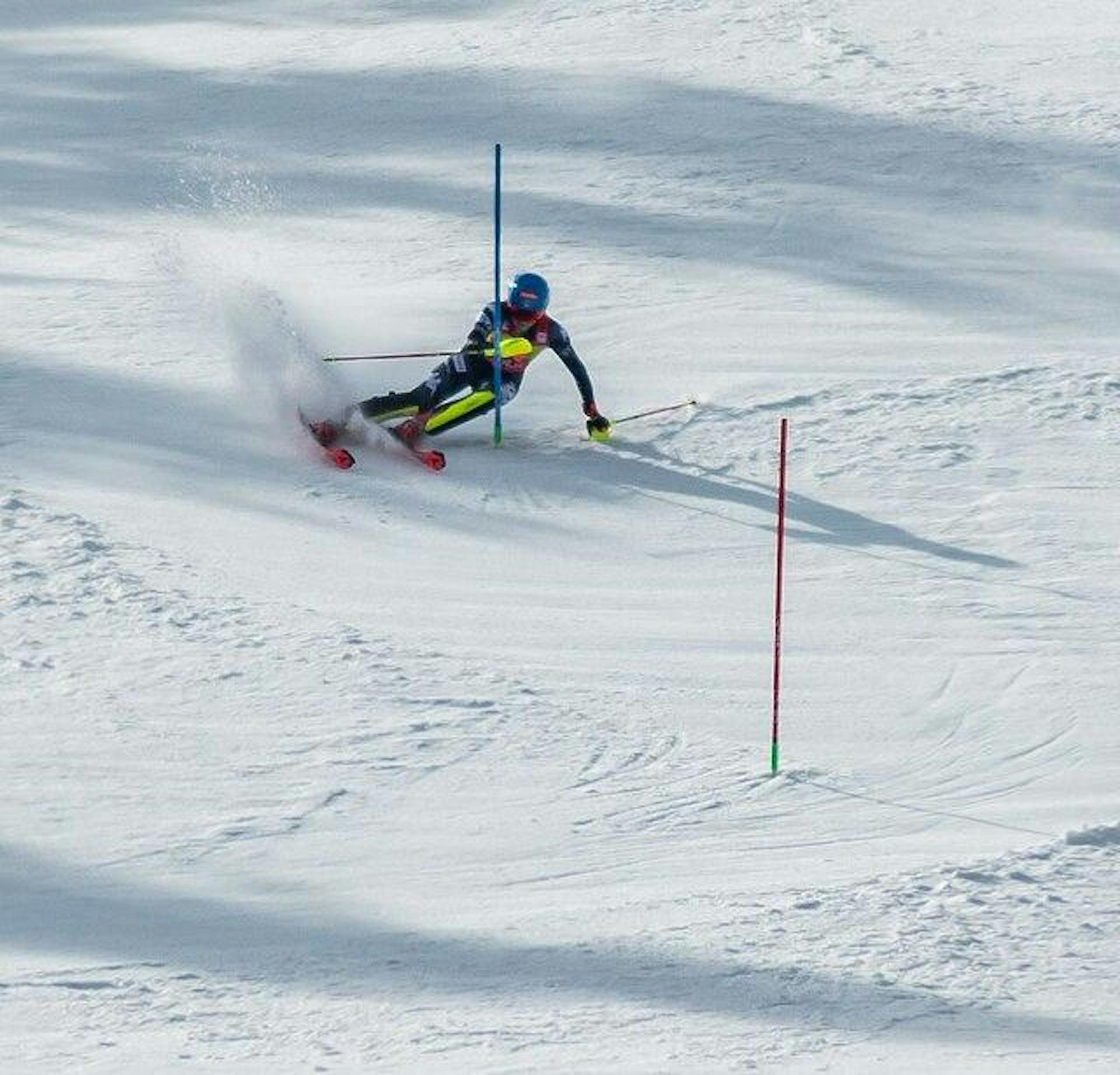
The Winter Olympics 2026 officially began last Friday in northern Italy. From ski jumping to curling, figure skating to snowboarding, lots of athletes will reach extraordinary speeds over the course of two weeks. As we perch on the edge of our seats, waiting for the start gun to fire or the start gate to drop, these athletes prepare to push the limits of physics. While their professionalism may deceive us into thinking we could do the same, we should remind ourselves of the fear we had when skiing ourselves down a snowy mountain for the first time or competing in front of an audience far smaller than a global one.
Recent studies suggest that Olympians’ brains function differently, enabling them to manage high-speed fear more effectively. Stories conducted on various Olympians show that they develop individual mechanisms to cope with fear and that their brain activity differs from that of amateur athletes.
In 2003, the South African Journal for Research in Sport, Physical Education and Recreation published an article titled “The Experience of Fear in High-Risk Sport,” in which researchers interviewed 12 athletes from six countries — South Africa, Namibia, Zimbabwe, the Czech Republic, the United States and Canada — to examine how they respond to and manage fear and anxiety.
Notably, the researchers emphasized a distinction between fear and anxiety, arguing that unlike situations of fear — in which “perceived threat is known and can therefore cause a specific action,” — anxiety alone “cannot produce specific avoidance behaviours.” This distinction was central to their research, as they sought to understand how athletes continue participating in high-speed sports despite instinctual fear that might otherwise encourage caution.
The researchers observed seven psychological “themes” within the athletes’ psyches that helped them perform well despite the stakes. One key observation was that athletes draw motivation from reflecting on their “peak” performances. While similar moments are often portrayed in action films, cinematic portrayals can obscure the real danger in such scenarios. This observation relates to another finding of the study: high-risk athletes have “misconceptions and denial about the intrinsic danger of the activities.”
The sixth theme highlighted that high-risk athletes “express the need for stimulation, change and creativity.” This creativity helps them manage the fear of pushing the boundaries of physical possibility to deliver extraordinary performances. The seventh theme reinforces this notion, noting that high-risk athletes “view their sport as being unique and misunderstood by the general population.” This mindset may contribute to record-breaking performances, even as athletes feel that spectators struggle to fully grasp the risks involved.
A more recent study — “Anxiety and Fear in Sport and Performance,” published in the Oxford Research Encyclopedia of Psychology in 2018 — examined the role of anxiety and fear in athletic performance. The researchers argued that athletes who are repeatedly exposed to fear-inducing environments can gain a performance advantage over those who struggle to cope with stress. The study emphasized that anxiety and fear often work together in shaping performance in extreme sports, helping explain why non-Olympians may find it more difficult to start an extreme sport compared to seasoned athletes.
While psychological theory provides a strong foundation for understanding high-speed performance, examining brain anatomy offers insight into how these differences manifest physiologically.
A 2021 case study titled “Neural Oscillation During Mental Imagery in Sport: An Olympic Sailor Case Study” examined the neural activity of a 32-year-old two-time Olympic sailor. Researchers tested how the athlete responded to guided versus self-generated multisensory imagery related to their sport. The researchers used an electroencephalogram, commonly known as an EEG, to measure the participants’ low and high alpha waves and sensorimotor rhythm activity. High alpha and SMR waves corresponded with heightened focus and attention, while low alpha waves indicated a more relaxed mental state.
The study found that multisensory imagery, often used in mental training, can enhance athletic performance. The researchers compared the sailor’s brain activity with existing research, the authors concluded that “an elite athletes’ brain is characterized by more efficient resources distribution, more economic activity or hypoactivation.”
With these studies in mind, it is clear that the Winter Olympics represent more than two weeks of entertainment. They are a scientific challenge of both mind and body. We can only imagine the fear and anxiety these athletes face as they attempt the extraordinary.



