
Editor’s note: Several sources chose to only provide their first names out of fear of retaliation.
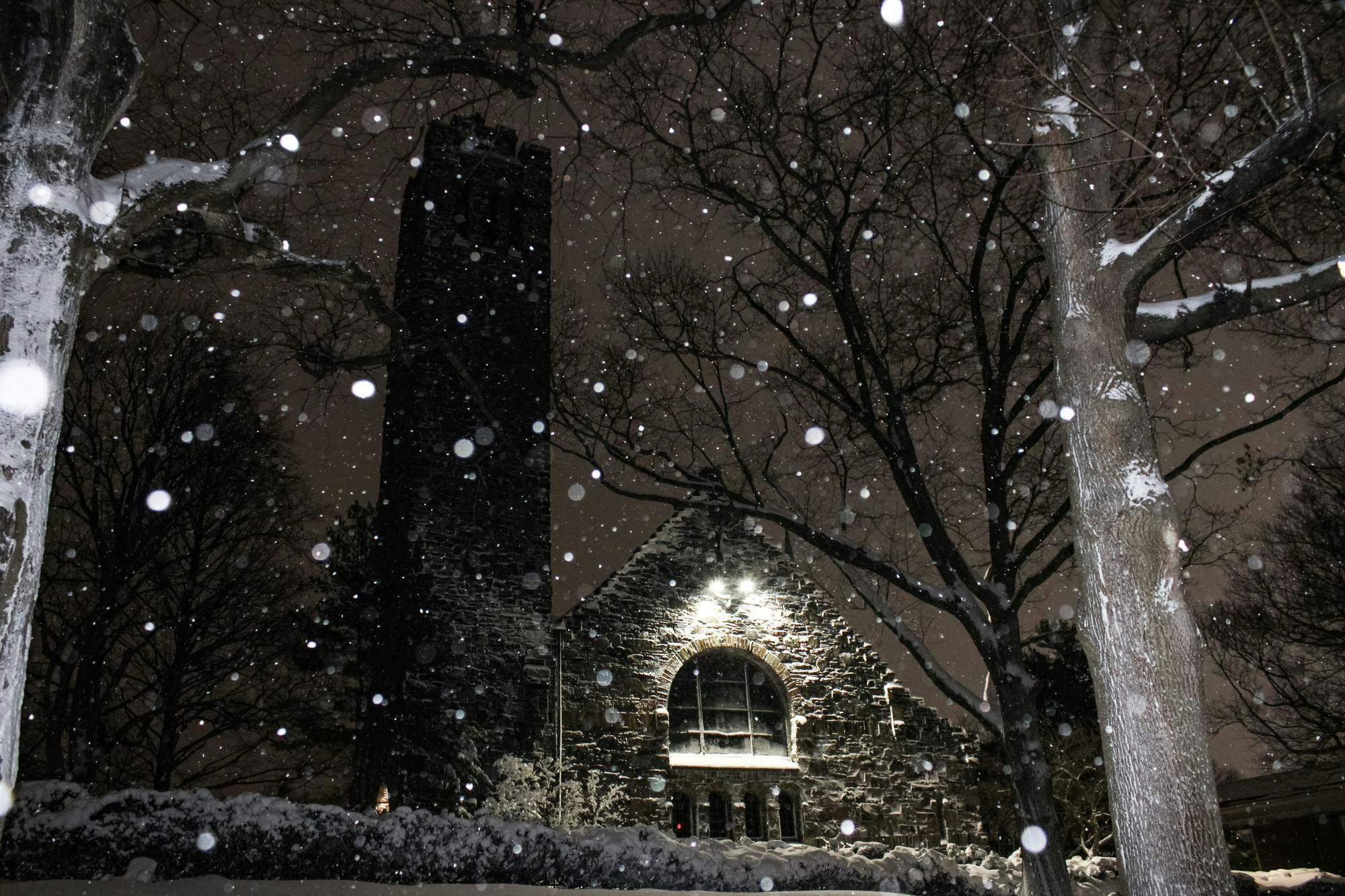
On Thursday, Feb. 26, the Tufts Persian Student Association hosted a vigil for Iranian protesters who were killed by their government in early January. The event took place in Goddard Chapel and was co-hosted by the Tufts Humanist Chaplaincy.
Iranians rose up in late December of last year in historic numbers against Iran’s economic and political situation as inflation and a depreciation of the rial sent shockwaves through the economy. The Iranian regime heavily repressed the protests, which lasted until mid-January, even carrying out massacres that left thousands dead.
The vigil was held at Tufts just days before the United States and Israel launched a large-scale missile attack on Iran, killing the country’s supreme leader, Ali Khamenei. The attack was justified by President Donald Trump as an attempt to neutralize Iran’s nuclear capabilities, which have been disputed by the Defense Intelligence Agency.
Following the protests, Trump urged protestors on, declaring that help is on the way. In the subsequent weeks, the United States entered negotiations with Iran while carrying out a massive military buildup in the Middle East.
The event began with an introduction from the humanist chaplain, Anthony Cruz Pantojas, who talked about the importance of having a space for reflection and community. Laila and Kian, members of PSA, then discussed the danger of mourning in Iran, where state agents often go to funerals to “harass mourners” and break up crowds with bullets.
“Ten days ago, Iranian people gathered en masse for memorials to mark the Chehelom, meaning the 40th day after the death of their loved ones,” Laila said. “The 40th day is understood in our culture as a period of transition, by which time the soul has completed its earthly departure and settled into the next realm. After this time, the most intense phase of mourning is believed to give way to a different form of grief: remembrance.”
As part of Chehelom’s tradition of clapping, singing and dancing as acts against oppression, local dance instructor Camelia performed a mourning dance in honor of the people of Iran.
Following the performance, Daniel, a member of PSA, recited a poem titled “One Moonlit Night,” written by his great uncle in 1957 during his imprisonment under the regime of Shah Mohammad Reza Pahlavi, before the 1979 Islamic Revolution.
“Its themes of freedom, symbolized by the moon that carries him from his cell, and the fairy who lets down her hair, themes of hope, embodied in the willow tree, stretching his arm out towards a fallen star and its themes of struggle, voiced by the martyrs who call out to him, remain just as relevant today as they were then,” Daniel said before reciting the poem in Persian and English.
Sepideh, a woman born and raised in Iran, then spoke about the people who were killed in January and described the Women, Life, Freedom movement, which began in September 2022 after the death of Mahsa Amini, who was arrested by Iran’s religious morality police for wearing her hijab improperly.
“Our bodies became paralyzed and cold with fear,” Sepideh said. “Blood spilled onto my clothes. I witnessed two people get shot just a few meters from me; one of them was an old lady just standing in her home’s doorway. They were randomly shooting people, and there was no place to hide and nothing to protect ourselves with. Unarmed people were slaughtered in the streets.”
Following Sepideh’s account, two club members, Yasmin and Leah, told stories about the lives of the individuals who were murdered in January. Candles were then lit by attendees and people were given time to walk around the chapel and read stories of the victims displayed on signs around the room.
“We hope for your solidarity,” Kian told the Daily. “We’re not so different. I tried to show in the ceremony that these are also people who live lives not so different from ours. [There were] thousands of college students in Iran that took to the streets.”
Laila said she was touched by the number of non-Iranians in attendance and described how people could support their friends.
“General support, being a good friend, being there for them emotionally, to support them through this unbelievably heartbreaking time,” she said. “Just showing an interest — caring.”



