Two new Torah scrolls were completed and dedicated at Tufts University on Sunday, Mar. 1. The completion of the scrolls was marked by the sacred writing of the last letter, followed by dancing, singing and speeches.
The ceremony began with remarks by Rabbi Naftali Brawer, executive director of Tufts Hillel and Tufts Jewish Chaplain.
Brawer explained that the last letter of the scrolls still had to be written before they could be considered sacred.
“It’s a moment that is very pregnant with possibility, and what we’re experiencing is a transition from the profane to the sacred,” Brawer said. “It only becomes holy with intentionality when the last letter is written.”
Brawer compared this transition from mundane to sacred through other moments.
“For example, the Sabbath, or Jewish festival; moments before sunset, it’s not sacred, and then with sunset it becomes sacred,” Brawer said.
After Brawer’s remarks, the final letter was written in ink in a silent moment, signifying the transition of the text to that of a Torah scroll.
While the ink of the first completed Torah scroll dried, Shir Appeal, Tufts’ Jewish a capella group, performed; the group also sang while the second scroll dried later in the ceremony.
After the ink was dry and the Torah scroll was lifted and dressed, Tufts Hillel President Elijah Fraiman, a junior, described what the Torah means within the Jewish Community.
“On one hand, the Torah is a chronicle of the history of our people,” Fraiman said. “The Five Books of Moses tell the story of the Jewish people, and it goes from creation with Adam and Eve through Noah’s Ark, Abraham and Sarah, Isaac and Rebecca, Jacob, Rachel and Leah, Joseph, and finally ending with Moses, Aaron and Miriam.”
Fraiman also described how the Torah is a witness to history through the example of one of the four other Torah scrolls currently being stored in the Arks at Hillel.
“[This Torah] was written roughly 250 years ago and was used by a Jewish community somewhere in Czechoslovakia. In 1939, in anticipation of the Nazi occupation, many small communities throughout Czechoslovakia sent their Torah scrolls to the Pinkas Synagogue in Prague for safe keeping,” Fraiman said.
Nazi forces eventually discovered the Torah scrolls and held onto them, anticipating that they could be used as artifacts in a museum of an annihilated race.
Fraiman noted that this scroll in particular was deemed too fragile to be used while two other scrolls in possession of Tufts Hillel were considered “pasul,” meaning unusable. This left just one scroll which was able to be used.
Fraiman also expanded on the process of obtaining and completing these new Torah scrolls.
“[The Scrolls] were written by two different scribes, sent over to the U.S., and then they were finished at the ceremony. So, the last verse, which is about 15 or so, maybe 20 words, was written yesterday,” Fraiman said.
Tufts Hillel leadership said, to their knowledge, these two Torah dedications are the first to ever occur at Tufts. The commissioning of the scrolls was a substantial undertaking, requiring around $60,000 per scroll in fundraising, which came from family support.
After the second Torah scroll was completed, Tufts University President Sunil Kumar spoke on the magnitude of the occasion, using Sanskrit words to emphasize its importance.
“Akshara means something that is infinite, immutable, eternal, and so is intended to mean the divine,” Kumar said. “The word Akshara [also] means letter or alphabet or character … [which] seems like a perfect metaphor for what is happening today. In one sense, simply complete again, in another sense when we do something [it] is eternal, timeless.”
Kumar also emphasized the importance of recognizing the Torah completion to Tufts.
“As the university enters its 175th year, timelessness is not to be taken for granted, of traditions, of religions or of communities. We need to invest in them from time to time, and today is one of such investments,” Kumar added.
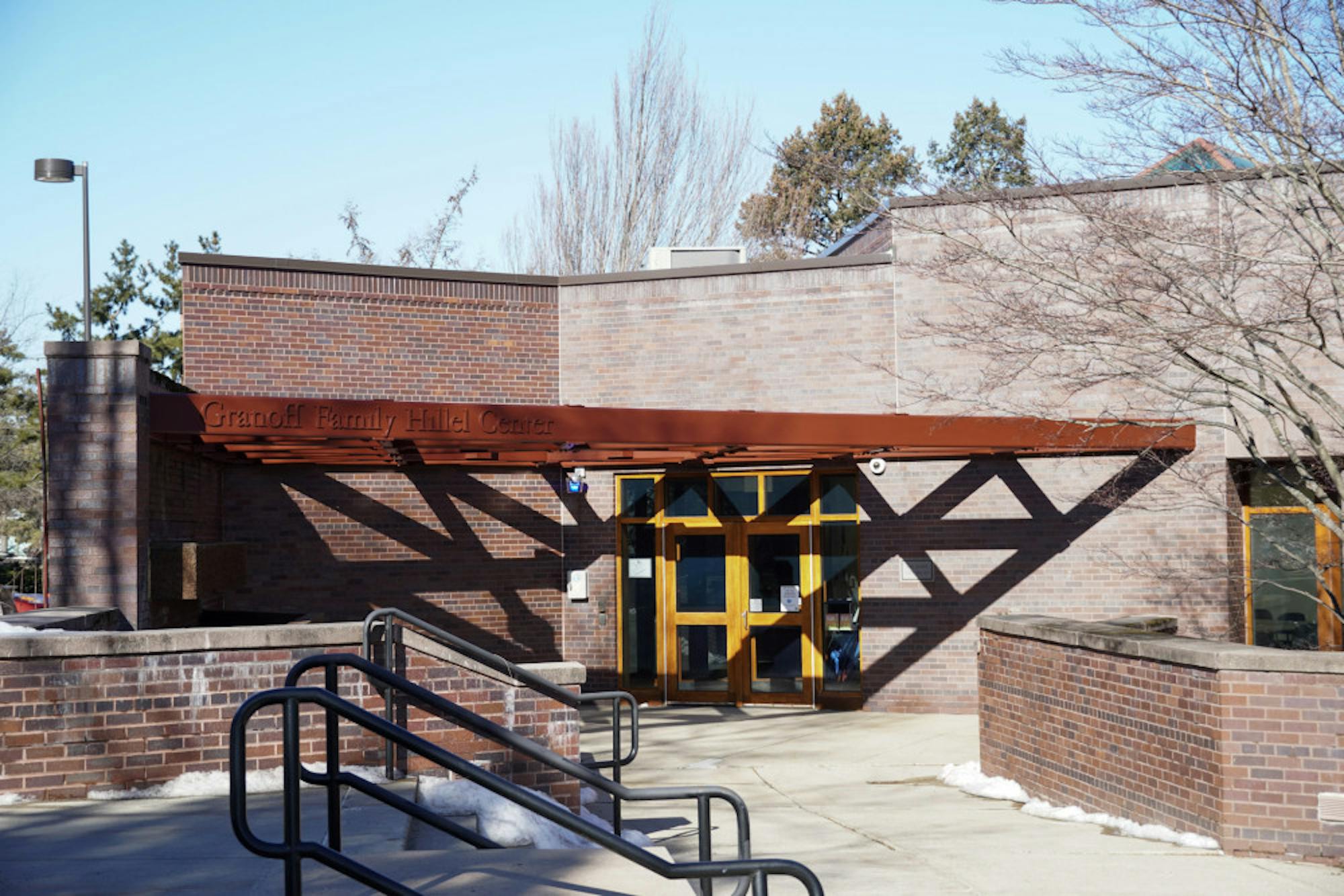
Afterwards, a procession of the two new Torah scrolls commenced, which featured dancing and singing on a walk from Eaton Hall to the Hillel Center. Once at Hillel, the new Torahs were placed in the Ark alongside the older Torahs, completing the ceremony.
Fraiman also highlighted how the two new Torahs will be used by the Jewish community at Tufts.
“When we have Shabbat morning services, we read from the Torah, and then on a lot of our holidays, we also read from the Torah,” Fraiman said. “There’s also a holiday called Simchat Torah where we celebrate having finished reading. Basically, we split the reading up into 54 segments and read them throughout the year.”
Fraiman also expressed gratitude to the chaplaincy, administrators, staff, office of the president and families for the hard work necessary to make these two new Torah scrolls a reality.
“It was really a privilege to be able to celebrate with the wider Tufts community to welcome in our new Scrolls,” Fraiman said.