
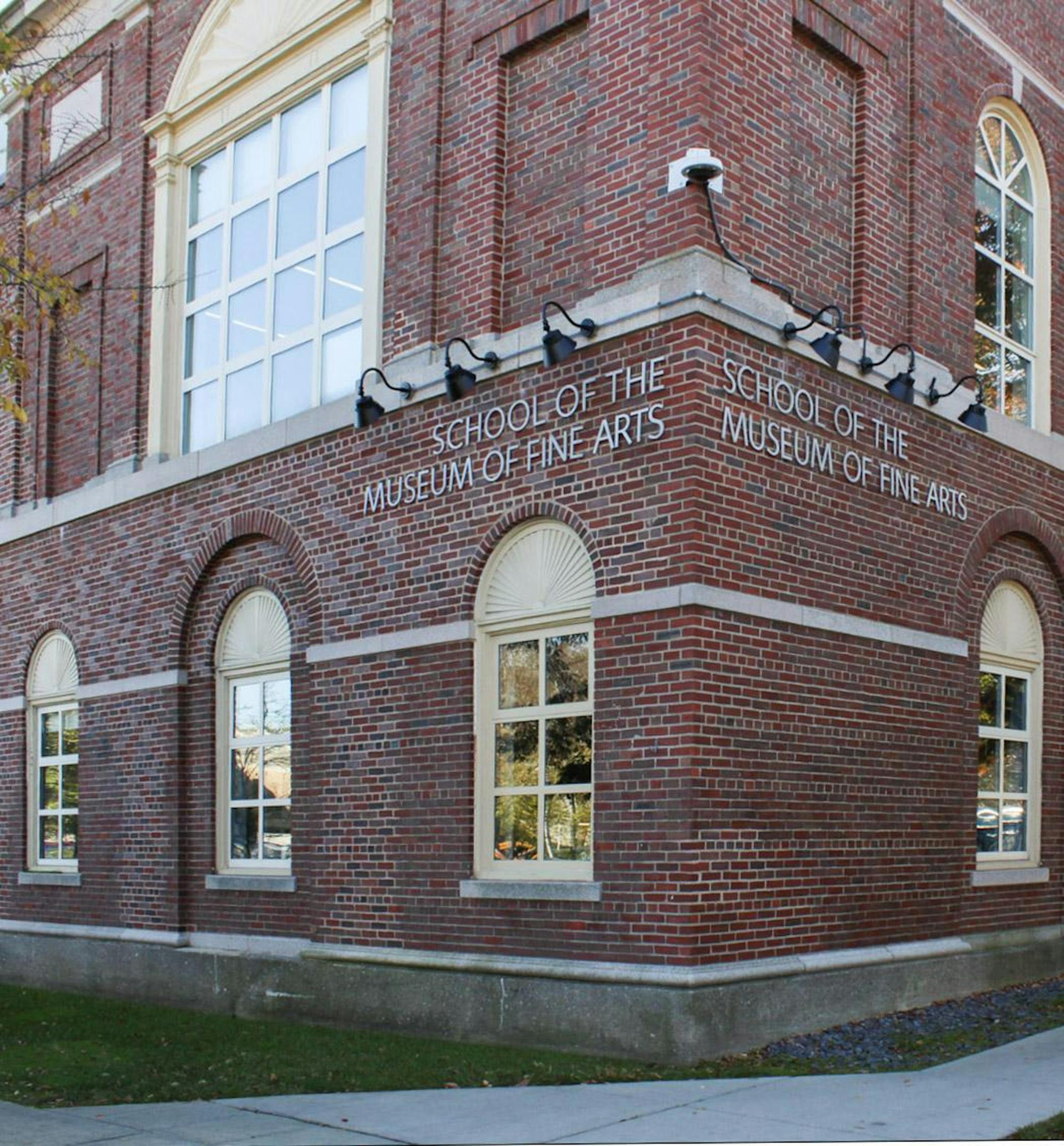
The professors of the practice at the School of the Museum of Fine Arts alleged in a March 19 Instagram post that the SMFA administration rejected a union proposal to compensate PoPs for taking on additional review boards.
The decision follows the ratification of the PoPs’ first collective bargaining agreement on Feb. 10, which included raises for all PoPs and safeguards for international employees. According to a statement posted on the union’s Instagram, the SMFA administration is asking PoPs to do additional review boards without compensating them for that labor.
The statement alleged that during the 21 months of bargaining, the SMFA administration knew that PoPs would no longer be expected to take on unreasonable numbers of review boards should a contract be ratified.
“Instead of hiring more faculty or making a plan to support students doing boards, the administration did nothing,” the union wrote.
In a statement to the Daily, Patrick Collins, executive director of media relations, said that Tufts is acting in accordance with the new collective bargaining agreement.
“Tufts strives to comply fully with all contractual obligations and believes it is doing so under the terms of the current collective bargaining agreement,” Collins wrote. “Tufts and the union may have different interpretations of certain provisions, including those related to review boards, and we are willing to address those differences through the processes outlined in the agreement.”
Review boards are academic evaluations in which students present a body of work and receive critique from faculty and typically take place every semester. Participation is required for undergraduate Bachelor of Fine Arts students enrolled in seven or more credits of studio work.
Collins also explained that students in their final semester of the BFA program were given the option to waive their review board this year, which many chose to do. He added that the school has made no changes to how the review boards are staffed, and that SMFA faculty have been discussing the format and frequency of review boards.
Some SMFA students expressed concerns about how changes to the frequency of review boards could affect their academic experience.
Katie Love Kiratsous, a sophomore BFA student at SMFA, said recent changes to review board guidelines and the lack of communication from the administration have created uncertainty for both students and faculty.
“This year, they have changed a lot of the guidelines and rules. … [Review boards] will literally get canceled if one of your teachers [doesn’t] show up,” Kiratsous said. “I knew that there was a problem, but I wasn’t hearing anything about [review boards] and the admin is not communicating with us, nor were they communicating with a bunch of the teachers.”
Maya Ventura, a second-year combined-degree student at SMFA, also expressed frustration with the lack of communication and transparency, noting a disconnect between students, faculty and administration.
“We see our professors every week, and we know they’re frustrated, and they know we’re frustrated,” Ventura said. “But I definitely think there’s a disconnect between students and faculty and admin, even just in informing us that [the negotiation process] was going to take a while.”
Ventura also emphasized the importance of review boards for all students, including seniors, and the need for mandatory participation.
“Maybe you’re more solidified in your practice and you don’t need this as much, but I honestly think … you shouldn’t be asking [students] to opt out,” she said. “I still think requiring it is helpful in the long term.”
Both students argued that teachers should be compensated for their time spent on review boards, as it is a required part of the curriculum.
“I think it’s incredibly unfair to those teachers,” Kiratsous said. “You’re asking them to do a favor for a job that they are making their living off.”
Ventura suggested that compensating faculty for the time and effort they put into conducting review boards would alleviate stress and improve the process.
“I think compensating them gives them the incentive, and also will make the process nicer for students and not stress out faculty as much,” Ventura said.
In response to concerns raised by the SMFA PoPs union, the administration also addressed faculty vacancies following a number of departures since 2019.
“The school is moving forward with searches for multiple professors of the practice positions made vacant by recent retirements and is engaged in ongoing hiring for part-time faculty at levels consistent with prior years,” Collins wrote.



