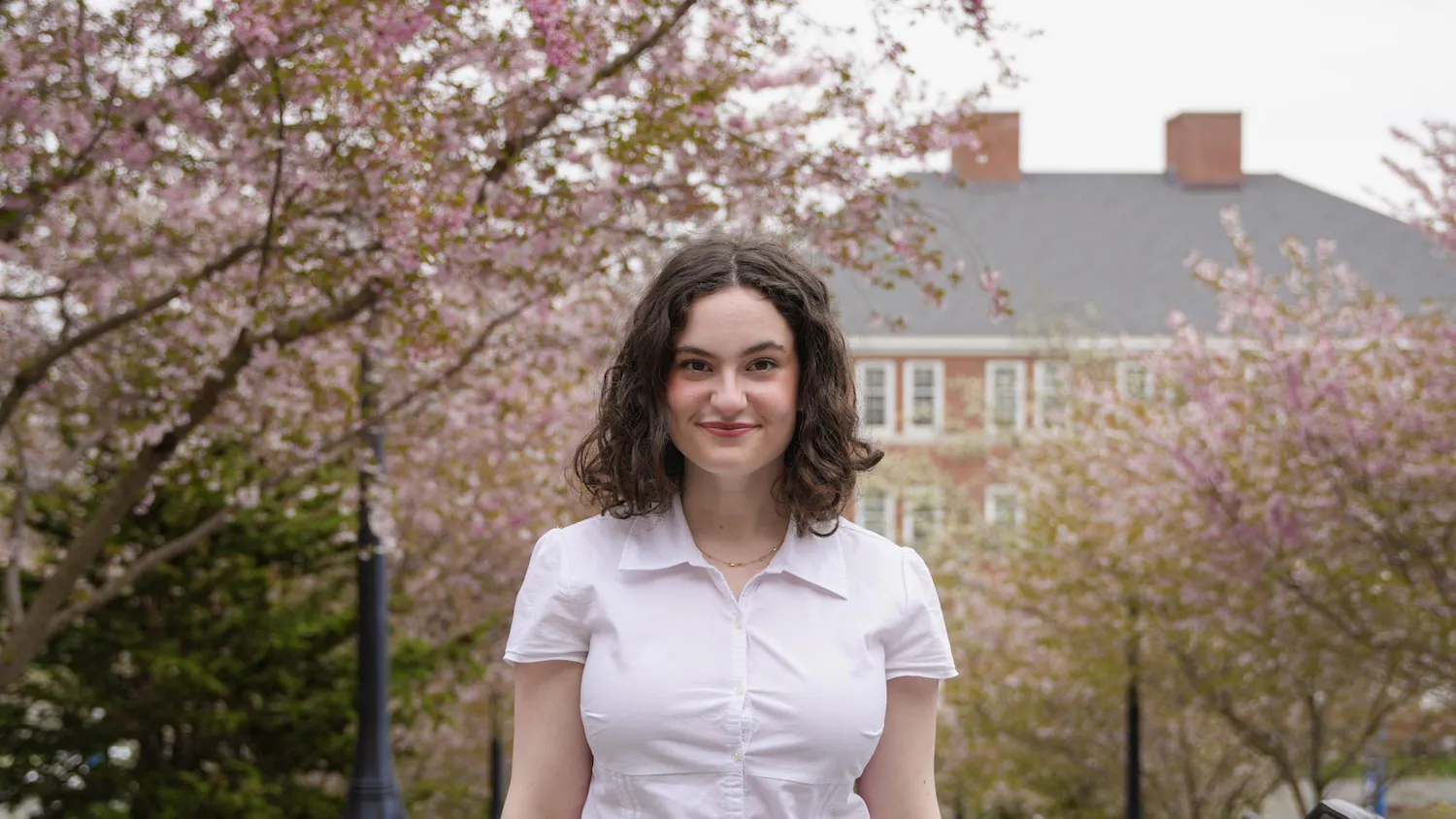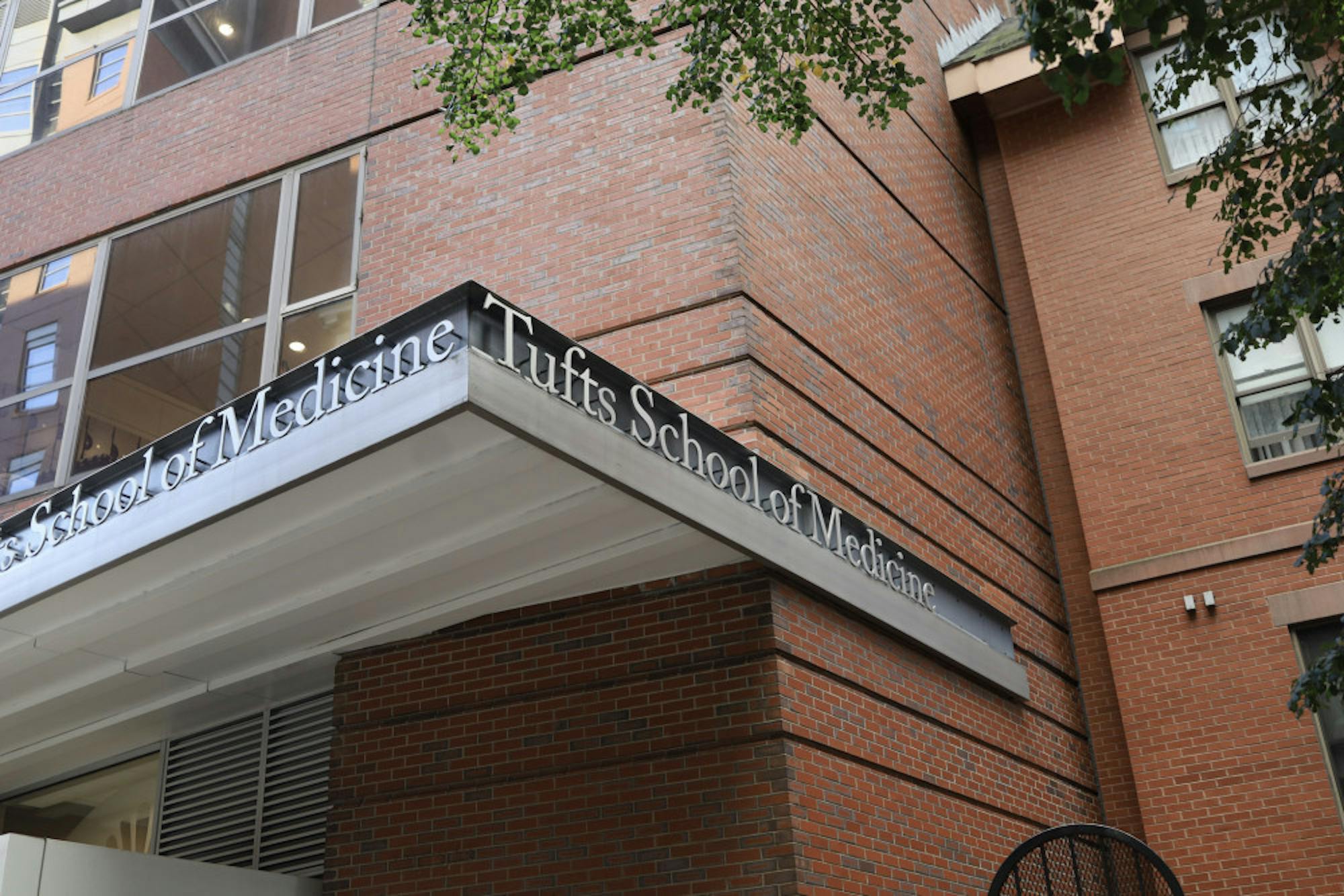
“The history of medicine is built on a bed of corpses,” journalist Hayley Campbell wrote in her 2022 book “All the Living and the Dead.” These corpses are cadavers, donated or unclaimed human remains used for scientific research. Krista Johansen, a clinical anatomist and assistant professor at the Tufts University School of Medicine in the Department of Medical Education, works with these cadavers every day.
Johansen’s work is possible through the Tufts Anatomical Gift Program, where individuals donate their human remains for medical education and research. “People [donate] for various reasons, but overwhelmingly, [it’s] people want[ing] you to learn.”
Johansen, lovingly called ‘ProJo’ by her students, has worked at Tufts for almost 30 years. However, she did not plan to end up at a university when she began her career. After graduating from high school, Johansen thought that she wanted to be a high school biology teacher, coaching track and working on her art in the summer.
However, when her college canceled the educator program that she was in, her plan started to change. At Wesleyan University, her liberal arts curriculum allowed her to explore a variety of interests in physics, music, neuroscience and psychology.
After graduating, she pursued a variety of jobs related to medicine, including becoming an EMT and working at a mobile mammography unit. However, her desire to work in the medical world formed during the height of the AIDS crisis.
“My cousin and her husband passed away from AIDS, and they weren’t talked about,” Johansen said. The personal loss sparked an interest in hospice work and pathology. “I kind of … took the [MCAT] on a dare, and I’m a multiple choice expert, and ended up in medical school.”
After studying at the University of Massachusetts Chan Medical School and specializing in pathology — the study of diseases and its mechanisms — Johansen realized that she still held a passion for teaching. When an opportunity to teach at her medical school arose, she took it.
“They needed somebody in anatomy, and I taught histology — looking at cells under the microscope — and pathology, and never looked back after that,” Johansen said.
When the death of her father led her to look for jobs closer to home, she received an offer from Tufts at their new Michael Jaharis Jr. Anatomy Laboratory.
“I really liked the cadaver work. It’s a very sacred space for me,” Johansen said. “The fact that [Tufts] just built this lab meant that they were going to be around for a while, and I liked the opportunity to teach such a varied, broad range of students.”
Thirty years later, Johansen is still teaching at the clinical anatomy lab. She primarily teaches first-year health professional anatomy classes to medical, physician assistant and physical therapy students.
Recently, she has also expanded the curriculum to students at the School of the Museum of Fine Arts at Tufts University. Johansen described the new perspective that the lab offers art students at SMFA.
“It’s a completely different conversation. They’re not worried about what’s going to be on the multiple choice test, [but] how [the work] enhances the anatomy that they know and the gravitas of it,” she said.
Johansen has also worked with engineering students, helping them look at the physics of the body and joint replacement.
The one thing that draws these different students and focuses together with Johansen is the cadavers themselves. While working with dead bodies every day may seem difficult for some people, they are the backbone of Johansen’s work and her teaching.
For Johansen, the physical diversity of the bodies remains a source of wonder.
“I’ve done this for 30 years, and I have not seen two hearts that look alike,” she said.
However, despite her comfort in the lab, Johansen is also cognizant of the fact that her students may have a different emotional response. She emphasized the importance of creating a space for students to feel their different emotions.
“I started doing this little club called Heart Club where some of my health students can go in and draw and just have time to be in the lab without thinking about what's going to be on their test,” Johansen said. “Creative thinking is what we need, especially in difficult times.”
Johansen referred to the donation of the cadavers to the medical lab as “a gift.” Her connection to these cadavers was deeply evident in her reaction to the Harvard morgue scandal — when, in 2023, it was revealed that the morgue manager under Harvard’s Anatomical Gift Program had been stealing and selling body parts from donated cadavers and shipping them all over the country. The scandal left the family members of these donated cadavers shaken and heartbroken. More than that, it severely impacted people like Johansen, who honor these donated gifts in their work every day.
“I can’t even tell you how upset I was,” Johansen said. “At Tufts, we take this job pretty seriously. … [T]hat stewardship [and] that responsibility to this gift has to be taken care of … [because it] can’t advocate for itself.”
At Tufts, there is a contract that will return the ashes of each donated cadaver to their respective family after a specified amount of time. However, there are special cases in which the family allows the body to remain in the lab for longer, if it has been a particularly good teacher to the students.
“I have been amazed by the generosity of the families,” Johansen said. She added that she sends cards with watercolored hearts as a symbol of appreciation to the family of every cadaver that she has worked on.
When people donate their bodies as cadavers to science and medicine, they are offering up a body that they have spent a lifetime protecting, taking care of and relying on in the interest of helping curious people learn more. Johansen is, in many ways, a steward of this gift — as a teacher, it is her job to ensure that her students honor these donations by learning and continuing to be curious.
“There is no greater teacher than somebody who donates their body after they die so that we can learn,” Johansen said. “That’s just the most unbelievable gift.”