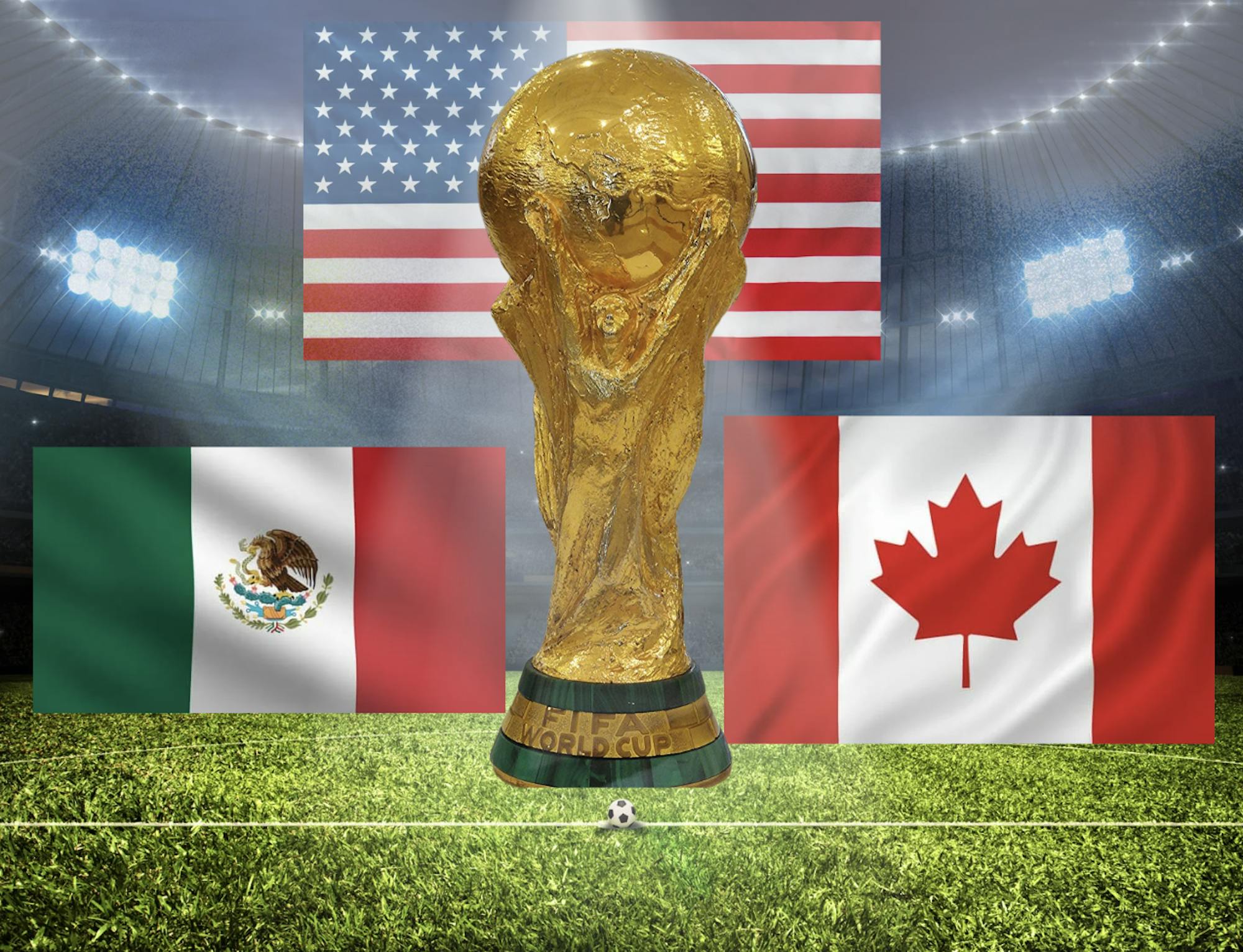
Only 25% of college students graduate during a World Cup year. Thus, the Class of 2026 is statistically rare, but what makes these four graduating seniors unique isn’t timing. It’s the question they all hold: How do you celebrate the world’s most unifying sporting event when the world feels anything but unified?
Bernardo Azevedo, Maryem Haque, Isa Reyes and Ella Voorhees all came into my life because of soccer. Azevedo is a close friend with whom I watch Champions League games during class (usually while we’re supposed to be doing something else). Haque, Reyes and Voorhees are all graduating seniors on the club soccer B-team, also called the Brown team. Together, they’ve become a larger part of my life than I ever anticipated. As they prepare to leave Tufts, they’re also preparing for a World Cup summer that feels different from the ones they remember.
The issues aren’t subtle, and they’re specific to the U.S. host. Azevedo went to Foxborough a few weeks ago to watch Brazil play a friendly game. The commuter rail, which usually cost around $20 for a sports game, was $30. For the actual tournament, that price jumps to $80.
“It feels like just all around, everywhere is money grabs,” he said.
Haque was more direct.
“A lot of people of color, a lot of immigrants are not gonna feel safe to attend,” she said. “People fearing for their safety are going to really minimize the attendance of people who would normally go.”
Reyes compared this to Qatar 2022 and the migrant workers who died building the stadiums.
“My fears about this World Cup aren’t unique to this World Cup. It’s just switched countries.” With ticket prices so high, she said, “The type of people that will be attending these events isn’t the type of people that are gonna care or have much to say about it.”
The graduating seniors’ concerns about Mexico and Canada are different. In Mexico, Azevedo is confident the tournament will have weight. Mexicans love football. In Canada, where the sport is still developing, the question is whether the country can embrace the moment. But in the U.S., the World Cup isn’t even a central topic of conversation. Americans are grappling with far more pressing concerns. Voorhees is optimistic but realistic.
“Hopefully it can be an opportunity for people to be proud, maybe not of the politics in their country, but of the people in their country,” she said. “It’s definitely harder. It’s scary.”
It’s easy to see how much they care because soccer still means something to each of them.
Azevedo remembered the 2018 World Cup in Russia. He would wake up at 7 a.m. to watch matches before school with two friends. That year ended in heartbreak: Brazil lost to Belgium in the quarterfinals. Azevedo didn’t eat again until the next day’s dinner.
Reyes remembered the last World Cup in her family’s living room when Argentina won. Her mom cheers for France, her dad for the underdog, but she said, “When Argentina won, my house was just cheering. I feel like it just brings everybody together in a really special way.”
Haque was 11 in 2014, at summer camp with her brother. She remembered the sticker books, and forcing her dad to drive them to stores to collect stickers. This World Cup, she’ll be with her brothers again, watching the way they always have.
Voorhees remembered the Gothia Cup in Sweden, an international youth tournament with teams from 80 nations. From my own experience there, I know it’s as close as any young player gets to a World Cup. She practiced with a Swedish team whose players barely spoke English.
“We were bonding over something we both loved, and it surpassed the need for language,” she said.
Azevedo explained what makes the World Cup special.
“For every player and everyone involved, they all know this is the biggest tournament they can ever participate in,” he said. “Everybody runs to a corner flag, the whole bench is running, everyone’s celebrating. There’s just that feeling of: This is something very special and big that is happening.”
For the four graduating seniors, something big is happening beyond the World Cup. They’re also stepping into their futures.
Azevedo will watch the group stage in Brazil before returning to move out.
“There’s the whole other part of actually transitioning into fully adult life,” he said. “Trying to figure out what kind of career path I want to take.”
Reyes will be moving to the Dominican Republic to teach.
“I’m Mexican, but I don’t really speak Spanish, so I feel like that’s kind of that missing piece in my cultural tie,” she said.
She added that she’ll miss the “pockets of community [she] found” at Tufts: the Arabic department, her housemates and soccer.
“For the first time it really does feel like I do have a lot in the future,” she said.
Haque hopes to work in public health in Massachusetts, promoting the health of marginalized populations. She co-founded the club soccer Brown team with junior Alex Levy her sophomore year with the goal of creating a more inclusive space. As captain, she has watched it grow into something special. She said that she would miss “the people, the soccer team [and] all of [her] close friends” the most.
Voorhees is heading to Minnesota for an internship before starting her master’s degree in transportation engineering at UC Berkeley. What she’ll carry with her is club soccer.
“I’d have a bad day, but then I’d go to practice and it would turn my day around,” she said.
I asked each of them to predict a dark horse and tournament winner in the hopes that they’ll read this again in the near future to see if they were accurate guesses.
Azevedo: Dark Horse: Ecuador and Japan. Winner: France.
Haque: Dark Horse: South Korea. Winner: Spain.
Reyes: Dark Horse: Morocco. Winner: France.
Voorhees: Dark Horse: Ireland (if they had qualified). Winner: Argentina.
By the time they read this again, they’ll know what the World Cup in North America actually felt like and whether it lived up to the promise or confirmed the fears. Whether it brought people together or pushed them further apart. I sincerely wish them the best.