For four years, Sacha Maes and Alex Ganchev chased a national championship in the blue and brown of Tufts men’s tennis, grinding through deep NCAA runs, undefeated regular seasons in the NESCAC and, in their senior year, a long-awaited title finally brought home to Medford. But when the confetti settled, the two captains weren’t ready to walk away from the sport. Instead, they packed their rackets, crossed the Atlantic and set out to prove that a Division III path can lead all the way to the professional tour.
“After having four amazing years with the team, I wasn’t ready to leave tennis,” Ganchev said, explaining that he and Maes felt that they had “the abilities” to give the pro game a shot. Four months in, the pair are chasing a goal that few D3 players attempt: to achieve success on the pro tour.
Highs, lows and three ATP points
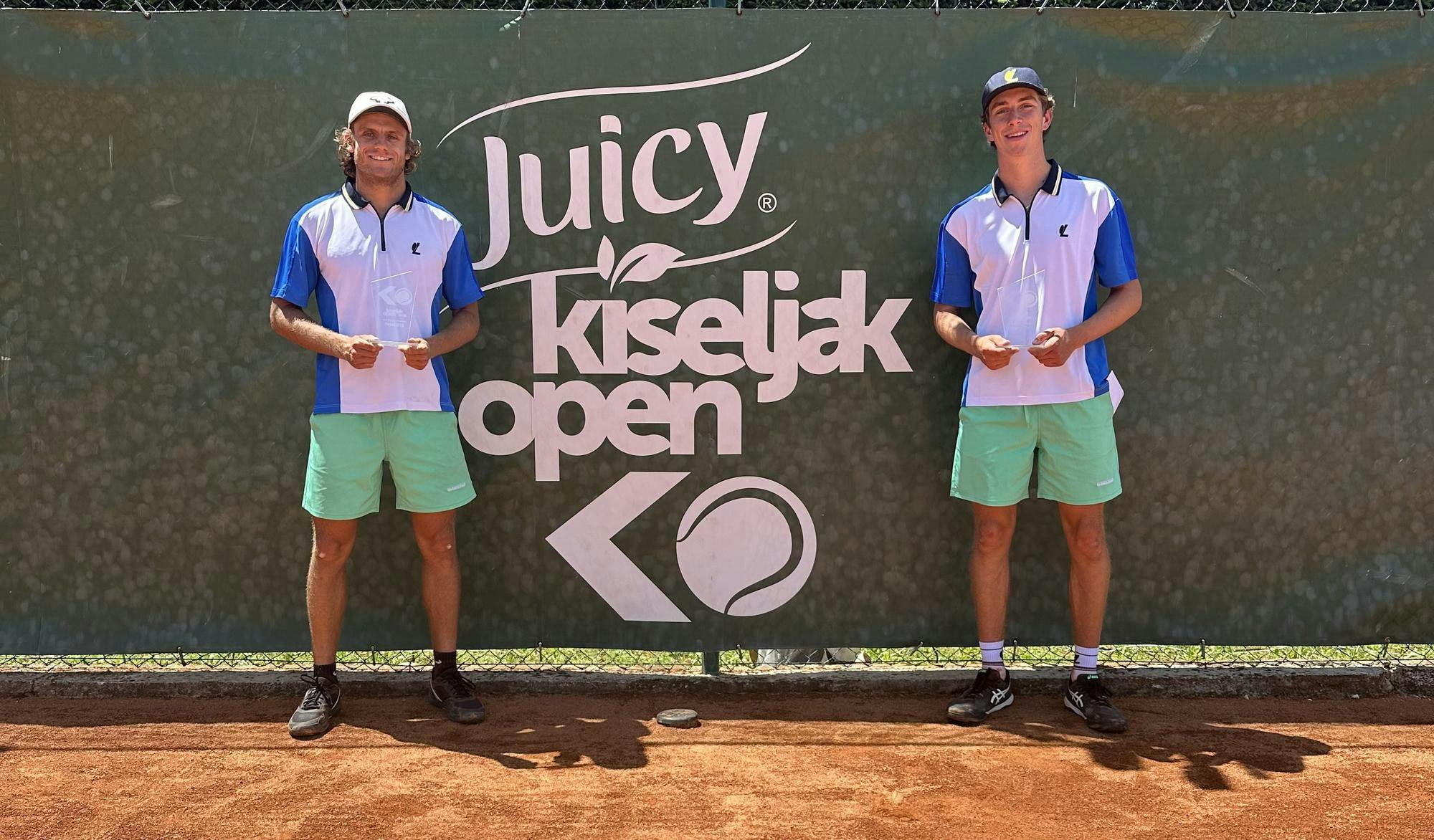
Their professional debut delivered a storybook high: a run to the final of their very first tournament. Even sweeter was the opening twist, a first-round meeting with former Tufts captain Andrej Djokic and his younger brother Filip, both fellow wild-card entrants.
The lows came fast. Over the following month, Maes and Ganchev — playing for Luxembourg and Bosnia and Herzegovina, respectively — won just one of their next four tournaments in Serbia and Slovenia, collecting just 3 points from the Association of Tennis Professionals, a haul Maes admitted was “definitely not what we were hoping for.” The lesson was humbling but clear: “Early success doesn’t mean that it’s going to continue.”
The logistics have been an undertaking of their own. A typical week in Europe begins with a Saturday arrival — usually by car, given Ganchev’s home base in Bulgaria — followed by Sunday singles qualifying matches and, if the draw cooperates, doubles main-draw play by midweek. The tour has already carried Maes to Bosnia and Herzegovina, Serbia, North Macedonia and Slovenia, all first-time destinations.
Learning to fill the calendar
The hardest adjustment after graduating, both players agreed, has been the sudden freedom of an unstructured life. Now, Ganchev says, “you get that freedom to decide how you want to spend your day.” Maes found upsides in the slower pace, noting that without “rushing to class or rushing to the next thing,” the two finally have time to “do the things that are gonna allow us to recover and perform the best.”
On court, the transition has been steeper. Accustomed to NESCAC hard courts, Maes said European red clay plays much differently, requiring changes to his game, including adapting his flat serve that was effective on hard courts but has proved less useful on clay.
Missing the roar of the crowd
For Ganchev and Maes, nothing has defined the leap from college to the pros more than the silence. The professional circuit — unlike the packed crowds of senior day at Tufts — is “lonely,” Maes says. A gallery of roughly 20 fans at their first pro final registered as a luxury. “It was just nice having a guy, a brother, next to you on the court," Maes added.
That solitude has tested a partnership the two are still learning to balance. They spend nearly all their time together — “25 hours a day,” as Ganchev joked — and while they occasionally bicker over trivial things, they’ve learned to keep on-court disagreements separate from their relationship off the court. The antidote, Ganchev said, is empathy and remembering that after a long, sleepless stretch of travel, “you’re doing it with your friend.”
Documenting the grind
Off the court, the pair have recorded their experience on a YouTube channel, “D3toATP.” The venture is partly about reaching people and partly about financing their start in a sport where, as Maes noted, making a living purely from playing is difficult. He was quick to credit the support network behind him and Ganchev, including clothing partner Outside Lines and nutrition and sports drink brand FitLine.
They remain wary, however, of the betting markets now surrounding their matches, pointing to the serious bans that have ended careers. “We’re staying away from that,” Maes said.
Trusting the process
When asked what lessons from Tufts have mattered most, Ganchev pointed not to a single moment but to a mindset. “If you wake up every day and you just try to be better than when you were yesterday, and you just put in the work and just trust the process, I feel like things will click eventually.” He said this was a philosophy that carried him from injury-plagued middle years to what he called his best tennis year as a senior, when the team reached “historic achievements.”
Both now aim to break into the top 800 in doubles by year’s end and to compete consistently at the ATP Challenger level next season. For Maes, a longtime New Yorker, one distant dream stands above the rest: to “one day compete together at the U.S. Open.” Ganchev urged patience, saying the pair simply need to keep believing in the process and putting in the work.
Their advice for any Jumbo weighing a leap of faith like theirs was blunt: “Just go for it,” Maes said. Ganchev put it another way, warning against a life spent chasing others’ expectations. “We rarely ask ourselves what do we want to do,” he said. The alternative, he added, is regret — and “why live [a] life that you’re gonna regret at the end of the day when you can live one that will be worth living?”