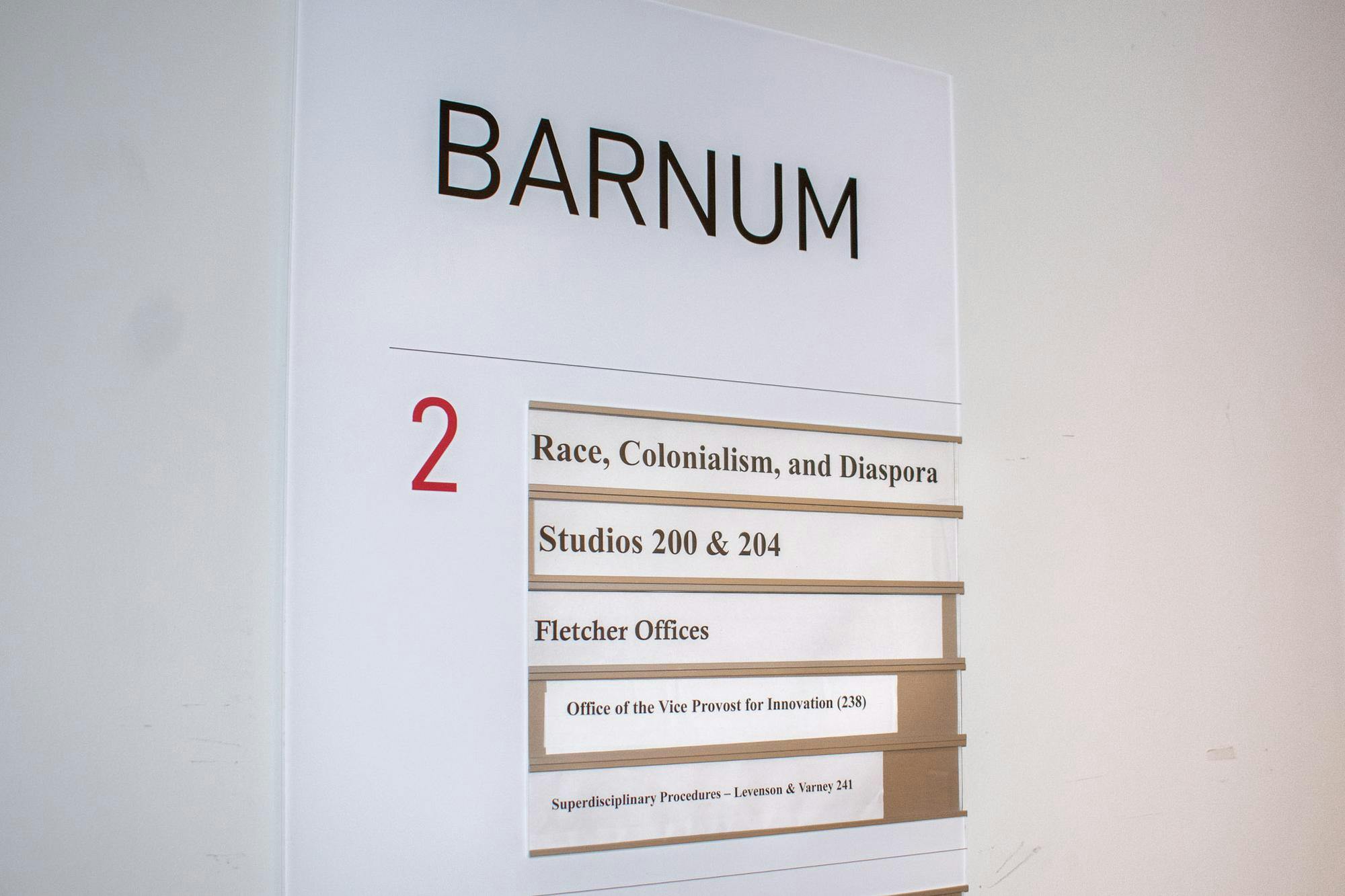
Kerri K. Greenidge, a former Race, Colonialism, and Diaspora tenure-track professor, is no longer employed at Tufts following criticism of her 2022 book, “The Grimkes: The Legacy of Slavery in an American Family.” Her departure follows allegations of false evidence and misattributed citations in her work, which were supported by an academic review conducted by Tufts.
The book, which received initial praise and several awards, describes the life and activism of an abolitionist family across the 18th, 19th and 20th centuries. However, Greenidge faced increasing scrutiny in 2024 when Myra C. Glenn, a retired professor of American history at Elmira College, decided to investigate Greenidge’s sources. Her investigation, fueled by doubts about several of Greenidge’s references and citations, found several factual errors and missing attributions.
According to a statement from Patrick Collins, executive director of media relations at Tufts, the university was made aware of allegations that Greenidge’s work “contained multiple errors of fact and failed to give appropriate credit to the work of another” in 2022. The university then began a peer review process led by external academics, who concluded that there were issues with the evidence and citations listed in the book and reported their findings to W.W. Norton, the publisher of “The Grimkes.”
W.W. Norton has since removed “The Grimkes” from its website.
Tufts’ administration has declined to comment on the manner of Greenidge’s departure and whether it was connected to the Tufts-led review of her work.
“Consistent with its policies and practices, the university will have no comment on any potential personnel actions related to this matter,” Collins wrote in a statement to the Daily.
Greenidge, who was a Radcliff Fellow at Harvard University for the 2024-2025 academic year, had been in the process of transferring to the history department from the RCD department.
In an interview with The New York Times about her departure, Greenidge, a Black woman, contended that the review process was spurred by a hostility towards Black women in academia, an allegation which Tufts denies.
“We stand by the review and strongly deny any allegations of bias that have been raised in some quarters,” Collins wrote.
While Tufts has denied any allegations of racism, Greenidge’s race has remained a large part of the conversation.
“I think that people will see a woman of color being accused of doing something wrong, and whether that’s true or not, probably accuse the institution of falling victim to [Diversity, Equity and Inclusion] practices,” junior Cristiano Miyawaki said.
Miyawaki believes the university should release a statement clarifying that this is an isolated event, rather than a racially motivated pattern.
Greenidge herself argued that her race was the reason for the increased visibility of this incident, which has been reported on by the Times and the New York Post as well as discussed by opinion sections in the Boston Globe and several blogs.
According to Miyawaki, a video he had seen about Greenidge that was published years ago now had comments from the past month containing racist language and derogatory comments about Black academics.
“By being silent, [Tufts is] allowing the narrative to run wild,” Miyawaki shared. “As an institution with some power in all of this, you have some obligation to respond.”
Some students feel that Greenidge’s behavior may cause Tufts to receive more unwanted attention.
“Especially with the new attention the university is getting, at least in the current political climate ... and the new eye the administration has on us, I feel like this would be a slam dunk for conservatives,” junior Ryan O’Malley said. “I feel like Fox News or wherever would have a field day with [this story], and it just puts more unwanted attention on the university.”
O’Malley, a history major, doubts that this sort of controversy would discourage students from taking classes with a professor, since most don’t follow academic news.
“I’m not looking up any of my other professors’ credentials, but when you do have all those criticisms — since it’s in the news — it can affect students. But personally, I’m not sure if it would affect me,” O’Malley said.
Miyawaki reported feeling mostly surprised that an issue of academic dishonesty would appear among professors.
“I was kind of bewildered,” Miyawaki said. “You don’t expect things like this to happen at your university, by any means.”