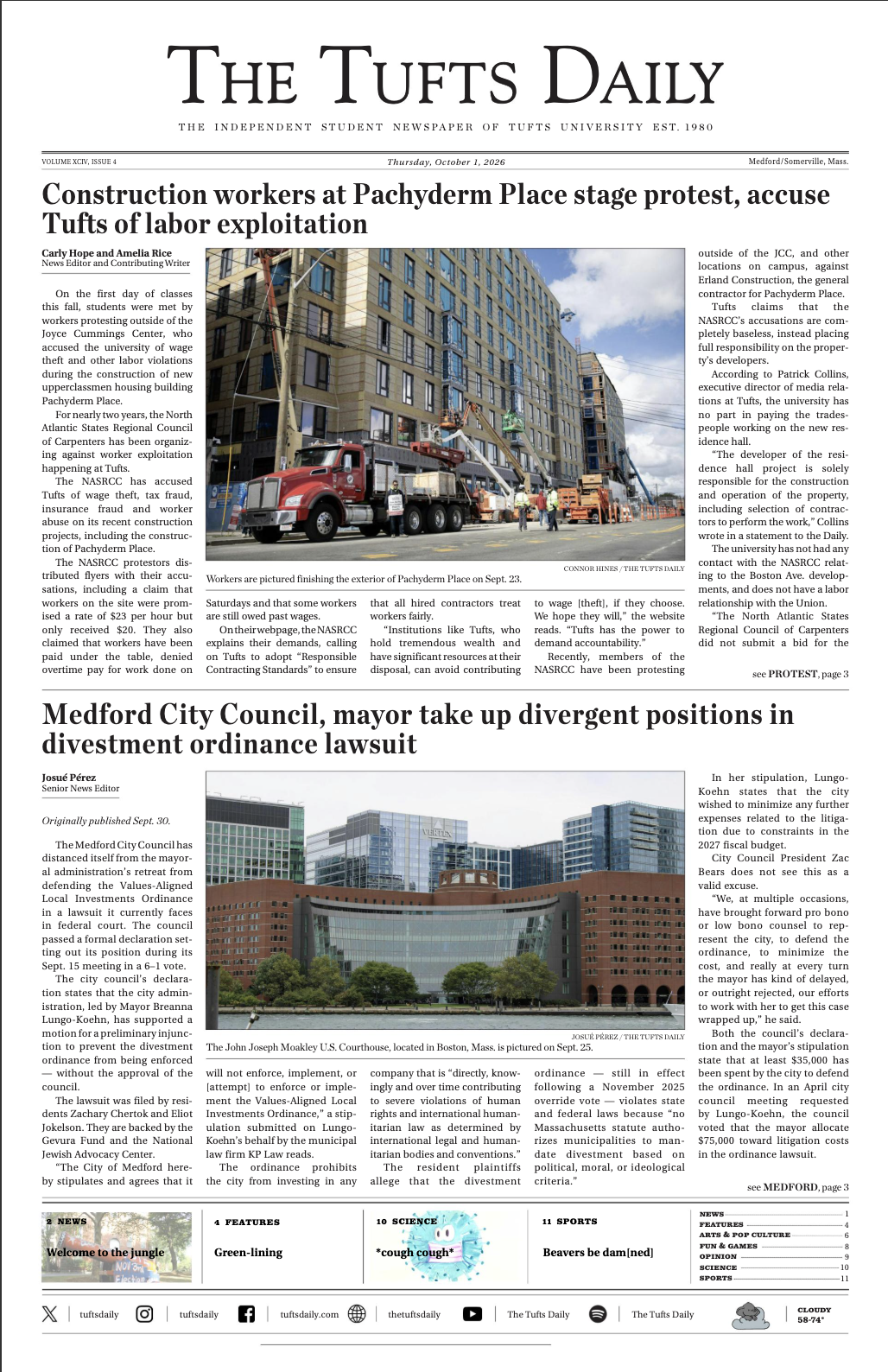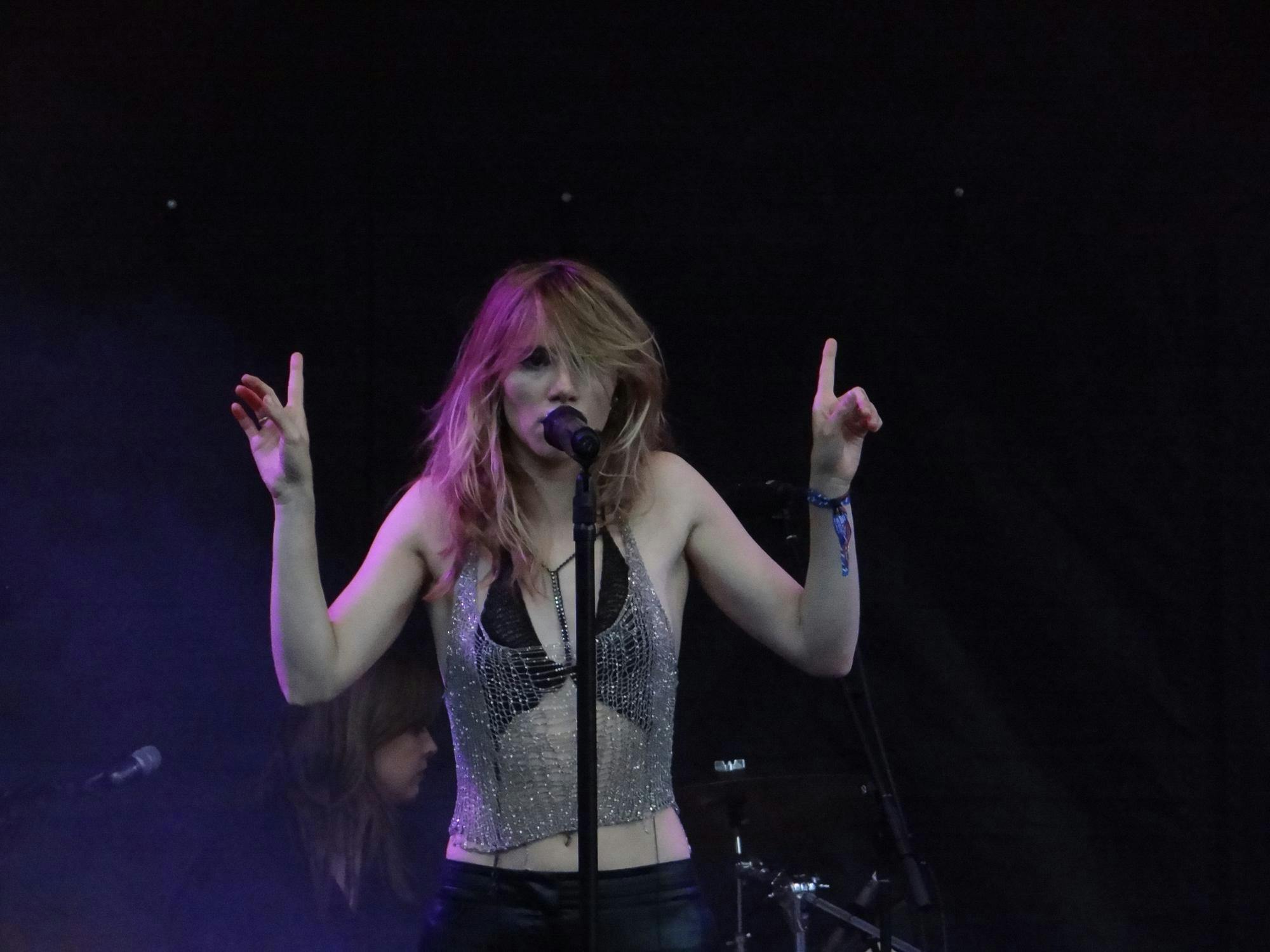
Against the backdrop of a sparkly, anatomically accurate heart pierced with cupid-esque arrows, Suki Waterhouse put on an electric show in Boston on Sept. 22. The set design, with rose bushes around her feet, expressed the romantic themes of her third studio album “Loveland.”
This newest album from Waterhouse is an intimate and lush collection of songs with, as Waterhouse’s website describes it, reflections on “identity, motherhood, and the quiet pull toward something truer.”
With romantic pink and purple lighting, Waterhouse invited the audience into a magical and playful world of music. Waterhouse’s tour style added to the enchanted atmosphere, as she rocked silver hair tinsel and changed outfits multiple times throughout the show.
Starting the show in a sheer, blush pink robe over a glittering bodysuit and knee-high lace-up boots, Waterhouse was the spitting image of a pop star. For the second half of her show, she sported a royal blue, floor-length robe trimmed with feathers, a ‘Loveland’ baby tee and silk boxer shorts. The stage was Waterhouse’s runway and she commandingly strutted across it.
The setlist included a balanced mix of new “Loveland” songs like “Back in Love” and “Notting Hill,” interspersed with her biggest career hits like “OMG” and “Good Looking.” This lineup gave the opportunity for both long-time supporters and newer fans less familiar with her past discography to sing along.
A standout song was “Johanna,” originally released in 2019, though Waterhouse’s 2026 performance made the song feel as striking as ever. Performed in the second half of the show, Waterhouse slowed down her set with this ballad.
Sitting by the piano with the wind machine blowing her hair back glamorously, Waterhouse belted the lyrics about unrequited love, accompanied by her quintessential synth music production. Overall, Waterhouse perfectly blends smooth vocals with a hazy, dream-pop sound, emblematic of ‘90s alternative rock stars like Alanis Morissette.
Waterhouse brought an incredible energy to her performance without relying on much formal choreography to go along with her vocals. She instead pranced naturally about the stage, radiating enthusiasm as she gave attention to all corners of the crowd.
Her performance was reminiscent of Aubrey Hobert, another pop star on the rise in 2026, known for her exuberant stage presence. Both Hobert and Waterhouse embody the spirit of a kid performing for their parents at a family gathering. Neither is overly polished or chock full of choreographed dance moves, but both express whimsy and a pure contagious joy.
The crowd was full of wholesome interactions, from girls offering to take photos of each other to father-daughter duos.
Before performing “Moves,” Waterhouse explained its message about bravely making the “move” to take charge of your life, then experiencing the powerful, lasting effects of that choice. Nearby, older women hummed in agreement and talked about how this message rang true for them. The moment highlighted Waterhouse’s universal appeal to girls and women at every stage of life.
Another memorable moment of crowd interaction was when Waterhouse asked for a piece of Boston lore. A girl in the audience took to the microphone to share about the Great Molasses Flood of 1919. In this casual interlude between songs, the British singer made her Boston show feel special, not just one stop of many on her tour across the U.S.
If there was one thing to improve, it would be to have more of these moments spent talking between songs. While the singing is undoubtedly the key element of any concert, there is also something to be said about the value of conversationally connecting with the audience.
When artists preempt their songs with a story about their writing process or the meaning of the song, it makes the show feel more personal and adds an emotional component to the live performance that you can’t get from listening to an album on a streaming service.
“Seasons” features lyrics like “How sad that the seasons change, but the loneliness stays,” and “Weirdo” describes a feeling of a difficult distance from her partner: “Dreams come true but they take me far from you.” While the depth is obvious in her lyrics, Waterhouse didn’t provide much additional insight into the meaning behind these songs when performing them live.
Waterhouse has famously been in a relationship with actor Robert Pattinson since 2018. Songs like “Weirdo” are clearly about their connection, with references to his movies including “The Odyssey” with “You’re on a set, is that ancient Rome?”
However, Waterhouse and Pattinson have followed Zendaya and Tom Holland’s ‘playbook’ for celebrity relationships, keeping their romance relatively private and away from the public eye. As such, perhaps Waterhouse refrains from giving too much explanation for her songs related to her personal life. She might be drawing a purposeful boundary between herself and her fans, especially amidst the culture of parasocialism heightened by the modern internet.
Ultimately, this minor critique did not detract from the overall show experience.