Skip to Content, Navigation, or Footer.

Opinion

The Setonian
Opinion

Greenwashing

Just seven miles away in Waltham lies the corporate office of Spectra Energy, a company that extracts natural gas, refines it and pumps it throughout the U.S. Natural gas has been billed as a clean alternative to other fossil fuels. According to Spectra, natural gas is the cleanest burning conventional fuel," and as such the company is "committed to making sustainable choices... [and to] represent[ing] the best in economic, environmental and social values and practices." Unfortunately, natural gas's image as a "clean" source of energy has not proven true. Methane, the primary greenhouse gas emitted in natural gas extraction and combustion, is about 85 times as potent as carbon dioxide in its contribution to climate change (over a 20 year period).


The Setonian
Opinion

I'm an English major who might be the assistant director of marketing

There's a myth out there that a degree in the humanities is a ticket to post-graduation employment behind a fast-food counter. As shown in a Tufts Daily article published last week, we've begun cultivating another myth that humanities and English majors in particular are only eligible to become journalists, teachers or publishers. The idea that English majors might understand something like (*gasp*) business has, apparently, become ludicrous.


The Setonian
Editorial

Joey service warrants improvements

While it may be the butt of jokes, the Joey is a very important part of life on the Hill, especially as the temperature drops. The Joey provides students with a quick and warm ride to Davis Square and back, allowing safe passage to the Davis Square T Stop, restaurants, convenience stores and everything else that Davis has to offer. That is, the Joey provides safe passage when it actually comes on time.


Feature-Image_Place-HolderWINTER
Opinion

Looking at Kagame in context, and why democracy is a privilege

This past month, Tufts invited President Paul Kagame of Rwanda to speak. After President Kagame’s lecture, an op-ed was submitted to the Daily criticizing the university for giving him a platform on our campus. The article — written by Alex Gladstein and published on April 24 — was one-sided in a way that is detrimental to any attempt at a complete discussion about the country and President Kagame's leadership. When analyzing Rwanda, it is necessary to look at the country's history. An open political space is a privilege of countries without legitimate worries about the takeover of genocidal ideology. It is true that, under President Kagame's leadership, there have been massive human rights violations. The Rwandan Patriotic Front takeover in 1994, while not genocide, did result in great casualties and war crimes, and the subsequent invasion of Zaire (now the Democratic Republic of the Congo) was similarly tainted. There is not complete freedom of speech in the country, nor is there space for dissenting political opinions. Rwanda is not a full and thriving democracy, but 20 years after the genocide, can it be? Twenty years ago, Rwanda was destroyed. After the genocide, in the wake of an unprecedented judicial backlog, ruined infrastructure and endless trauma, the country needed strong leadership. Today, that leadership is still needed. A 2010 survey showed that 39.9 percent of Rwandans agreed with this statement: "Although it is against the law, some Rwandans would try to commit genocide again, if conditions were favorable." I am not saying this to give President Kagame a free pass for political oppression, but for some people to slam the quelling of free speech without contextualizing the issue is rash and ill-advised. It is true that only two questions during the Q&A session were "hard-hitting," and those questions were important and deserve space in a discussion. But why delegitimize questions about economic development and regional and continental integration? Rwanda, while still an incredibly impoverished country, has seen notable economic growth. Eighty percent of firms in Rwanda were started between 2006 and 2011, and the country continues to attract foreign investment by being the safest country in the region. President Kagame is vocal about wanting to move the country away from dependence on foreign aid, and Vision 2020, an economic plan for Rwanda, hopes to make the nation a middle-income economy in the next six years. It is not a given that these goals will be accomplished, but it's worth talking about. In the face of a devastated economy in 1994, Rwanda needed a forceful leader. It was under President Kagame's leadership that the country has had such notable achievements. Only 20 years ago, the country needed to completely rebuild — basic necessities, like food and shelter, were prioritized. It is unreasonable to assume that a country where people struggled to survive is capable of implementing a democracy. President Kagame is not comparable to former president of Iran Mahmoud Ahmadinejad. If we are going to start clumping together all leaders who have committed human rights abuses, we should add many United States presidents and other democratic leaders to the list. The United Nations High Commissioner for Refugees has issued a Cessation Clause for Rwandan refugees, essentially saying that it should be safe for all Rwandan refugees to return to the country and that Rwanda wants them back. This is indicative of the strides the country has taken to reconstruct the security and human rights status of the nation. President Kagame's actions must be contextualized by the real security threat Rwanda faces from political opponents and genocide deniers. Making radical comparisons does nothing to contribute to a conversation about why Rwanda might need a more authoritarian regime. I did not write this to minimize the many problems with the Rwandan government, but I do think it is necessary to take into consideration the context of Rwanda before hitting President Kagame with un-contextualized criticism. Twenty years ago, Rwanda was in the midst of genocide. Democracy does not happen overnight, and political freedom is a privilege. If we are going to make a space at Tufts for a discussion about Rwanda as it is today, then it must include both the criticism and an understanding of Rwandan society. Rwanda is still healing. The effects of the genocide are still relevant, and that must be taken into consideration when understanding the country today. I'm excited to have a dialogue about Rwanda on campus, but if it is not holistic, it will be unproductive.


2014-05-11-Around-Campus-1-2.tif_
Opinion

Why college should not be the best time of your life

College is not the best time of your life, nor should it be. College is four years of hardship and struggle. We leave the forge of high school life to find ourselves in the crucible. Many students arrive and burn out within the first year, myself included. However, I had a realization: I was not ready ...


The Setonian
Opinion

Engineering Mentorship Program is improvement on Tufts advising

Freshmen often enter college with vague ideas of what they want to study and have even more malleable ambitions for their future careers. With every semester of navigating academia, and with every mistake made and lesson learned, students fine-tune their interests in search of a major and, ultimately, a life path. The advice of upperclassmen, whose one or two years of seniority represent an innumerable quantity of wisdom, is an invaluable resource for their underclassmen counterparts. It is with this in mind that two juniors, John and Michael Kenny, founded the Tufts Engineering Mentorship Program, a group whose mission is to connect freshmen and sophomore engineering students with juniors and seniors who have similar goals and can offer their experiences to the benefit of both the mentee and the mentor. These partnerships would be assembled not just on a basis of shared interests, but on a basis of real compatibility, with the ultimate goal of providing underclassmen with a mentor with whom they feel comfortable on both an academic and personal level. Just introduced this school year, the program capped its membership at 70 students, but is looking to expand. While this student initiative should be widely praised, it raises an unavoidable question: Why does a program like this seem so necessary? Is the university doing enough to offer support and guidance to underclassmen? So little emphasis is placed on pre-major advising that incoming freshmen have relatively no say in the adviser to whom they are assigned. Students interested in biology, French and peace and justice studies may all be advisees under the same faculty member, perhaps a philosophy professor who only recently began teaching at Tufts. It is no wonder that freshmen often feel as if they are left to navigate the system on their own, guided only by unreliable snippets of advice and word-of-mouth suggestions about which classes to take. Yes, the first year of undergraduate education is a time to explore potential fields of study and take the classes that pique one's interest, but there are some requirements and advisable academic choices that cannot be ignored. Students should feel comfortable meeting with and seeking the guidance of their pre-major advisers, and should not feel as if they are only in place to offer logistical suggestions about how to fulfill foundation and distribution requirements. Peer mentorship programs should be helpful, but not necessary. Instead, the university should make changes to the existing pre-major adviser assignment system. This could be accomplished with a solution as simple as allowing incoming freshmen to select an adviser in their preferred area of study. While peer mentorships are a partial solution to problems presented by the current advising system, making changes to the system itself should be a university priority to help underclassmen find their paths in a timely, organized fashion.


Feature-Image_Place-HolderPRESLAWN2
Opinion

Letter to the Editor

To the Editor, The Daily article from April 23 entitled "External influences impact TCU election" raises the question: who exactly is "external" to the process of electing the TCU President? The influences discussed in the article are Generic Candidate, the creation of Tufts junior Ben Kurland, and posters made by Tufts senior Evan Moulson. TCU Parliamentarian Brian Tesser was quoted as saying, in reference to Generic Candidate, "I think that it could have kind of swayed votes in a way that they shouldn't have been swayed. It was coming from something that, in my opinion, wasn't credible because no one was tying themselves to it." In the same article, N??ez's campaign manager Hannah Deegan referred to Generic Candidate as an "outside force [which] came in and sort of changed" the positive campaigns both candidates were running. Everyone must come to his or her own conclusion as to how much credibility to afford anonymous speech, which begs the question: May Generic Candidate's critique be judged on its merits now that Kurland has taken ownership of it? But how should votes be swayed? Implicit in Tesser and Deegan's words, and in the article's headline, is the idea that legitimate discussion of the election must simply weigh the candidates against one another, never questioning the fundamental premises of their campaigns. The fact that people involved with TCU Senate, presidential campaigns and the Daily take this attitude only underscores the validity of Moulson's claim, in his op-ed of April 23, that "the nominating process is designed to stifle dissent and unpopular views." Moulson and Kurland are current Tufts students; their views should be no more "external" to the campaign process than, for instance, those of a Senator or campaign manager. Moulson's other major point in his op-ed, that "TCU Senate is, for all its bluster, very limited in its power," also ran through many of Generic Candidate's strongest pieces of satire. Here I disagree slightly with Moulson's proposed solution. Rather than investing TCU Senate with the powers held by the Committee on Student Life, I'm inclined to think we should ignore presidential candidates' promises to take actions that far exceed the scope of their office and instead focus more on elections for the CSL itself. In any case, Moulson's and Kurland's criticisms of electoral campaigns at Tufts ought not to be dismissed simply because they are "external" to the messages of sanctioned candidates for office. Sincerely, Sam Duncan Class of 2016


Feature-Image_Place-Holder
Opinion

Letter to the Editor

To the Editor, The Daily article from April 23 entitled "External influences impact TCU election" raises the question: who exactly is "external" to the process of electing the TCU President? The influences discussed in the article are Generic Candidate, the creation of Tufts junior Ben Kurland, and posters made by Tufts senior Evan Moulson. TCU Parliamentarian Brian Tesser was quoted as saying, in reference to Generic Candidate, "I think that it could have kind of swayed votes in a way that they shouldn't have been swayed. It was coming from something that, in my opinion, wasn't credible because no one was tying themselves to it." In the same article, N??ez’s campaign manager Hannah Deegan referred to Generic Candidate as an "outside force [which] came in and sort of changed" the positive campaigns both candidates were running. Everyone must come to his or her own conclusion as to how much credibility to afford anonymous speech, which begs the question: May Generic Candidate's critique be judged on its merits now that Kurland has taken ownership of it? But how should votes be swayed? Implicit in Tesser and Deegan's words, and in the article's headline, is the idea that legitimate discussion of the election must simply weigh the candidates against one another, never questioning the fundamental premises of their campaigns. The fact that people involved with TCU Senate, presidential campaigns and the Daily take this attitude only underscores the validity of Moulson's claim, in his op-ed of April 23, that "the nominating process is designed to stifle dissent and unpopular views." Moulson and Kurland are current Tufts students; their views should be no more "external" to the campaign process than, for instance, those of a Senator or campaign manager. Moulson's other major point in his op-ed, that "TCU Senate is, for all its bluster, very limited in its power," also ran through many of Generic Candidate's strongest pieces of satire. Here I disagree slightly with Moulson's proposed solution. Rather than investing TCU Senate with the powers held by the Committee on Student Life, I'm inclined to think we should ignore presidential candidates' promises to take actions that far exceed the scope of their office and instead focus more on elections for the CSL itself. In any case, Moulson's and Kurland's criticisms of electoral campaigns at Tufts ought not to be dismissed simply because they are "external" to the messages of sanctioned candidates for office. Sincerely, Sam Duncan Class of 2016


Feature-Image_Place-HolderOLIN
Opinion

Free the T

When I first toured Tufts, the view from the library roof made me want to come here. It sounds shallow, but it's true. I had finished my informal look at campus and was heading back to my car when I decided to stop on what I would come to know as the best spot at Tufts. From there, I could pick out the familiar Boston landmarks. It was getting dark, and over the distance, it looked like some modernist holiday display: towers strung with lights, pushing up against the darkened sky. It's still a point of pride for me that I can take my out-of-towner friends up there and give them a visual tour of the city from afar, saying to them, "We can go there, soon." There's a subtle trick at play in that phrasing, though. We are able to go there, in a loose sense. We are able to wait for the Joey or trek down to the Davis Square T stop; we are able to sit on the train, take it all the way across the river. But we can only do all those things if we have the time, the money and the will required to put the easy campus entertainment aside and burst the infamous "Tufts bubble." As much as I hate to admit it, up on the Tisch Library roof, there are significant barriers between pointing at Boston from afar and actually going there. This is, of course, a shame. Boston, for all its petty provincialism and much-maligned early bedtime (the T shuts down at 1 a.m. on the weekdays), is a beautiful, vibrant city. It is worth pointing out that there are over 250,000 college students in Boston and Cambridge alone; that count doesn't include geographical outliers like Tufts, or Boston College or the schools connected to Boston by commuter rail. It is essentially a mega-sized college town, with all the wonderful weirdness that entails. With this many students in one relatively small area, there will never be a shortage of culture, entertainment or fun ways to waste time. The only problem for Tufts students is getting there. This is the reason that I support bringing the U-Pass program to Tufts, and why I joined the Tufts Transit Coalition: to make that goal a reality. There are countless reasons to support the program: Using public transportation is environmentally friendly, an influx of students into Boston would encourage the T to stay open later, the increased T revenues from wide adoption of the U-Pass could lead to a similar program for local high schools, thus increasing opportunity for those students ... the list of benefits goes on and on. For me, though, the most important thing is that the U-Pass would make Boston accessible. A university-subsidized pass providing unlimited T rides at a deeply discounted price would allow every Tufts student freedom of movement. Freshmen like me would be able to expand and enrich our college experience immeasurably with such a program. Instead of standing on the Tisch roof, pointing at places we may never be able to visit, my friends and I could stand there and make plans. This reason — simple freedom to expand my world — is why I support the TTC and U-Pass. You may not share my reasons, and I don't expect you to. The other TTC members and I don't even expect you to immediately jump on our bandwagon. There are so many reasons to support this program — I haven't yet been to a meeting of the group where two people voiced the exact same motivations for their support. Ask me questions, if you want. Ask any one of us questions. We've been lucky to see such strong support from the Tufts community so far, including from newly elected TCU President Robert Joseph. However, ceasing our efforts now won't help anyone. So, keep the U-Pass in mind over the summer and into the fall. I ask you simply to think over the reasons to free the T and open up the city. To sit on the doorstep of a city like Boston is a wondrous thing. Why would we not knock and enter?


The Setonian
Opinion

Peace starts with us

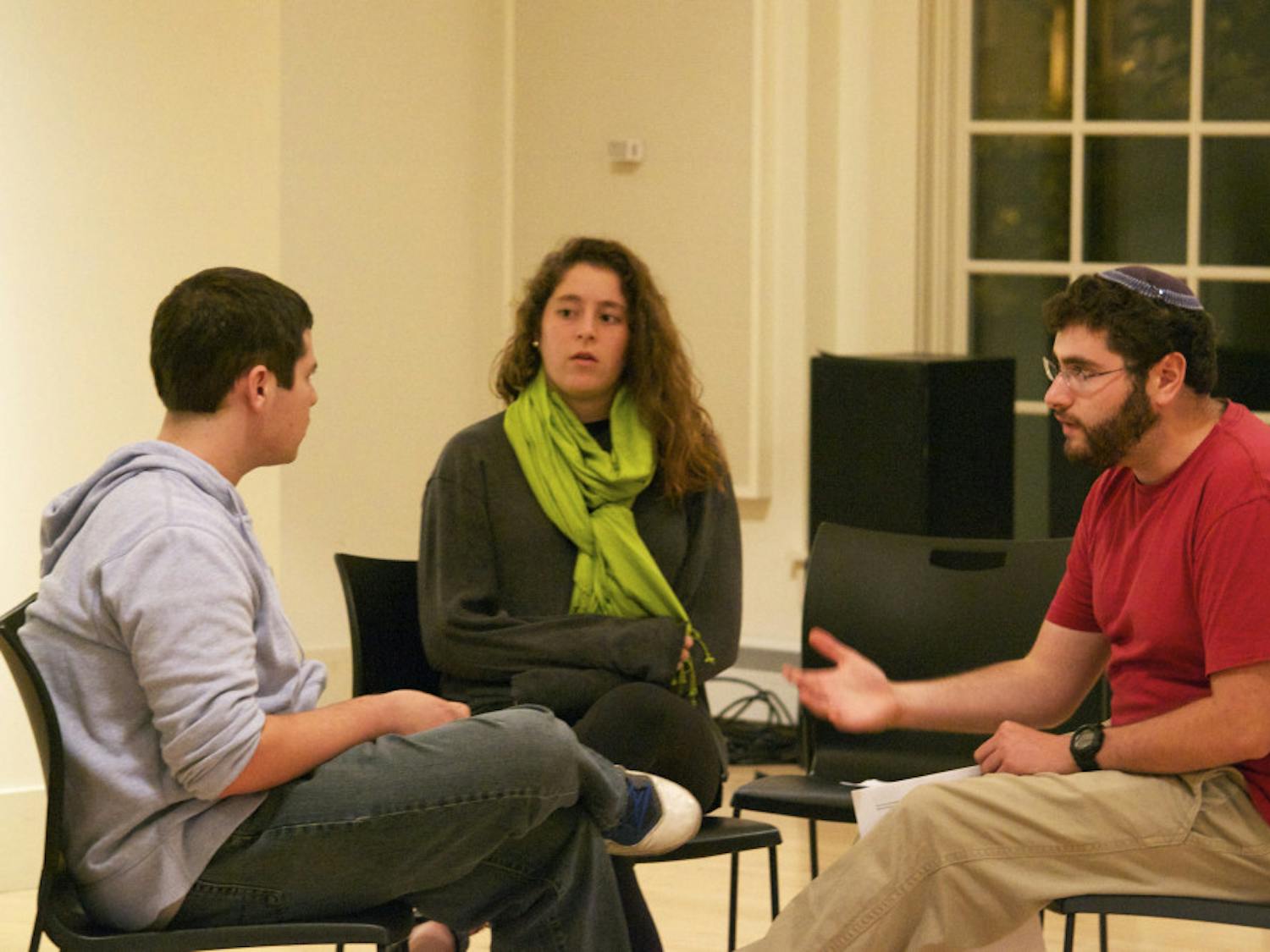
    The misplaced focus of Israeli-Palestinian dialogue both on campus and nationwide is  disappointing and deplorable.      While it is embarrassing that Israeli leaders have thus far been unable to grant the Palestinians their own state, and it is shameful how Israel has, at times, treated Palestinians and other non-Jews both within its borders and across the Green Line, those with a sincere desire to bring about a better future for the Palestinian people should be vociferous and aggressive in advancing the current negotiations for a two-state solution, rather than solely demonizing Israel. As rational and judicious students we must ensure that the separation between healthy criticism of the Israeli government's policies and offensive attempts at the delegitimization of Israel's very existence remains intact.      If Israel expects continued support from human rights and democracy-valuing Americans, its violations must be addressed. That being said, intimidating rhetoric - which defined anti-Israel expression on campus in early March - only tells us that the participants are averse to engaging in dialogue and unwilling to respect alternative perspectives, narratives and histories.      These actions also deter us from the more immediate issue of the negotiations that has been hardly touched upon on campus. After years of political stalemate, United States Secretary of State John Kerry has overcome incredible obstacles to bring the Israelis and Palestinians back to the negotiating table. Now that these talks have hit an impasse, we, as Americans, must funnel our energies into supporting the continuing of negotiations. With little time remaining until the April 29 negotiations deadline, now - while we still have the chance - is the time to join a struggling Kerry in the "great constituency for peace" that he has asked of us and to affirm our country's stance on the issue.      Maintaining the status quo between Israeli and the Palestinians is unsustainable for both sides. For Israel, its democratic, egalitarian character is on the line. Also facing increasing international threats of isolation, it is gambling with a future as a pariah state. Slowly being dissolved by ever-growing Israeli settlements and led by an aging Abbas, Palestine would sacrifice the sole peaceful means of achieving sovereignty. Should the peace talks collapse, both sides of the Green Line would certainly face further despair - or worse.     Altering the present dynamic into a single, bi-national state is an unachievable delusion and a recipe for disaster. What reason do we have to believe such a state could avoid the type of divisive inter-ethnic conflict that has ravaged nearby Lebanon, Syria and Iraq? Only through two states for the two peoples can both the Israelis and the Palestinians set the foundations for productive futures. Both the Jewish people and the Palestinian people have valid desires for self-determination that must be recognized. Though their histories are vastly divergent, the two nations experienced their formative years in the same Judean cradle and trace back to the same prehistoric Canaanite tribes. Both can rightly be called indigenous to the land between the Jordan River and the Mediterranean. Their differing evolutions over the millennia, however, have produced two separate nations that both maintain deep and interconnected historical claims to that land. Like all of the other ethnic movements for self-determination that have defined the modern era, the wills of the Jewish and Palestinian peoples deserve to come to fruition.     Despite attempts on either side, the tragic histories of both cannot be erased. Only through painful compromises can the Palestinians be given a tangible, cohesive territory on which to build a state, as well as letting Israel have its own legitimate security claims guaranteed. Roughly two-thirds of Israelis are willing to forfeit sovereignty over much of Judaism's birthplace, the West Bank. The Palestinians must acknowledge that a massive influx into Israel proper is just as unacceptable as Jewish settlement expansion in the West Bank, as it would lead to Israel's demise. Kerry offers an unprecedented and vital non-partisan approach to such difficult issues. Not supporting his initiative is forfeiting one of the last true opportunities for a two-state solution - it equates to not really supporting peace at all. And peace is the only form of justice for all.     For the experts invested in this conflict, it is not only clear what has to happen for peace to occur, it is formulaic: borders based on those of pre-1967, dividing Jerusalem and making land swaps. It is also clear that, to this day, the United States has not been willing to pay the political price necessary to bring about two states. Are all of us students invested in this conflict doing what we can to push the U.S. to make that leap? No side wants the status quo - the state of "limbo" between one and two states - to persist for another generation. And no one wants to see Israel inch down the path towards apartheid.     It is easy to give in to emotions. It is easy to dwell on Israel's violations against Palestinians and other non-Jews. But it is far from practical to avoid advocating for a two-state solution altogether.     Now is not the time to be fueling hatred and intensifying polarization. We, as Tufts students invested in the Israeli-Palestinian conflict, must channel our hopes and frustrations toward something truly productive. Join us at J Street U in voicing support for Secretary Kerry's tireless and remarkable efforts. Help in bringing the dreams of both nations closer to true fruition through a negotiated settlement that would allow all to enjoy the rights of peace, recognition and security.     We invite you to join us next semester for bi-monthly inclusive, pragmatic and values-driven conversations.


Feature-Image_Place-HolderWINTER3
Opinion

Why does Tufts want rapists on its campus?

Trigger warning: This article discusses sexual assault and rape.Have you ever had that feeling, after walking alone off-campus late at night, when you finally cross onto campus you feel a bit safer? I remember that feeling. I also remember when I stopped feeling that sense of security. I remember when ...


The Setonian
Opinion

Why did Tufts give a platform to a dictator?

On Tuesday April 22, Tufts University gave a very warm welcome to Rwandan President Paul Kagame. Fletcher Dean Stavridis and President Monaco told a packed Cabot Auditorium audience that they were "thrilled" and "honored" to have His Excellency on campus to discuss Rwanda's road ...


Feature-Image_Place-Holder
Opinion

Why did Tufts give a platform to a dictator?

On Tuesday April 22, Tufts University gave a very warm welcome to Rwandan President Paul Kagame. Fletcher Dean Stavridis and President Monaco told a packed Cabot Auditorium audience that they were "thrilled" and "honored" to have His Excellency on campus to discuss Rwanda's road to recovery 20 years after the horrific Tutsi genocide. On an official event webpage, Kagame was described as Rwanda's first democratically-elected president, a United Nations leader and a statesman setting his country on a course of "reconciliation, nation building and socioeconomic development."After a 20-minute lecture by Kagame, Tufts officials posed three pre-selected questions, and he was able to answer four more from the audience. It was, by any measure, a wonderful event for the Rwandan leader, who had ample time to tout his achievements with regard to economic growth, private investment, ethnic harmony and the cleanliness, efficiency and stability of his country's cities. When finished, he received a standing ovation, and Dean Stavridis thanked him amid photo-ops for a "candid and wonderful" conversation. Tufts' public relations office released a statement saying that the university was "pleased that the event was well-attended and the audience fully engaged."The question is: how many of the organizers or audience members knew that Paul Kagame is a murderous dictator? Before you turn away in disbelief, consider the following facts.Despite Tufts officials' claims, Kagame is no democrat. He won his first election in 2003 with 95 percent of the vote, in a contest where critics said the opposition was "virtually excluded from campaigning." During his second election in 2010, Kagame jailed political rivals and shuttered critical newspapers en route to winning 93 percent of the vote. As The Guardian observed, "opposition groups have been excluded, journalists have been intimidated and dissenting voices have been silenced, sometimes violently." A former party official in exile was shot in the stomach after voicing criticism of Kagame. Meanwhile, a critical journalist was killed, and a deputy leader of an opposition party was found beheaded. One opponent, Victoire Ingabire, was arrested soon after launching her campaign. She is still in prison today.Once Rwanda's liberator, Kagame has spent two decades building a harsh authoritarian regime, working hard to consolidate power and extinguish dissenting voices. He operates a police state using the national army and his political party, the Rwandan Patriotic Front. According to Susan Thomson, a Rwanda expert at Colgate University, "The RPF saturates every aspect of life in Rwanda ... they know everything: if you've been drinking, if you've had an affair, if you've paid your taxes." Reporters Without Borders calls Kagame a "predator of the press," while Human Rights Watch has observed "a long-established pattern of assassination and attempted assassination of Rwandan government critics." Freedom House designates Rwanda with its lowest freedom ranking, on par with Iran and Zimbabwe and worse than Burma and Russia.After taking power, Kagame orchestrated massacres of Hutus in Rwanda and in neighboring countries. In a vivid recent report The Wall Street Journal describes how, in the chaos after the 1994 genocide, Kagame's army "conducted its own mass slaughters across Rwanda, rounding up unarmed Hutu civilians by the thousands and machine-gunning them." In 1996, Kagame started a war with neighboring Zaire, now the Democratic Republic of the Congo. The International Rescue Committee estimates that more than five million people have died as a result of this military campaign. I'll repeat: five million people.Remember Tufts' official campus statement about Kagame being a U.N. leader? Well, a U.N. investigation found that his army and allies "killed tens of thousands of innocent refugees" in the Congolese jungles, while pillaging a fortune in gold and other precious metals. According to a 545-page report, "the majority of the victims were children, women, elderly people and the sick, who were often undernourished and posed no threat to the attacking forces." Columbia University professor Howard French claims that Kagame's campaigns against Rwandan and Congolese Hutu have killed as many as 300,000 people.In 2012 the head of the U.S. war crimes office warned Kagame that he could face prosecution at the International Criminal Court for arming rebel groups in the Congo. Again, an official in the Obama administration has suggested that Kagame has committed war crimes. The U.N. has also presented detailed evidence that Kagame was financing M23, a particularly notorious death squad founded by Bosco Ntaganda. Nicknamed "The Terminator", Ntaganda is a warlord on trial in The Hague, where witnesses testified that he personally used child soldiers and ordered troops to rape and kill civilians.Despite all of the widely-available evidence, President Kagame did not have to face a single question at Tufts' April 22 event about human rights, attacks on dissidents, massacres or his support for armed groups. To the great disgrace of Tufts alumni, parents, donors and current students, the administration chose to genuflect before a man who should have been taken to task. When Columbia University hosted Mahmoud Ahmadinejad, the school as an institution made it categorically clear that the Iranian leader was there to be heard in the spirit of a lively debate that did not exist inside the dictatorship of Iran, and the school's president sharply challenged Ahmadinejad on the controversial human rights issues. Despite the fact that Kagame stands accused of a much larger number of deaths than Ahmadinejad, Tufts made no such statement. Instead, anyone in the audience at Cabot would have had to figure out Kagame's crimes on their own, given that pre-event materials portrayed him as a democratic hero.12


The Setonian
Opinion

Administration must help amend problems with elections

The TCU presidential election concluded yesterday after more than a 12-hour delay in the release of results due to some technical problems experienced by the TCU Election Commission (ECOM). Students voting off-campus (via wireless networks other than tuftswireless) had difficulties submitting their votes, and students were required to use a temporary username and password to log into to VoteNet.


The Setonian
Opinion

Justice for janitors: demand an end to contract violations and mistreatment

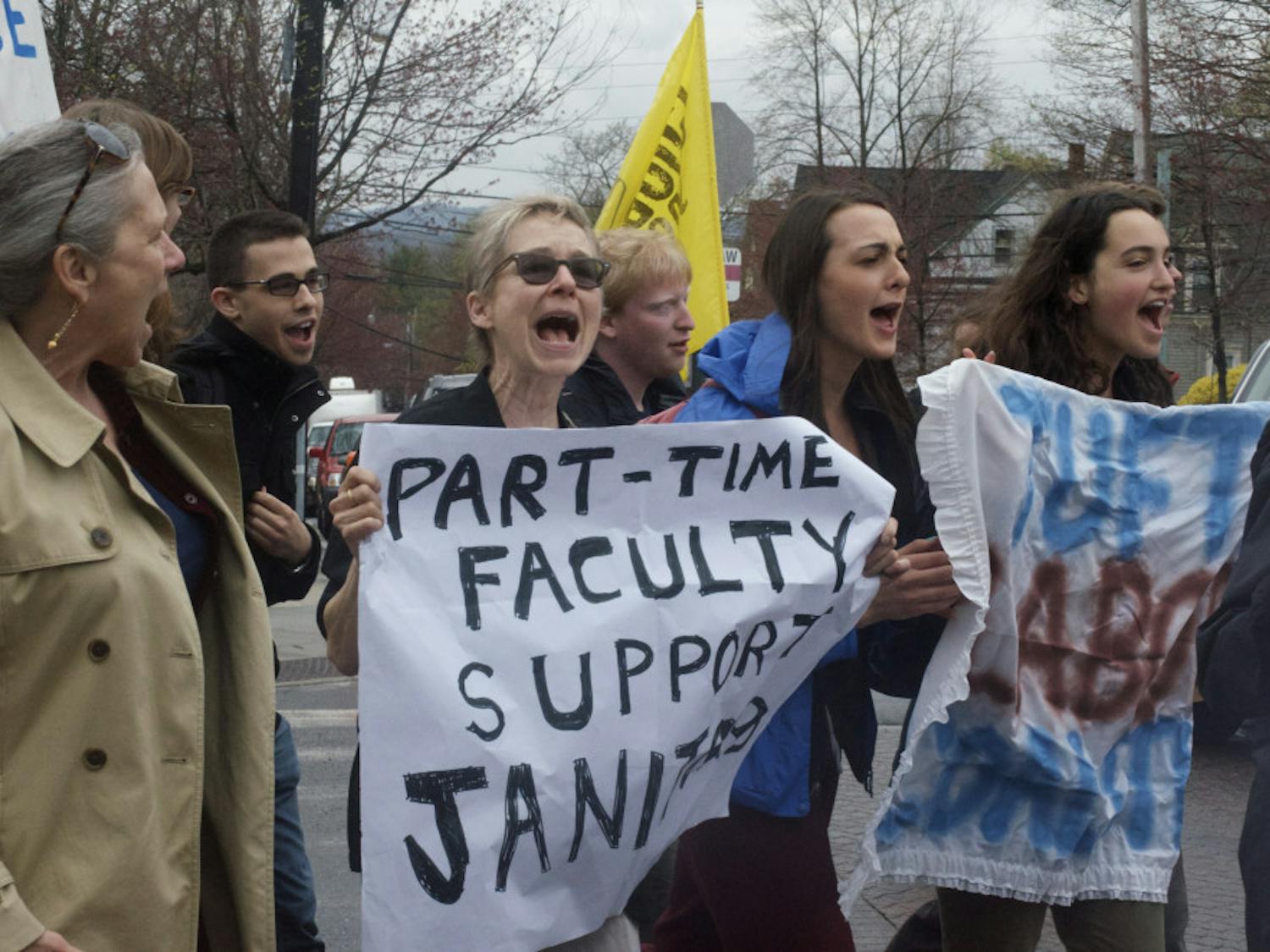
The Tufts' janitorial staff is in a precarious, and often confusing, position. I would like to clear up the situation, in hopes of paving the way for further student and administrative action on behalf of the Tufts janitors. Because the janitors are not directly employed by Tufts University, but through a subcontractor, DTZ/Unicco, the daily realities of their working conditions are at the mercy of this contractor. They are not afforded the same standing as direct Tufts employees. Fortunately, as members of the Service Employees International Union (SEIU) Local 32BJ, as they explained to us, Tufts janitors have some protections through a hard-fought contract, such as a required level of full-time employment across the staff, specific payment methods and more. Unfortunately, DTZ has continuously violated this contract since they took over custodial operations at the beginning of 2013. In our experience, when such concerns have been brought to the attention of President Anthony Monaco, Executive Vice President Patricia Campbell and Vice President of Operations Linda Snyder, they have expressed sympathy for the janitors' situation. However, this sympathy has not taken form as action. As indirect employers, Tufts administrators have repeatedly ignored their responsibilities in ensuring that their hired contractors treat workers on Tufts campuses well, or even abide by their legal contracts. Members of Tufts Labor Coalition believe otherwise. We believe that it is the responsibility of the Tufts administration to ensure that workers on this campus are treated fairly, regardless of who directly employs them. Ultimately, it is Tufts' money that reaches — or fails to reach — the janitors. As students we also have a responsibility to demand that our tuition money goes towards supporting workers who make our time here possible, rather than lining the pockets of the corporate middle man.Three pressing issues are currently at stake for the janitors, two of which are direct contract violations. First, as reported to us by the janitors themselves, fewer janitors are currently classified as full-time workers than their contract calls for. Right now, only 58 percent of janitors are full-time employees, while the contract binds DTZ to employ 75 percent of the janitors full-time and to aspire to employ 90 percent full-time. It is our understanding from conversations with the janitors that DTZ has been manipulating the janitors' schedules in order to refrain from classifying more as full-time. For example, they will work full-time hours for two weeks, then have their hours cut for one week, so as to never accrue the scheduling necessary to be classified as full-time. Similarly, when full-time janitors leave Tufts, DTZ does not always fill those positions, instead opting to split that workload between several part-time janitors. Full-time classification is vital to workers' livelihood because it affords job security and important benefits such as health insurance.Second, the janitorial staff explained to us that DTZ has not been following the specific payment methods as prescribed in the contract. The most recent problem that has come to light is the following: The contract states that janitors should be paid with individual weekly checks during their paid vacation time, rather than one composite check for the entirety of their vacation. While this seems like a minor difference, it was a hard-fought specification in their contract. Getting paid for vacation time with a larger composite check ends up meaning that the janitors have more of their total pay taken out as taxes. As we understand, the DTZ manager on Tufts’ campus acted swiftly to try to correct this, but his superiors at corporate DTZ would not comply. This is indicative of problems that have occurred repeatedly with DTZ corporate and payment headquarters in the past. It has been extremely difficult, if not impossible, for janitors to obtain pay accidentally taken out of their paychecks. These are claims that should be routine and easily fixed.Third, the janitors told that us over the past several years they have acquired larger and larger workloads. They have been forced to take on responsibility for cleaning more space and buildings, often in less time and with fewer co-workers. Weekend hours were cut drastically, meaning that cleaning up on Monday mornings is an even more arduous task. Often, janitors are responsible for three, four or five buildings every day. DTZ does not maintain staff available to cover the ground of janitors who take a sick day, so entire buildings are routinely added to a janitor's daily load. This results in increased work strain on the janitors. The janitors explained that they are instructed implicitly and explicitly that they must sacrifice quality in order to clean the buildings they are assigned. Tufts janitors take pride in their work, and asking them to compromise in this way devalues what they do. Furthermore, our living conditions suffer. When students notice that their dorms and academic buildings are dirtier than they should be, they often choose not to complain because they worry it will reflect poorly on the janitors. In fact, the opposite is true. Until the student body makes a fuss about these trends, DTZ will continue to cut corners. It is quite likely that DTZ is employing fewer janitors for fewer hours than necessary in order to cut their costs, keeping more of the overhead from the fixed amount that their contract with Tufts provides.12


Feature-Image_Place-HolderOLIN
Opinion

Blame the Senate for boring candidates

Congratulations to Andrew Nu?ez on your election to the position of President of the Tufts Community Union Senate! Or congratulations to Robert Joseph on your election as president! I'm very sorry — despite reading everything I could, I still can't discern the differences between you.


Feature-Image_Place-HolderWINTER31
Opinion

Kagame visit should not go without scrutiny

Rwandan President Paul Kagame visited Tufts yesterday to give a speech to students and guests on his country's recovery from genocide, ethnic tensions and its future. The lecture was so popular that tickets for the event were gone within an hour of their public release. While Jumbos should feel lucky that the university continues to bring in elite speakers, thinkers and media figures, it's important to remain aware of Rwanda's full story.


The Setonian
Opinion

Robert Joseph is right choice for Tufts

Between the exams and papers that overwhelm students during the last week of school, it is important to read about the candidates for Tuesday’s Tufts Community Union Senate presidential election. Beyond allocating funds to student groups, the members of TCU play a significant role in campus culture and help shape university policy by acting as spokespeople for the student body. This year’s candidates, juniors Robert Joseph and Andrew N??ez, both offer impressive ideas for how to remedy on-campus issues and better the Tufts community. Tomorrow’s election features two candidates who are competent, capable and incredibly passionate. In fact, Joseph and N??ez share similar perspectives on many key issues: Both are strong proponents of revising Tufts’ sexual assault policy; both are in favor of increasing financial support for students through various measures, including need-blind admissions; both advocate for reforming the role of the Resident Assistant and for a University Pass (U-Pass) program. With each contender boasting such comparable, progressive platforms, it’s impossible for Tufts to lose in this election. Regardless of the outcome (unless Generic Candidate swoops in for the win), the Tufts community will be in good hands. The only question is, in whose hands will Tufts thrive more? Ultimately, we believe that Tufts will benefit the most with Robert Joseph as TCU president. Joseph has continuously emphasized his open-minded, inclusive leadership style. Were he elected head of the TCU Senate, Joseph will build bridges between all organizations and people, from The Group of Six to Tufts’ athletics teams – something that the Daily feels is critical in order to create a more unified student body. To his credit, N??ez has been a particularly vocal advocate for a number of groups on campus, especially for members of marginalized or disadvantaged communities who often need a louder voice. He has and is encouraging the university to set up a scholarship fund for undocumented students and said he would like to push for increased equity for transgender students through gender-inclusive faculty training and gender-neutral bathrooms. His idea to form a lending library to reduce textbook costs for students on financial aid is both compelling and feasible. And last year, as part of the Equal Education Opportunity Committee, N??ez was also a staunch objector to the Committee on Student Life’s highly controversial “justified departure” policy. Yet, while there’s no doubt that N??ez has students’ best interests in mind, Joseph has vowed to reach many of these same groups and more. What sets Joseph apart is not just the wide range of students he will serve, but also his approach to understanding their needs. He has a long history of reaching out to disparate faculty and student groups, and actively involving them in the process of finding solutions. This spring, for example, Joseph began pushing to establish education as a possible second major for undergraduates. Before penning his resolution, Joseph made a point to speak with knowledgeable and interested faculty members, in order to get input from those who had the most thorough understanding of the discipline. In regards to the U-Pass, Joseph didn’t simply announce his support – he actually joined Tufts Transit Coalition, helping the group gain over 2,000 signatures. Joseph has additionally pledged to work with student activists to improve the sexual assault policy and has even approached others on campus, including Tufts RAs, with his ideas. Through these conversations, he concluded that there should be individuals trained to help victims of sexual violence stationed in every on-campus living space who are separate from RAs, so that he or she will not be forced to report confidential information. These examples make it abundantly clear: Joseph is not just willing to work for the Tufts community – he wants to work with them, too. In this race, there is no reason to vote against either candidate – only a seemingly infinite number of reasons to vote for each of them. Joseph and N??ez are both dedicated, enthusiastic Senators who will undoubtedly bring fresh ideas to the table. But, ultimately, Joseph better understands the role of TCU President: to be a negotiator. He is a person who can orchestrate change without alienating people in the process. His strategy of interacting with both the “experts” who know the most about the issues and those who will be most affected by university decisions is commendable, and is something Tufts should look for in a TCU president.  


Feature-Image_Place-HolderPRESLAWN
Opinion

Why I run with Rojo

I met Robert Joseph the fall of my freshman year. In both senses of the word, Robert is one of the best friends I have ever had - we are very close, but he is also one of the most loyal, genuine people I have ever met. I ache at the thought of taking him to Dewick because I know he will run into 20 students. He'll know all of their first and last names, majors and absolutely must have a conversation to ask how they're doing and how classes are going. And it's effortless. Robert doesn't work at memorizing facts and placing names with faces to advance himself in any way - he comes from a place of honest care and concern 100 percent of the time.