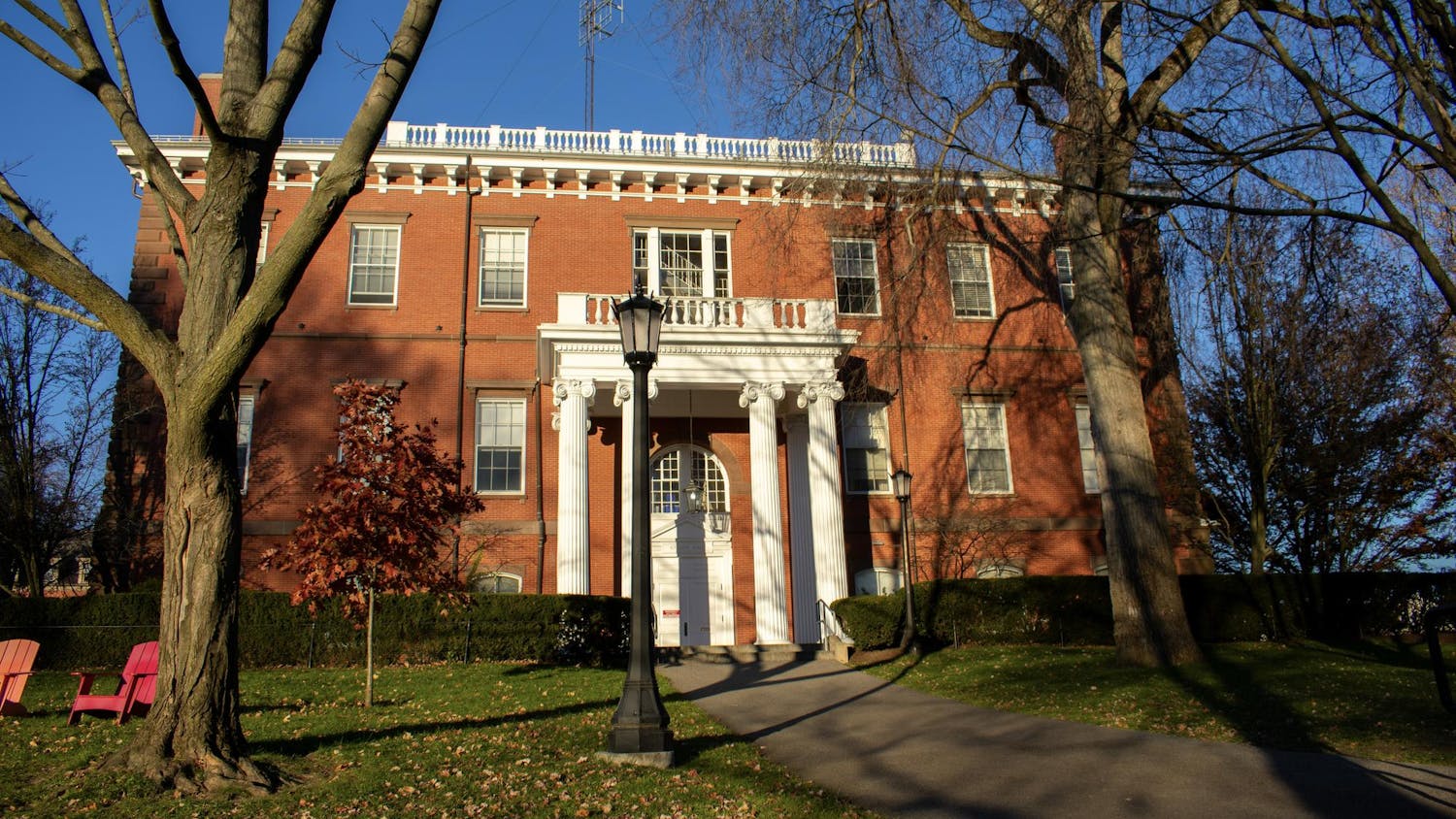
Susan Zuckerman Williams, a media attorney at Loeb & Loeb LLP, gave a presentation titled, What really happens at Sundance? yesterday afternoon at 95 Talbot Avenue.
Williams spoke about her career, the business of film and how to break into the industry.
She began by encouraging listeners to begin following popular media sites, especially TheWrap and Deadline Hollywood in order to stay updated on casting and business news. Williams also recommended following many people on Twitter, estimating that she herself follows between 500 and 700 people for business and social reasons.
Next, Williams spoke a little about her own career. She explained that she started law school hoping to be a litigator. After exploring other types of law, however, she found that she liked being a contract lawyer and specializing in getting deals done instead of defending clients in court.
I liked the goal-orientation, she said. I liked the fact that I spend my day trying to achieve compromise.
Williams added that students hoping to practice law in the entertainment business would do well to start in corporate or commercial finance fields before segueing into areas more closely related to film.
One of the more important points to remember when entering any field, Williams explained, is to find out where the money is.
Were all looking to make a living, she said. I dont want to be crass, and I dont want to dash anyones visions or goals or passions. ... If you want to have kids eventually, youve got to be able to pay for them to maybe come to Tufts.
Williams next discussed the different aspects of entertainment that young people can pursue. She explained that each facet of the industry including film, theater, music and new media is very different from the others. Williams own knowledge lies mostly in the film business, she said.
She explained that the film industry is broken into many different sections. Paramount Pictures, Walt Disney Pictures, 20th Century Fox, Universal Studios, Warner Bros. and Columbia Pictures are the six major studios. Mini majors, such as Lionsgate Films, fall below these studios. There are also several independent distribution companies like Open Road Films and Relativity Media LLC.
Thirty years ago, major studios made most of the movies in theaters, Williams said.
Your goal, when you were writing a script, was to sell it to a studio or a television network, because thats who was making everything, she said.
Independent companies produced were more schlocky films, she said, like lower-budget horror movies.
Nowadays, many movies are only bought by major studios after they are finished, she explained. The Hurt Locker (2008) and The Way Way Back (2013), for example, were created by smaller, independent companies.
Theres a ton of movies that you guys watch all the time that are not studio- produced, and studios take credit for it, she explained.
She said that major studios are looking for large franchise films, such as Transformers (2007), which already have an audience base.
Williams explained that content is the most important aspect of a film, and studios are always looking for new ideas. She illustrated this point with a comparison to the car industry.
You can decide, You know what? I dont need a new car this year, she said. But you cant do that with film. People have a voracious appetite for new content.
Williams also spoke about film screening festivals like Sundance Film Festival and Cannes Film Festival. She attends these festivals not to watch the films, she said, but to set up business deals after the screenings. Business negotiations, like one she acted in for the film Jobs (2013), can take all night to complete.
That deal concluded literally at 5:30 in the morning after the screening, she said. They were really up all night in this bidding war.
Depending on audience reaction, these screenings can also spur or discourage business offers. Filmmakers and financiers must therefore be very strategic about their decisions to participate in screenings, she explained.
Williams concluded her presentation with some general tips for finding a career in entertainment, such as dressing professionally at work and checking emails for proper grammar and spelling.
She said that the most important thing is to always network with people ,because any person you meet could help you in the future.
You never know, and if you dont ask, you dont get, she said.