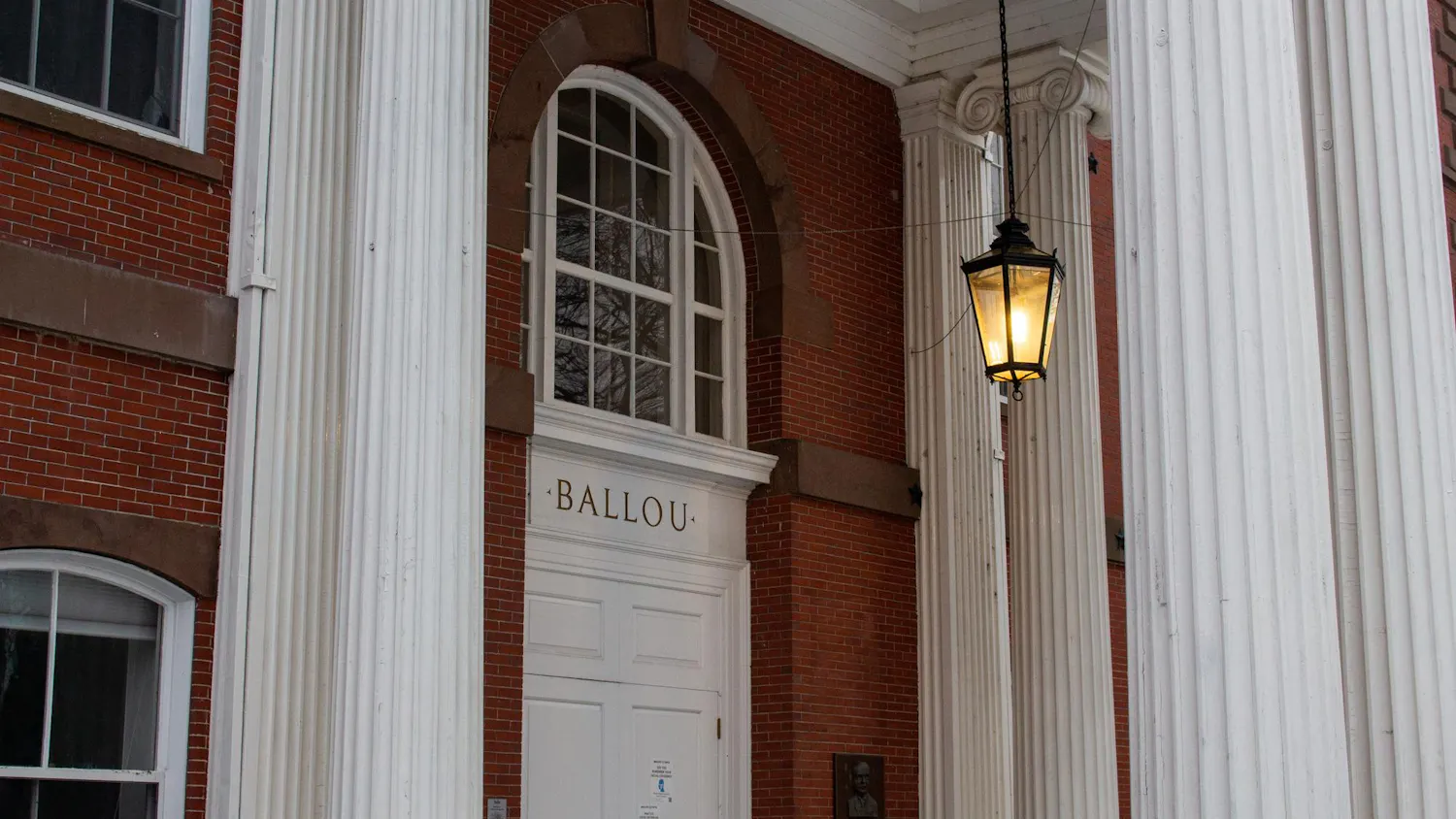
Tufts Democrats last night hosted a forum titled How We Get Where Were Going: A Public Transportation Discussion in Tisch Library.
The panel discussion, moderated by Lecturer in the Department of Urban and Environmental Policy Planning Penn Loh, addressed various issues concerning public transportation and featured presentations by Boston Globe reporter Martine Powers, Somerville Mayor Joseph Curtatone and Transportation for Massachusetts Advocacy Director Lizzi Weyant.
The forum proceeded in a talk show-style format after a brief introduction from Loh. The panelists began by describing their jobs.
Powers discussed being a transportation reporter for the Boston Globe, explaining that such a position is important because transportation affects everyones lives in diverse ways.
Curtatone introduced himself next, describing his experiences as a life-long resident of Somerville.
What drives me from a personal, social and professional perspective is that Somerville was defined by transit up to about mid-century, he said.
Curtatone explained that, with the advent of the automobile, public transit systems died out in Somerville and are only now starting to return. This was detrimental to the citys well-being, he said.
Personally, I have been motivated by that history, he said. This is beyond getting from point A to point B. It is about improving our quality of life. It is about preparing Massachusetts to compete in the 21st century global economy.
Weyant followed Curtatone by talking about her role as a lobbyist. She spoke about her transportation priorities, which include investing in poor, rural areas of the state in order to help people who depend greatly on public transit. She added that climate change must be an essential issue in transportation policy.
After the panelists introduced themselves, a general discussion began. Lohs first question dealt with the issue of funding transportation. After giving some historical context, Loh described the impact of the expensive Big Dig project to reroute Bostons chief highway. The project drew money away from other transportation problem areas, he said.
Weyant then discussed funding in terms of Massachusetts investment needs.
The governor came out with this proposal in January that essentially said what most transportation advocates have known for a long time, which is that we needed about $1.2 billion a year in strategic investments, she said.
These investments were needed for a variety of vital transportation projects that may normally go unnoticed by average people, Weyant explained. Governor Patricks initial request for $1.2 billion, however, was not approved.
We ended up getting an average of about $500 million a year, she said. We did this by raising the gas tax three cents. ... At the end of the day, we had about half as much as we had needed.
Curtatone agreed that the invested money was not enough, but saw it as a positive step forward. He suggested a possible statewide ballot that would aim to garner the full amount of money needed. In regard to the raise in the gas tax, which was considered somewhat controversial, Curtatone argued the tax was fair.
You use, you pay, he said.
The conversation next moved on to a discussion on the proposed UPASS for Boston university students. The pass would allow students attending participating schools to ride on the T for free. The panelists were generally favorable to the concept.
Powers commented on the link between housing and public transportation.
The first thing you are looking for [in an apartment] is how many minutes it is to the T stop, she said.
At the end of the discussion, audience members had the opportunity to discuss related issues with the panelists. Questions covered topics such as the possibility of a Green Line stop near the Tufts campus, affordable housing and its connection with transportation and security issues on the subway.
Regarding the Green Line extension, Curtatone emphasized that the project would definitely happen within the next five years.
It is coming, he said. It will happen. The game plan right now is [to have the stop by] 2018.
After the forum, members of Tufts Democrats thanked the panel participants for sharing their opinions and ideas. Lucas Conwell, a member of Tufts Democrats, believes that the panel was beneficial to the Tufts community.
The panel was a great way to educate Tufts about an important issue that we dont talk a lot about, Conwell, a sophomore, said. I hope this can be the start of a bigger conversation on the Tufts campus.