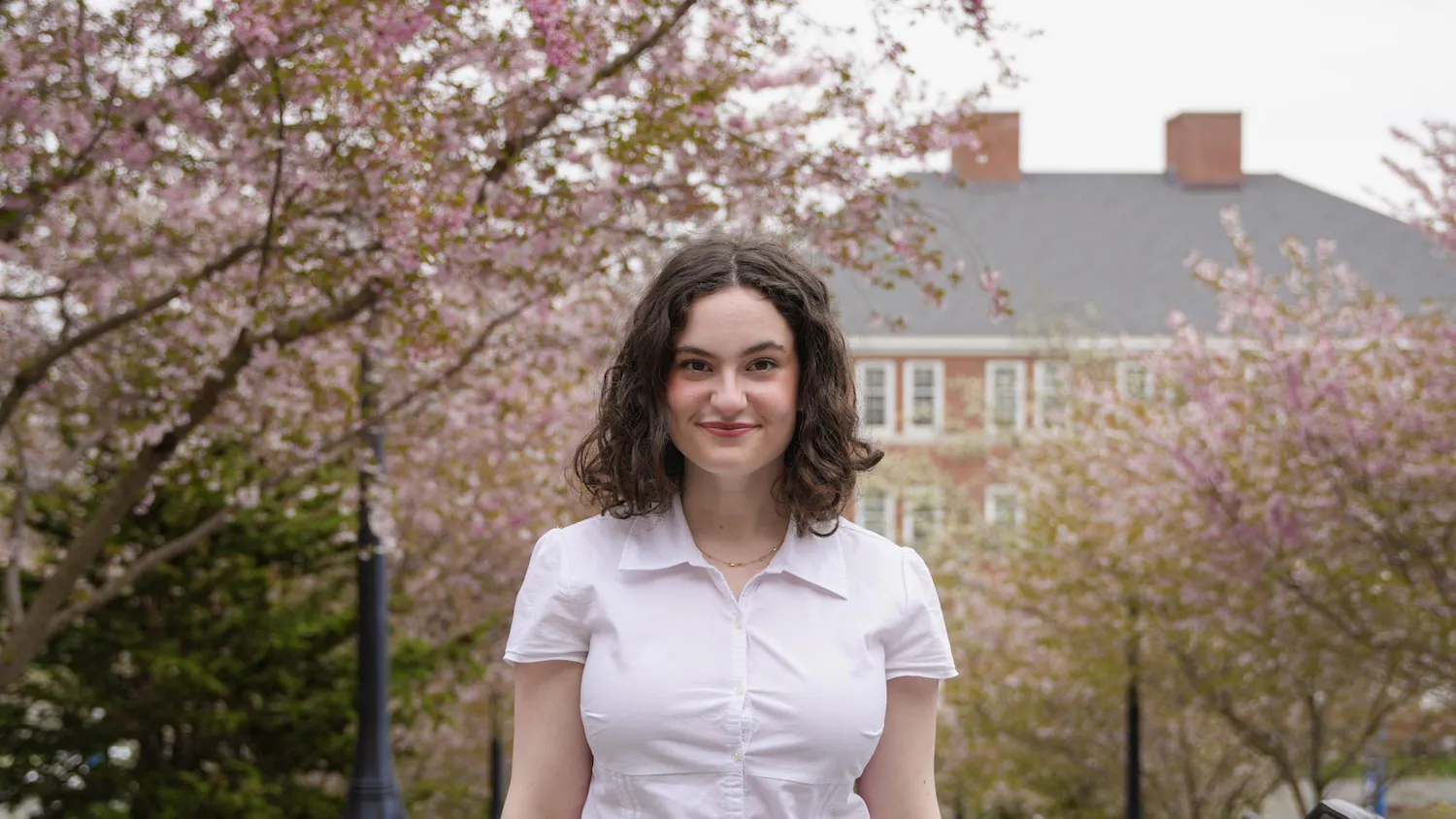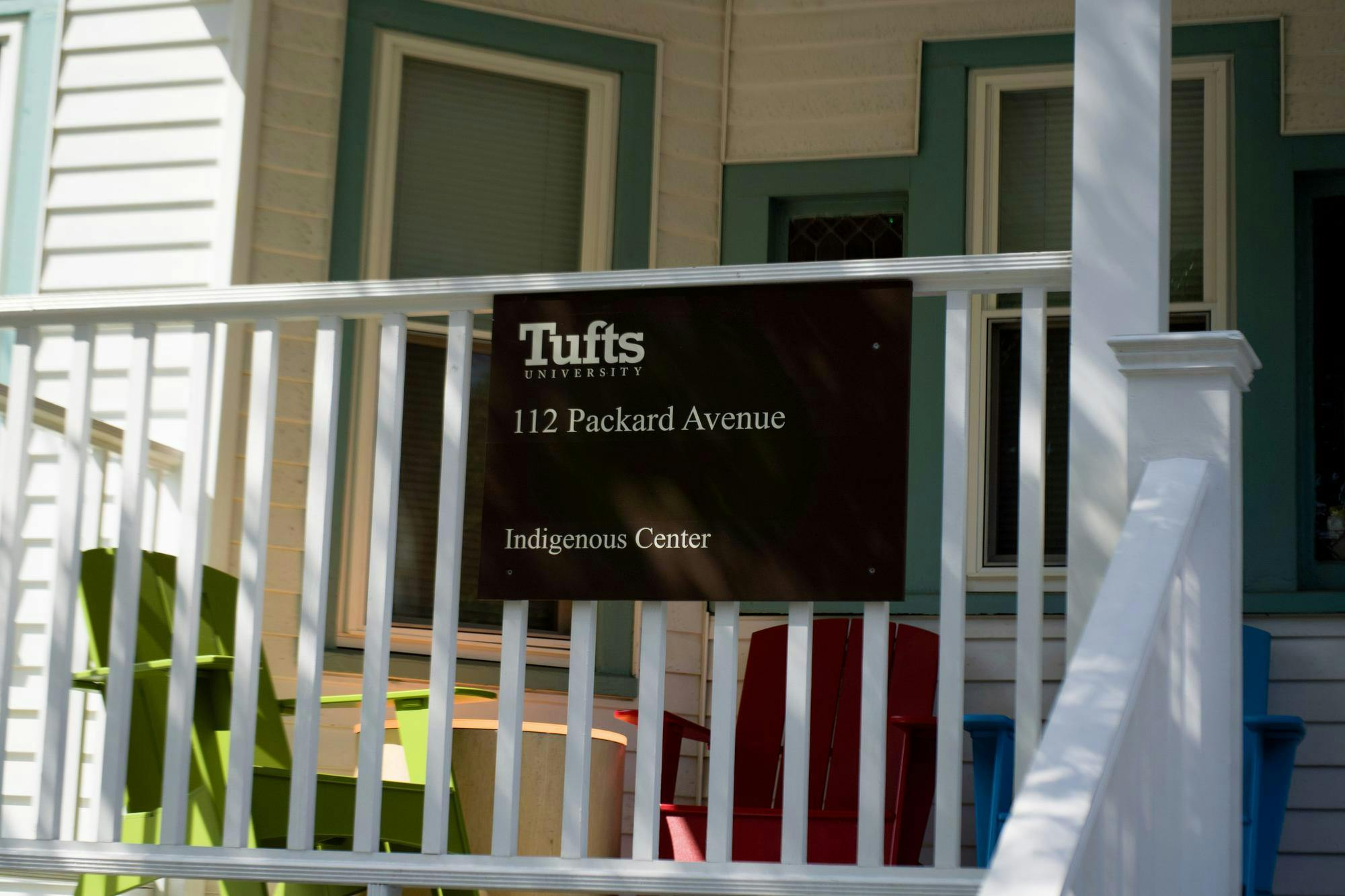
When senior Vanessa John toured Tufts in the spring of her last year of high school, she was met with the very beginnings of the university’s newest affinity space: the Indigenous Center. The center, which had been approved in fall 2021 and opened during spring 2022, promised to be a welcoming, open space for both Indigenous students and anyone else who wanted to learn about Indigeneity. However, back then, the center still had a long way to go.
“The IC in the spring [of 2022] was clearly newly established,” John wrote in an email to the Daily.
However, by the fall, the center was well into the process of becoming the warm, homey space that its frequenters have come to know and love, with John writing that the space had become “filled with Indigenous-made art, textiles and other cultural representations and most importantly, people.”
In the three years since, the center has become the hub for workshops, community building and events centering Tufts’ Indigenous community. The students who were first-years during the center’s inaugural year are now seniors. As the center continues to evolve, the students who helped shape the center into what it is today reflect on its accomplishments and what they hope is to come.
Both John and senior Sam Jonas have played integral roles in the center’s success. As Indigenous Center interns and previous co-chairs of the student-run club, the Indigenous Students’ Organization at Tufts, John and Jonas have been at the helm of organizing many of the center’s and club’s events. One of the most notable is the Indigenous Peoples’ Day event that takes place annually in mid-October, which welcomes Indigenous vendors, caterers and performers to Tufts for a campus-wide celebration of Indigenous culture. Last year’s event was the biggest yet.
“It can’t be understated how important [last year’s event] was and how big it was,” John said. “When I was a [first-year] … the budget was a lot less. We had one or two performers and then I think [one] caterer.”
John later added in a statement to the Daily that the limited budget in the early years of the event was due to “institutional obstacles [the club] faced in receiving funding.” In contrast, last year’s Indigenous Peoples’ Day event hosted several performers, two caterers and over 20 vendors, a reflection on how much the event has grown.
In addition to supporting Indigenous businesses outside of Tufts, the event also gives students the opportunity to participate. Junior Pono Merryman has been a vendor at the event for the last two years, selling items they have crocheted.
“[The Indigenous Peoples’ Day event] is a huge achievement because it’s not a very big group putting on such a big event, so being able to foster that community and have all the contacts outside the school … the celebration has just gotten bigger and bigger,” Merryman said.
For Jonas, this connection between the Indigenous community at Tufts and the rest of the student body has been a highlight of the Indigenous Center.
“We’ve received some really amazing feedback about how it’s grown and how people have come and learned so much, and so that’s really felt meaningful to me,” Jonas said.
In fall 2024, the center hosted the IndigiBaddie Mixer, an event open to all Indigenous college students in the Boston area. Participating schools included MIT, Harvard, University of Massachusetts Boston, Wellesley and Brown.
“It was a big turnout, the Indigenous Center was completely filled, and that was one of the first times I’ve met a lot of the Indigenous students in Boston,” John said. “Say somebody from our nation or tribe isn’t at Tufts, well, maybe there’s somebody at Harvard who shares that kind of history and that kind of identity … and it was really only facilitated by having the physical space of the Indigenous Center.”
Courtney Mann, a junior and intern at the center, also noted the importance of Indigenous students having a physical space on campus that they can call their own.
“It’s just such an amazing opportunity that we have a community here and that we can expand through New England and invite our brothers and sisters over. That’s the highlight of the IC for me,” she said.
Having a dedicated space on campus also allows students to express their culture and foster community in ways that would not have been possible otherwise. This includes the student mixer, but also projects such as the center’s garden that was started last spring, which allows students to utilize and tend to medicinal herbs, vegetables and other plants.
At its core, the Indigenous Center serves as a space for students to study, talk or simply visit at any time.
“I won’t go [to the center] for a while, and then I’ll go back into my routine and I’ll go frequently for a bit,” Merryman said. “If I sit in the common area, I know probably at some point somebody’s going to come in that I know and we’ll talk. … The environment is really comfortable.”
This year, the center has six student interns, in addition to Indigenous Center Director Vernon Miller and Program Administrator Victor M. Aguilar. The team is slightly smaller than in past years, which is likely in part due to the seeming decline in Indigenous students attending the university. This decline comes as a series of federal decisions have led to a widespread scale-back in Diversity, Equity and Inclusion initiatives and the promotion of students of color at higher-level institutions.
Among these decisions is the Supreme Court’s ban on affirmative action in June 2023, which barred universities from considering race as a factor in admissions decisions. Tufts admitted 95 Indigenous students to the Class of 2027, the last class before the ban on race-conscious admissions, which made up roughly 3% of the overall admitted class. The Class of 2028 saw only 22 Indigenous admitted students, or roughly 0.6% of the admitted class. Data for the Class of 2029 is not currently available.
“For Indigenous people who are already a very underrepresented community on college campuses, that is a huge difference,” John said. “When we are represented in demographics, we often don’t get a percentage. We get a number because our percentage is so low in comparison to other communities.”
In addition to the end of affirmative action, President Donald Trump’s administration’s strikedowns of DEI initiatives have also hit affinity spaces at universities hard. In February, the Department of Education issued guidance that prohibited colleges from conducting race-based programming or activities. While this letter was vacated by a federal judge in August, citing it as unconstitutional and unlawful, its content pushed many schools and universities nationwide to scrub away or rebrand DEI efforts to avoid funding cuts.
Although the Indigenous Center has maintained its mission of amplifying Indigenous voices and creating a safe space for Indigenous students during this time, John has noticed a shift at the center following these rollbacks.
“Of course I’ve noticed a change [at the center]. I noticed a change [in] that people can’t express themselves the way that they could have. And of course, it’s an ongoing history from being Indigenous in the [United States]. It is something that has taken a lot of resilience and resistance because there has been so much discrimination and hate towards my community,” she said. “It’s not something that comes out of left field, because the American political scene is so fickle with who it decides … is okay to live in the [United States].”
However, the nation’s fraught political moment has not deterred students from continuing the mission and programming of the center.
“We’re not going to change any of the ways we advocate for things, [or] any of the ways that we frame things,” Jonas said.
The Indigenous Center is looking towards an ambitious semester, with a plan of putting on at least two events each month. This includes the Indigenous Peoples’ Day event, which will be held on Oct. 12, but also events such as collage vision board making on Friday and Fruity Paint Night on Monday, an event organized by Jonas for students to paint while enjoying fruit with Tajin and chamoy.
Jonas maintains the importance of having the center on campus, especially at an institution that has not historically centered Indigenous communities.
“It’s tradition for the Indigenous seniors to leave their handprint on the walls of the IC. And when I was a [first-year], there weren’t too many handprints on the walls because it was a new center. But now I go in there and it’s tripled,” she said. “These institutional spaces weren’t built with Indigenous communities in mind. They weren’t built with the intention of having Indigenous students succeeding. So it’s super meaningful for me.”
Jonas hopes that when she returns to the center in the years to come, it will have continued to serve as a space for Indigenous students to find community and solace in.
“I want to come back to visit the Indigenous Center in 10 years, and I want to see the walls full of more of those handprints of Indigenous students who have graduated,” she said.