
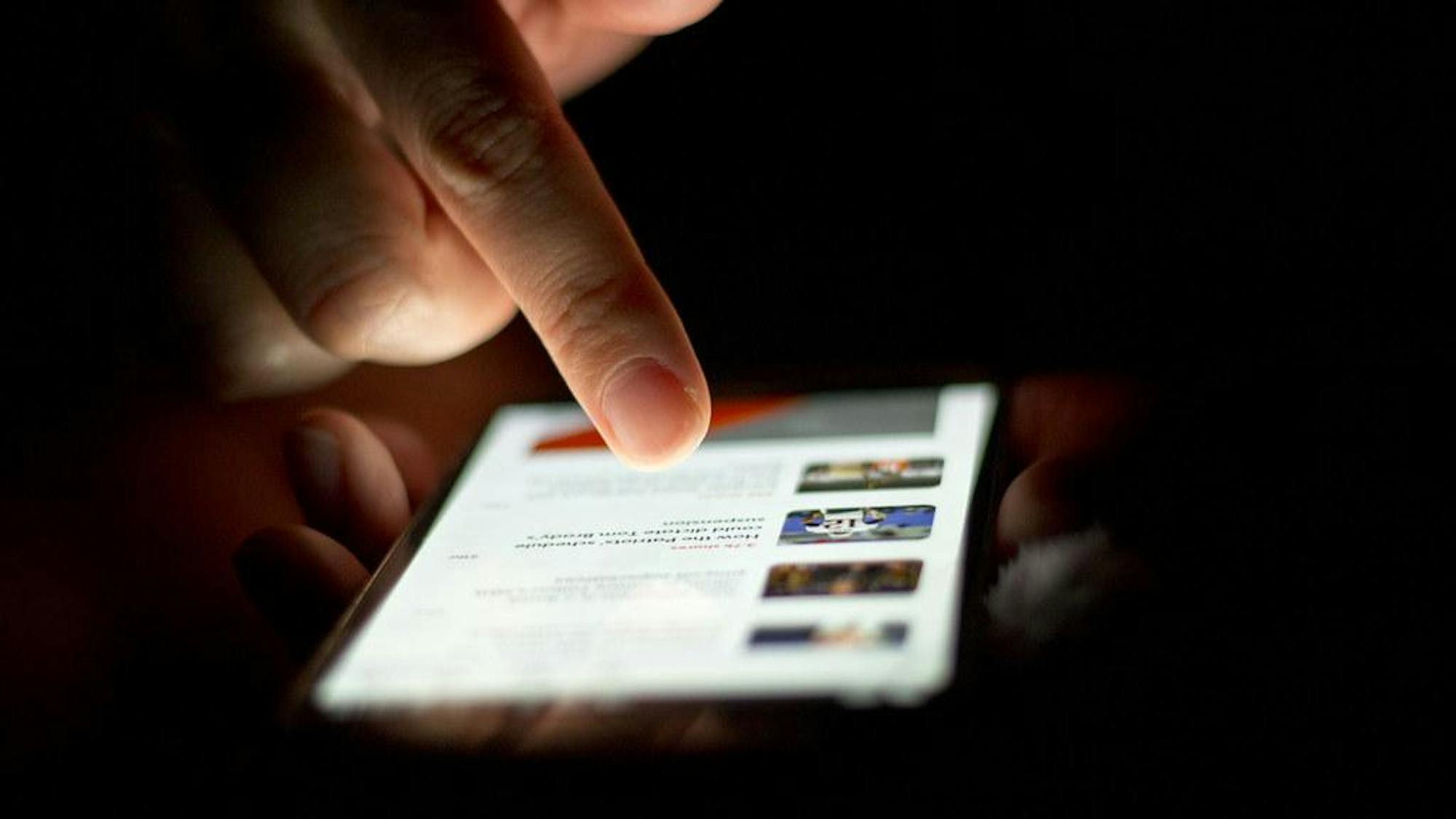
Once I submitted my last final and the freedom of summer washed over me, I made a radical decision: I would not spend a single second of break doomscrolling. Pulling out my deteriorating phone, I gleefully deleted all my social media apps, committing myself to saving my attention span and being morally superior to my peers. But it only took one 40-minute layover on my flight home for me to supplement my need to scroll with another vice: obsessively checking the news.
When I initially detoxified my phone, I only kept the apps I couldn’t live without, namely iMessage and Shazam, for when I’m in a car with people and too nervous to ask what song is playing. This also included The New York Times and The Washington Post to make sure I knew if a meteor was hurling towards earth or that Jason Momoa prefers to be called a ‘sensitive alpha male.’
Yet, soon I found myself constantly checking the news the way I once did with social media. Only now, instead of falling asleep to Sydney Sweeney discourse, I would lie awake thinking about the destruction of our democracy.
It was only a matter of time before headlines of worsening climate catastrophes blurred together, photos of war zones morphed into one and I soon lost track of which governmental agencies had been cut. Still, I saw no problems with my endless consumption of the news. Sure, I woke up feeling an impending sense of doom every morning, but wasn’t this my moral obligation as a citizen of the world? As Former President Thomas Jefferson once wrote, “A well informed citizenry is the best defense against tyranny.” While Americans watched the sitting president attack his political rivals, deploy the national guard in U.S. cities and unjustly deport immigrants, Jefferson’s words felt more relevant than ever before.
But instead of feeling invigorated to take action — with a picket sign in one hand and my other dialing the phone number of my local representative — I felt hopeless. When there’s an avalanche of catastrophe, doing something begins to feel pointless. Sure, I could go protest, but wouldn’t I just come back home to the next depressing headline?
Maybe I’m a pessimist who’s destined to wallow while listening to NPR for the next four years, laughing only when Gov. Gavin Newsom tweets.
Or maybe, I’m simply not meant to spend all my waking hours reading the news.
It’s only a relatively recent phenomenon that humans are able to endlessly consume the news like an all-you-can-eat buffet. Prior to the internet, news was circulated through the morning paper, the radio or TV — sources that all inherently had some degree of limitation on the quantity of content or on the rate at which you could engage with it. The ability to refresh a website or listen to an endless array of political podcasts wasn’t an option, restricting the amount of news one was able to read.
Call me a Luddite, but I believe there’s some benefit to how we once stayed informed. With the seemingly never-ending stream of information we’re exposed to, ‘news fatigue’ has increasingly become a problem. By contrast, the restrictions of traditional media formats made it more difficult to become overwhelmed by the news. Studies have found that excessive exposure to the news can lead to chronic stress, and therapists agree that news consumption can negatively impact one’s mental health. For those of us who have grown used to watching the world burn from our laptop, taking a step back from our steady news regiment is perhaps for the best.
However, I’m not advocating for going off the grid and just hoping someone sends you an email if there’s a new pandemic or if one of the actors from “Friends” died. Like Jefferson, I believe that being cognizant of the present attacks against democracy is essential for this country’s survival. But finding a healthy balance — somewhere between being entirely disconnected and a hypervigilant doomsday prepper — is necessary to ride out the storm.



