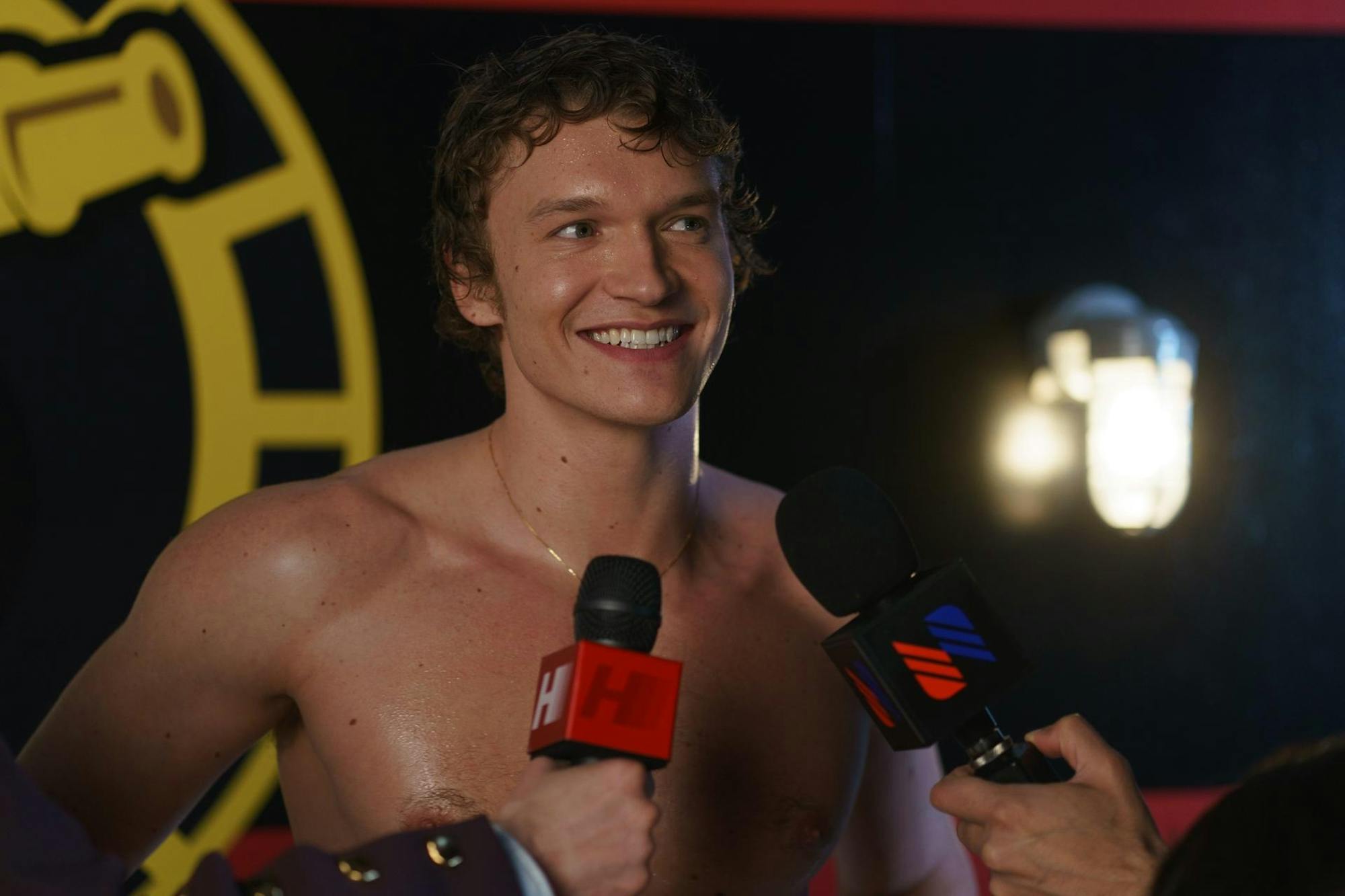
Since its debut on HBO Max, “Heated Rivalry” (2025–) has amassed an astonishing 10.6 million U.S. viewers, with the two lead actors, Connor Storrie and Hudson Williams, achieving instantaneous Hollywood-level fame. The two experienced complete culture shock as they went from being everyday, run-of-the-mill restaurant servers to presenting at the Golden Globes, with Connor Storrie going on to host SNL and Hudson Williams appearing as a guest. While I expected “Heated Rivalry” to go platinum in queer communities, I never anticipated this level of fame or appreciation from the general public. Looking back, I should have. This insane surge in viewership and fan appreciation paralleled that of “Red, White & Royal Blue” (2023), a drama about the gay romance between the First Son of the United States and the Prince of Wales.
While queer audiences do consume and love these forms of queer media, it’s impossible to ignore the fact that “Heated Rivalry,” a show about gay men, went platinum with straight girls, who made up the majority of the viewers by the end of 2025. “Heated Rivalry” is a perfect springboard to unpack the fetishization of gay men in queer media and subsequently evaluate why gay media is so popular, while sapphic media slips through the cracks.
Even in articles purporting to support it, the show is diluted to its sexual scenes and its ‘steamy’ nature. Critics often completely ignore the fact that, at its core, “Heated Rivalry” is a gut-wrenching drama about the traumatic experience of being closeted in a homophobic and heteronormative space. The story ultimately follows the characters as they build the courage to be outwardly queer and choose love. I find it sickening that this storyline is watered down to a sex show for straight women that offers an ‘alluring’ opportunity for them to impose themselves upon a queer romance. This romance isn’t for straight women. While I agree that it should be shared with and appreciated by non-queer audiences, it’s not an opportunity for straight women to enjoy observing gay sex.
This surge of female support, if we’re being realistic, is likely what made “Heated Rivalry” the pop culture phenomenon it is. What I find so intriguing is that this level of fame would never transpire with a sapphic show or movie. Viewership of the third season of “The L Word: Generation Q” (2019–2023), the sequel to the hit show “The L Word” (2004–2009), reached only a dismal 67,000 viewers compared to the staggering 10.6 million viewers of “Heated Rivalry.” While “Heated Rivalry” amasses support from both queer audiences and straight women, shows like “The L Word: Generation Q” and films such as “Bottoms” (2023) and “But I’m a Cheerleader” (1999) are largely created by and for sapphic audiences. As a result, they rarely enter the mainstream cultural zeitgeist in the way “Heated Rivalry” and other films about gay men have.
When pondering why these sapphic films would never amass such a fanbase among the opposite gender, or even a large fanbase of straight girls, misogyny presents itself as the answer. Straight men and women likely don’t particularly want to watch a heartwarming romance about two women simply because masculinity has been marketed so intensely. Consider the Bechdel test, which asks whether a film has at least two named female characters talking to each other about something other than a male character. Male-focused media is so widespread that a test had to be invented to assess whether a film even fully develops its female characters. Thus, unfortunately, it makes sense that a film wholly about a relationship between two women would never reach the same astonishing levels of fame as films about gay relationships have.
Ultimately, the surge in “Heated Rivalry”’s fame points to the fact that gay media has been heavily co-opted by straight, female fans. This fetishization of gay media also presents an opportunity to examine why sapphic media has never — and, in my opinion, will never — reach the same level of fame, no matter how much I wish it would. To combat this, I urge straight and queer consumers of media alike to appreciate, not fetishize, queer romance, whether gay or sapphic.