
“Being a performative man just means being a man of the century.”
First-year Christian Hess shared this sentiment at Tufts’ inaugural performative male contest on Friday. Hess, a competitor, shared what performativity means to him.
“Being a performative male means … being able to express my love for feminism and being able to express my love for matcha,” Hess said.
But beyond feminism and matcha, what exactly is a performative man?
The New York Times describes the so-called ‘performative male’ as a man who comports himself in a way — or performs, rather — to make himself more appealing to progressive women. To do so, many men express a distaste for periods and the patriarchy and an interest in things oft-deemed either effeminate or feminist, like drinking matcha, listening to particular music artists (e.g., Clairo or Beabadoobee) and reading feminist literature (preferably multiple books at once).
Performative male competitions, much like the celebrity lookalike competitions that took the country by storm last year, have reached major U.S. cities as well as college campuses like Yale, Syracuse and now Tufts.
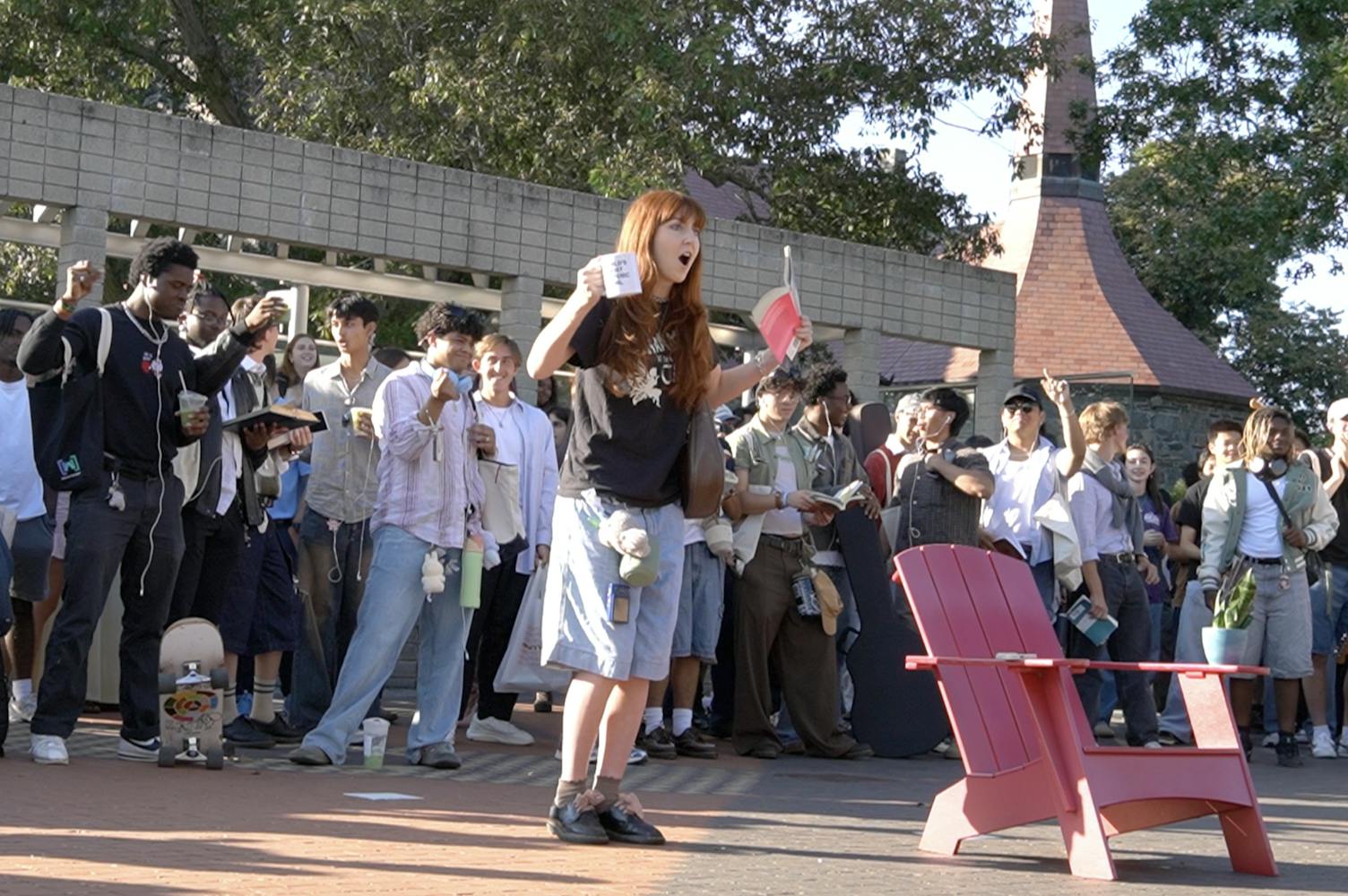
Over 200 spectators gathered on Tisch Roof to watch dozens of Tufts students vie for the crown of being Tufts’ most performative man.
Inigo Herraiz, a first-year, was eager to participate.
“When I heard we had a performative [male] contest, I couldn’t believe it, and I said, ‘I have to go. I have to find more performative males,’” Herraiz explained.
Cyrus Lerner, another first-year, agreed.
“I’m here to really find my people. There aren’t many performative males like me out there, and I wanted to make some friends,” he said.
First-year Meggie Stenback was also excited to participate, especially as one of a select few non-men in the competition.
“You may think I’d be at a kind of disadvantage in the competition given the fact that I might be the only one who’s not a man in the performative man contest, but I truly believe that … we’re all performative,” Stenback said. “Performative men, they love what ‘soft women’ like, so Clairo, Beabadoobee, the tote bag, the jorts, just everything I’ve been rocking, you know? I feel like, if they’re trying to performatize my culture, why can’t I just get in there?”
A number of students did not cease performing when interviewed, suggesting that the performative man archetype is, for them, an authentic lifestyle.
“I don’t even really think about [being performative]. It’s just so natural for me,” Lerner said.
First-year Em Fritz felt similarly.
“It’s not even a performance, really. It’s just our lifestyle,” he said.
Others, though, were clear that they were strictly performing. First-year Rohaan Iyer prepared himself to share in the interests of performative men, but he ultimately divulged that he doesn’t actually enjoy them.
“I just really like matcha lattes and Clairo and Beabadoobee. … That’s a lie, I don’t. I like iced lattes. I like Erykah Badu. That’s a little bit more underground,” Iyer said.
First-year Sasha Foster admitted that he was not actually enjoying the matcha in his hand and described it as “low-key nasty.”
When asked to describe women in one word, performers expressed high praise. Iyer chose “sexy,” Herraiz said “everything,” Lerner said “perfect.” Hess suggested two words: “greatness” and “celestial.”
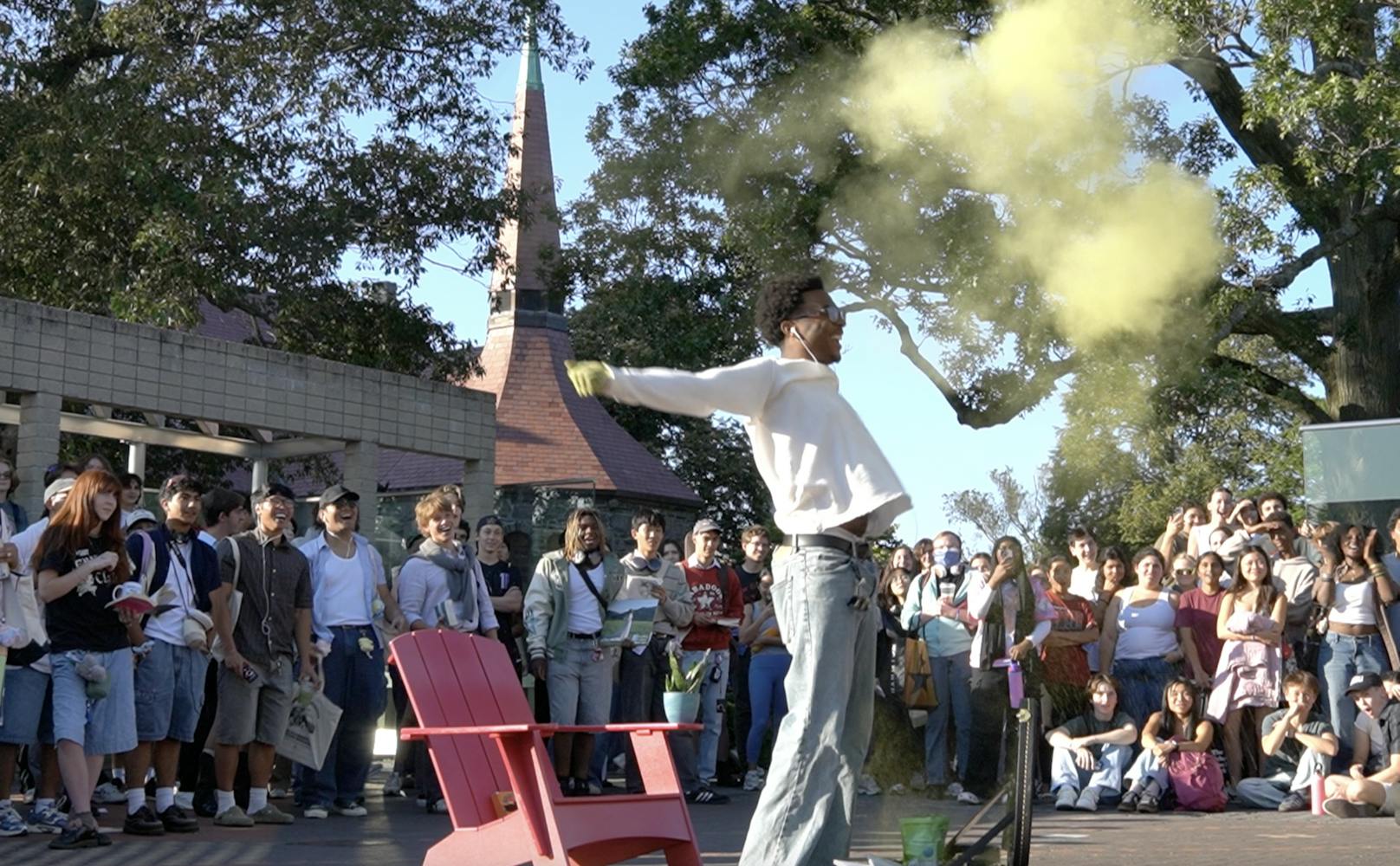
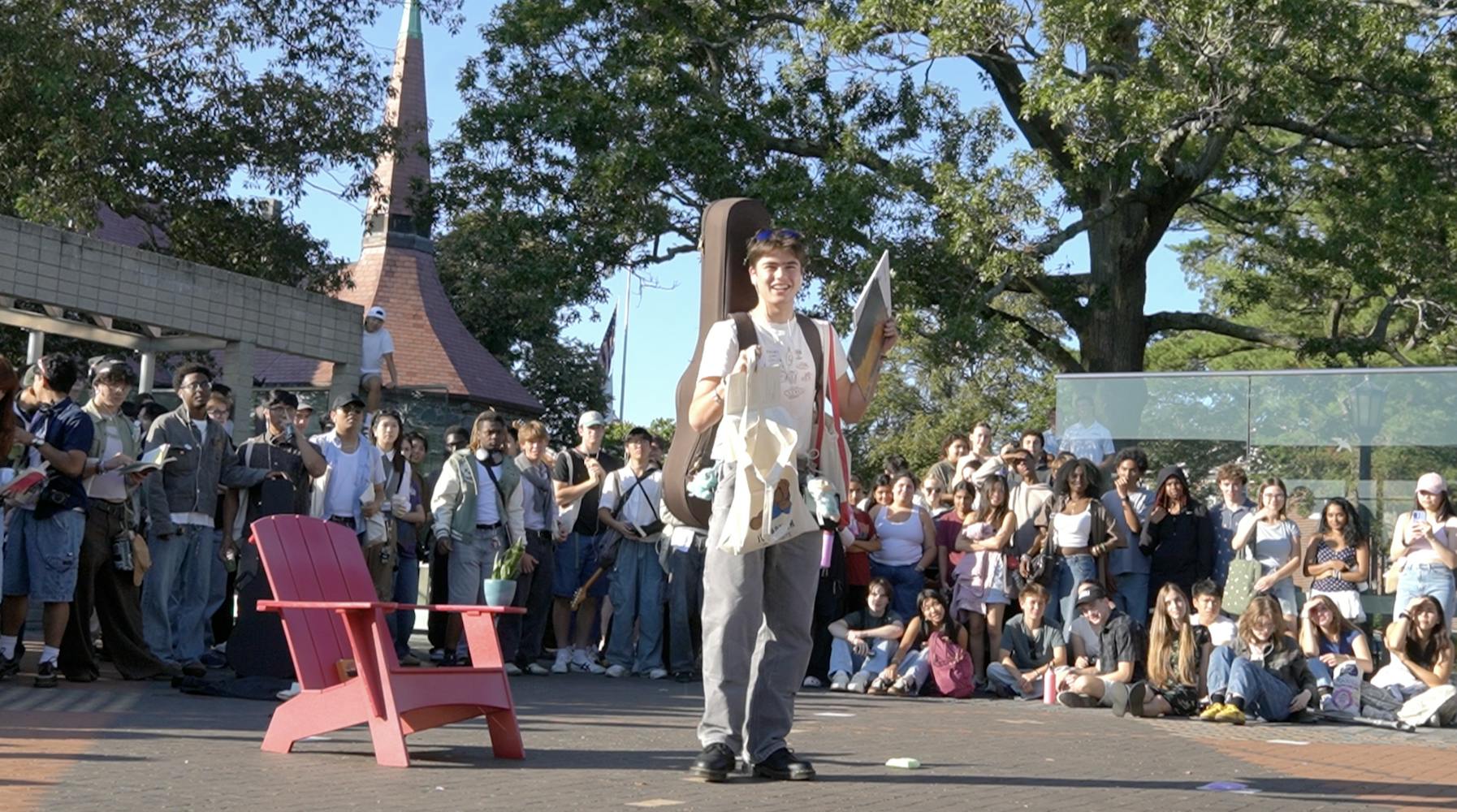
Each performer was granted 30 seconds to perform for the crowd however they saw fit. Some performers focused on the difficulties of menstruation and led the crowd in chants like “We hate periods!” or “F--- the pink tax!” One performer threw a fistful of matcha powder into the air, and Stenback pretended to snort the remnants off the ground. One of the last competitors performed a guitar solo. A number of performers also came equipped with menstrual products and threw them into the crowd.
First-year students Alana-Kaye Morgan and Mila VonderHaar were spectators at the event. They found out about the event from posters around campus.
“I saw the poster, and I was like, ‘Yeah, I’m going,’” VonderHaar said.
Although the performers were trying to gain audience approval, VonderHaar emphasized that performativity is all about surface-level feminism, and Morgan admitted that the tampons and pads flying through the air caught her off guard.
“We didn’t appreciate the projectile launching of period products,” Morgan said.
Iyer, himself a performer, noted that the performative men were, perhaps, not contributing to the feminist cause.
“I feel like the fact that there’s this many men in one place is already not feminist,” he said. “I feel like it’s counterproductive.”
The event was organized, advertised and emceed by sophomores Ava Reijmers and Dhriti Swamy. They were inspired by performative male contests they saw elsewhere.
“We saw it on TikTok, and we thought it looked pretty interesting. And we figured at Tufts especially, there were a lot of performative males, so we thought there would be a very high success rate,” Reijmers said.
“We were just sitting in our dorm one day, and we were like, ‘This would be perfect for our school,’” Swamy said.
Reijmers and Swamy timed each performer and, after everyone had been granted their 30-second time slot, selected their top 10 performers. They used audience cheers to gauge the ultimate winner, and the honors ultimately went to Stenback.
Overall, Reijmers and Swamy were pleased with the turnout.
“It really, really exceeded expectations. We were not expecting so many people to come, and it was a little nerve-wracking to show up and see all these people … but it was definitely exciting,” Reijmers said.
“We’re just so glad people came and were so enthusiastic about everything,” Swamy said. “It was a lot of fun.”
Reijmers expressed hopes that the event could return next year.
“It was a really good time. We could even make it an annual thing. … Maybe next time we have even bigger prizes like free matcha for a year,” she said.
The performers enjoyed the event as well. Fritz noted that they enjoyed the company of the other contestants and expressed interest in getting to know them beyond their performativity.
“It was a nice community on the roof,” Fritz said. “All the people who performed — I want to meet them out of character and be friends with them.”



