
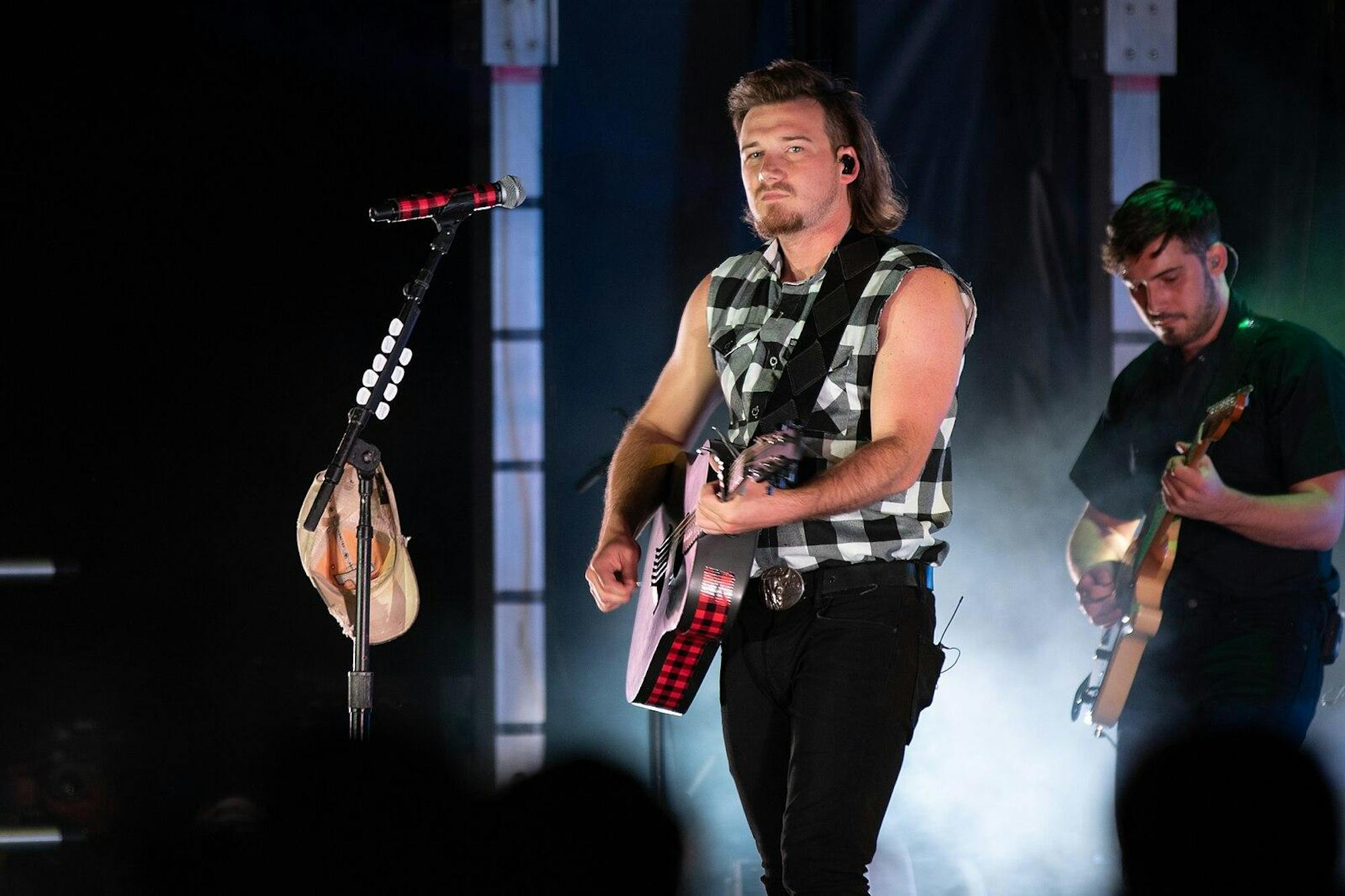
Lately, country music has felt somewhat inescapable. Songs from Morgan Wallen’s new album hold multiple spots on the Billboard Hot 100 while echoes of a country twang have made their way into Sabrina Carpenter’s recent music. Country’s spreading influence is visible in Beyoncé’s Texan homecoming, Noah Kahan’s seemingly overnight fame or the success of Shaboozey’s hit “A Bar Song (Tipsy).” In a 2023 study on popular U.S. radio content, songs falling into the genre of country composed 41% (second highest to the grouped category of rock, alternative and indie) of music on the radio. That’s a percentage even higher than pop.
But the increased role of country music in popular culture has done more than just top charts and stylistically influence pop artists. Zach Bryan’s discography, while continuing to make headlines and break records, has also sparked controversy. After Bryan posted a video singing a portion of his newest song, responses revealed the precarious political role of country music, and what is expected of country artists.
The song is overtly political, entitled “Bad News,” featuring lyrics “ICE is gonna come bust down your door” and mentioning a “fading of the red, white and blue.” Backlash was immediate; “Bad News” was renounced by supporters of President Donald Trump and government employees alike. Bryan’s very career came under fire as the song was deemed “a desperate Hail Mary” from a man whose “non-career is in the toilet” by angry commenters beneath the post.
Bryan, though a white, Southern veteran, proves an exception to a pattern in country music outlined by multiple critics after Trump’s win in 2024. In one such Rolling Stone article, Marissa R. Moss connects country music’s rise to that of American conservatism, claiming that country’s musical success was a clear indicator of the election’s winner. “The rise in popularity of the genre among folks that used to pledge listening to ‘anything but country music’ was the red flag flapping in the wind,” she wrote.
Country is often considered to be representative of a conservative American lifestyle. But a song seeming to oppose U.S. Immigration and Customs Enforcement coming from one of country’s most popular contemporary artists suggests a different picture: one of a genre at war with itself.
To understand country’s turbulent history in politics, it’s helpful to first review a (very brief) history of the genre. Country music has roots in minstrel and vaudeville theatrical genres. It has distinctly Southern origins and is generally considered to have been popularized by settlers from the U.K. in the Appalachian region. Though distinctly American, country rapidly spread across the world. It is now popular globally, and there are famous country artists from Canada, New Zealand, Australia and other countries outside of the United States Willie Nelson, an icon of American country, once said that country music “comes from the soul of America, but it has gone around the world.”
As suggested by its origins, country represents the collision between the musical traditions practiced by African Americans and those brought by British and Irish settlers to the early South. From the very start the genre was an engine for social change, providing commentary on issues of both class and race.
Artists like The Chicks and Dolly Parton have kept this tradition alive and well through their music, though they also often face backlash for their vocal political criticisms. But while some artists used country as a vessel for vocalizing progressive views, the simultaneous release of popular songs like “Chicken Fried” and “Wagon Wheel” solidified an image of country music as being less adversary. These songs lean into their distinctly middle-American visuals, very rarely making weighted statements and often embracing a carefree love for Southern landscapes, foods and booze. For the most part, the only hardships these songs explore are romantic ones.
This marks the divergence between the history and political traditions of country music and the Southern conservatism that it’s associated with today. This conflict was evident in the ’70s through the outlaw movement, a subgenre of country that intended to rebel against the restrictive Nashville sound, and continues to prove itself true in every new headline about a country star’s recent political controversy. The genre is toeing the line between its inflammatory political traditions and easy-listening songs about red Solo cups and mutually destructive romantic relationships. Bryan’s rousing new lyrics have only helped to illuminate this battle further.
As country has trickled further into the mainstream, left-leaning listeners are attempting to reclaim the genre. Across social media, users post videos in Canadian tuxedos to country songs, with captions that clarify that they’re adopting the aesthetic “in a liberal way.” Now that the genre has avid listeners from both sides of the ballot, what is to become of it? One thing is clear: Country music is, and has always been, a microcosm of the United States. Its future depends on its ability to unify in the face of colliding cultures to build a new sound. Hopefully, it just doesn’t forget its history in the process.



