Only a few weeks ago, one of my roommates asked why people are calling President Donald Trump a “fascist.” My roommate wondered how, if American conservative ideals are so rooted in limited government oversight, free trade and the supposed ‘truth,’ Trump could ever be labeled as fascist. This made me think — are we too quick to judge, or should Trump’s tendencies really be flagged as the beginnings of a fascist regime?
Fascism is defined by ultranationalism, militarism and authoritarian tendencies that violently censor speech, information and opposition groups. This strict definition could lead one to believe that Trump is not a fascist, and that labelling him as one may even be ignorant of history. Fascism is heavily characterized by alienation and the scapegoating of ‘inferior’ ethnic groups, as well as by intense economic control. The tendencies exhibited by Trump — such as calling Democratic leaders “losers” and blaming job losses on illegal immigrants — are not yet at the extreme levels of past fascist regimes that violently persecuted opposition and minorities. The vast majority of Americans are still free to live, protest peacefully and vote, all without being entirely dissuaded from doing so by the government.
However, the most important aspect of ‘fascism’ missing from the common definition is that it is a process, developed and shaped over time. Many say that labeling Trump as a fascist is too extreme, but historians argue that fascism typically starts small. Although Trump has not entirely consolidated central authority, his actions — and the support from his constituents — mark a turning point in American politics. There should be no acceptable amount of fascism.
In both presidencies, Trump campaigned on “making America great again,” blaming immigrants and minorities for job losses and gang violence. He pointed to Democrats as “evil” and claimed the U.S. had become “poisoned,” infiltrated by people not aligned with the MAGA movement. Trump’s rhetoric and excessive scapegoating in these circumstances consistently blame groups opposed to him, marking the first major parallel to fascism.
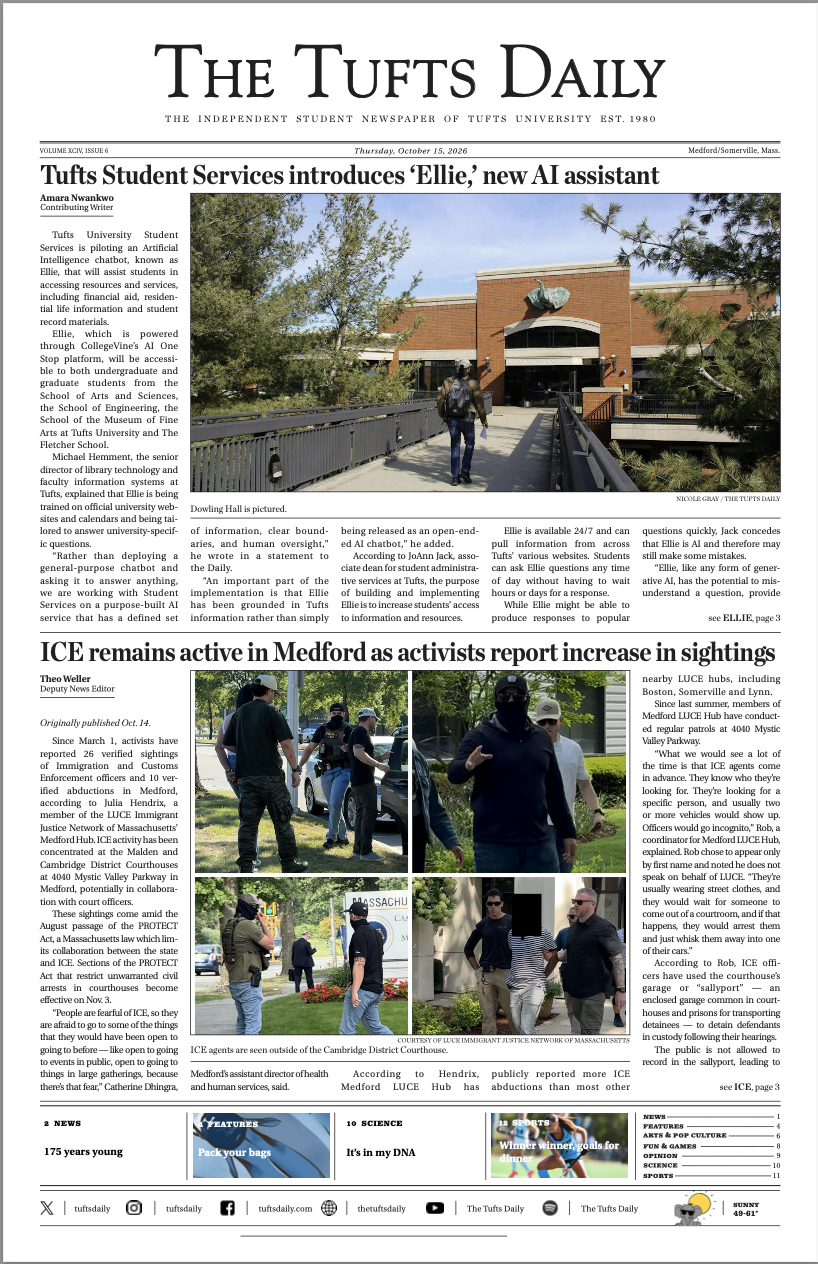
Trump’s blatant attacks on free speech, media and access to information have also been likened to trends in earlier fascist regimes. He continuously disguises these actions with empty promises and executive orders claiming to “end censorship,” which mirror — to a lesser extent — the early foundations of fascist Italy. His latest moves to pressure critical media companies exemplify continued encroachments on the First Amendment and the fascist tendency to undermine an established constitution.
Trump’s unequivocally violent rhetoric since the 2020 election marks the largest parallel to fascist regimes. From allegedly inciting an insurrection through mobilizing statements and false claims to militarizing the National Guard in Democratic-runcities, Trump’s use of violence against the American people has demonstrated strong similarities with the more egregious “Blackshirts” and “Brownshirts” armies of fascist Italy and Germany.
The bottom line is that Trump is not a fascist, but his potential to become one is ever increasing. Much like the fascist regimes of the past, he is laying the foundations and constructing an environment where fascism can thrive. Using the inconsistencies of the left, he normalizes hate, violence and the spread of misinformation across the U.S. His divisiveness and exploitation of opposition grow his base and strengthen the next generation of his followers. The term “fascism” is thrown around not necessarily to accuse Trump, but to emphasize the very real consequences of his actions.