Skip to Content, Navigation, or Footer.

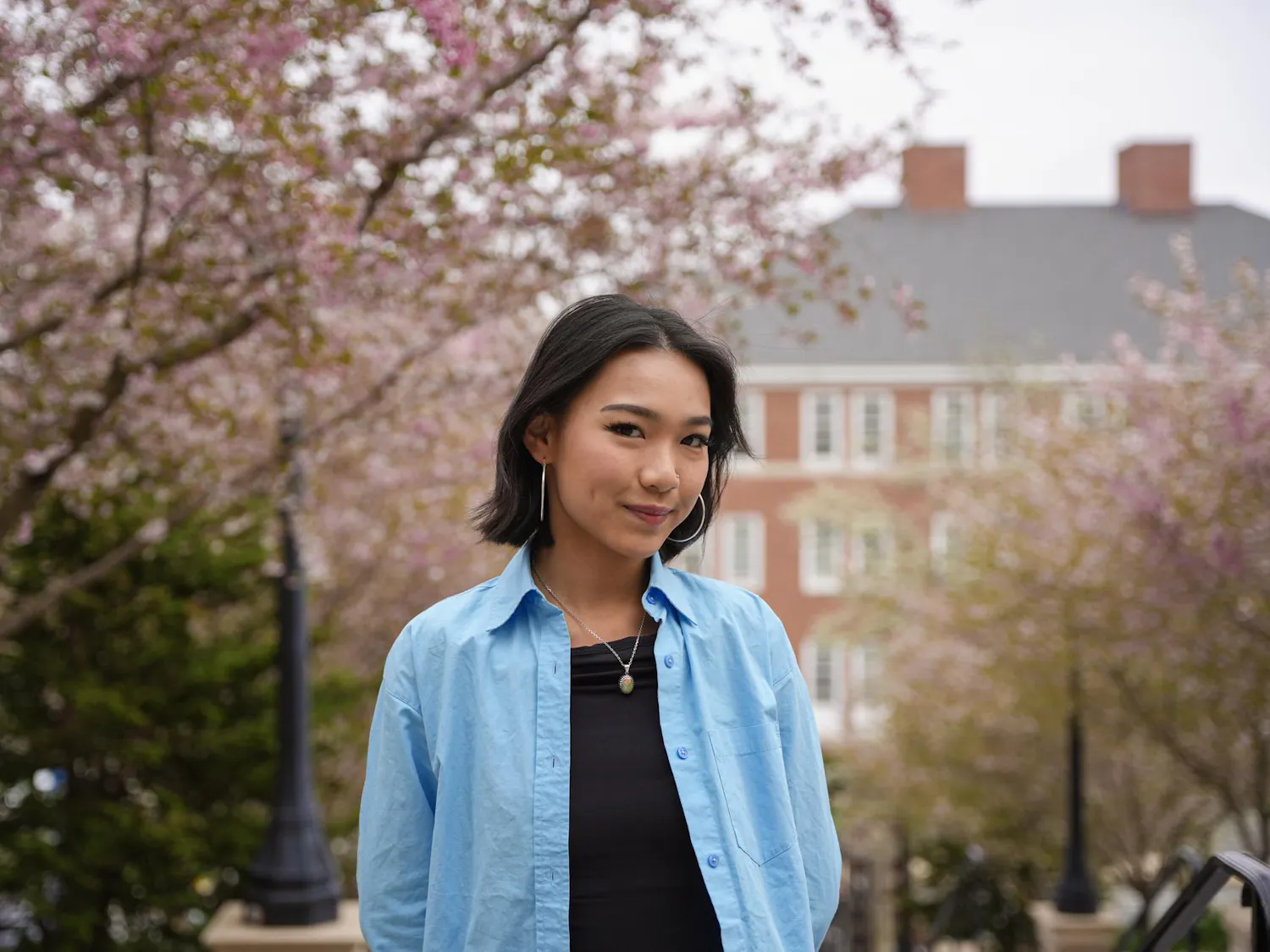
Sorsha Khitikian


Sorsha Khitikian is an opinion writer/columnist at the Tufts Daily. Sorsha is a junior studying history, civic studies, psychology, and child studies and human development. She can be reached at sorsha.khitikian@tufts.edu.

Through Indigenous Eyes.jpg
Column

Through Indigenous Eyes: On that Taíno beat

I, like at least 128 million others, spent Feb. 8 watching Bad Bunny perform in the Super Bowl halftime show. And like most of those 128 million, I loved the performance; it was rich with cultural references, amazing visuals and a message of love. What Bad Bunny did was celebrate Puerto Rico, with all of its beauty and struggles. He also showcased an important cultural legacy: the Indigenous Taíno peoples and their survival, which is part of the broader story of Puerto Rican culture.

Weixin Image_20260225190619_150_16.png
Opinion

You should join Opinion!

We want YOU to join the Opinion section of the Daily. We recognize that writing can be intimidating, especially at a publication like the Daily. So, before we explain all of the reasons why you should join, we first want to tell you how we started writing.

Through Indigenous Eyes.jpg
Column

Through Indigenous Eyes: Revisiting Greenland

Last year, I published an article about the colonial history of Greenland, exploring why it and its Indigenous people would want to be independent from Denmark. Since then, the people of Greenland voted Demokraatit, a center-right, moderately independent party, into power. At the same time, President Donald Trump has intensified his effort to buy Greenland from Denmark, Greenland’s former colonial owner. Greenland has achieved autonomy from Denmark, but is not fully independent. Trump had made it clear that he would consider violence as a tactic to annex Greenland, but walked back such statements earlier this month.

32558817082_294a1c0e70_b.jpg
Opinion

No, America isn’t becoming Nazi Germany

Within the past few weeks, President Donald Trump and his administration have threatened to invade Greenland, referred to a U.S. citizen killed by Immigration and Customs Enforcement as a domestic terrorist and released a racist video of Barack and Michelle Obama. In the past few months, the administration has threatened universities with federal funding cuts, grabbed thousands of people off the streets and engaged in trade wars with dozens of countries. Within the past year, it has pulled out of over60 international agreements, pardoned those with Jan. 6 related convictions and purged federal websites of information Trump deemed ‘DEI.’ This paragraph barely covers the overwhelming actions of Trump’s second term, and doesn’t even cover anything he did in his first.

Through Indigenous Eyes.jpg
Column

Through Indigenous Eyes: Let’s talk about ICE

On Jan. 8, an Indigenous man named Jose Roberto ‘Beto’ Ramirez was dragged from his vehicle in Minneapolis by Immigration and Customs Enforcement agents. Despite insisting on both his U.S. and tribal citizenship, he was beaten, detained and then sent to an ICE detention center for questioning. After being told he would facecharges for assaulting a federal officer, he was released over six hours after his initial encounter with ICE.

Through Indigenous Eyes.jpg
Column

Through Indigenous Eyes: Vanishing, Surviving

As my mom and I left Arkansas, we traveled north through Missouri and Illinois to Chicago, then east to Detroit and up through Canada to Niagara Falls. At all of these stops, we never really ran into anything that had obvious Indigenous ties. Once we crossed back into the United States, we still didn’t run into anything explicitly Indigenous. While this may be surprising to you, it was anything but surprising to me.

Through Indigenous Eyes.jpg
Column

Through Indigenous Eyes: Side by side

As my mom and I crossed out of the Southwest into Arkansas, we came face-to-face with Fort Smith. For those who don’t know, Fort Smith is widely considered the last stop on the Trail of Tears, a genocidal displacement of southeastern Indigenous people. At Fort Smith, Indigenous people were sent into what is now known as Oklahoma, which the U.S. government deemed “Indian” territory at the time. While I was nervous to explore this site, my Mom and I thought it was important to sit with the pain of this place.

Through Indigenous Eyes.jpg
Column

Through Indigenous Eyes: Our American responsibility

My mom and I share a love of Indigenous history and a good hike. Thus, when my grandmother recommended Bandelier National Monument as a stop on our road trip, we both jumped at the chance. Located near Los Alamos, N.M., Bandelier is home to ancient Pueblo ruins. When we arrived, we were both ready to get our hiking boots on. However, the second we got to the park, I knew something was wrong.

Through Indigenous Eyes.jpg
Column

Through Indigenous Eyes: Native authenticity

On every road trip, there’s a point where you get a bit bored. The scenery outside looks identical for hundreds of miles. The playlist you’ve made? You’ve already listened to it twice. You’ve spent so much time with the people you’re driving with that there’s nothing left to talk about. ...

Tufts Blue Cannon Painting.jpg
Viewpoint

Tufts admin, leave the cannon alone

As a Tufts student, I am always paying attention to the cannon. A central part of student life, the cannon represents student voice, interests and activism. Whether you’re a member of the Tufts cheese club advertising the Cheese Ball or anonymous activists writing political messages, you can make your voice heard and seen by the broader community on the cannon. Every time I walk to Tisch Library or to a class near the Academic Quad, I stop by and see what students are up to. This is how I first noticed the cannon painted a blank sheet of blue by the Tufts administration.

More articles »