After spending our first night with a family member in Las Vegas, my mom and I hit the first destination on our road trip: the Grand Canyon. A bucket-list item for both of us, we decided to make the most of the drive. Along the way we stopped at cool sites such as the Glen Canyon Dam and Wahweap (where I even got to touch the Colorado River!). But by far the standout of these stops was Upper Antelope Canyon.
Less than 150 miles away from the Grand Canyon, Antelope Canyon is a gorgeous destination. Split into two parts — upper and lower — the canyon is only accessible via tours led by Navajo/Dine guides and visitors must pay a fee to the Navajo Nation. Classified as slot canyons, these ecological marvels are part of a Navajo Tribal Park and hold sacred meaning to the Indigenous people who live and work near the reservation. While not every tour operation is Native-owned, every guide who works in the canyon is Navajo/Dine.
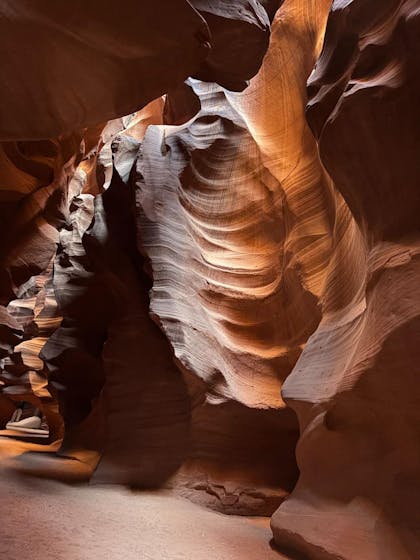
Photo of the eagle formation in Upper Antelope Canyon.
First, about the canyon itself: my mom and I visited Upper Antelope Canyon, or Tsé’bighanilí — “The place where water runs through.” After a 10-minute bus ride into the reservation, we spent about 40 minutes exploring the canyon with our Navajo guide. She infused the entire experience with Indigenous knowledge, pointing out how the wind eroded the canyon walls into the shapes of sacred animals. My favorite of these was the eagle, the animal my Indigenous grandpa most closely identifies with. We heard Navajo myths and family stories that non-Native guides could never have shared.
Beyond cultural connections, our guide told us about the canyon’s geology, the tribe’s efforts to protect it, the effects of flash floods on its formation, and more. The atmosphere felt sacred. Every moment I spent in the canyon was one filled with wonder and deep respect. It was unlike anything I’ve ever experienced before.
What struck me most was how the Navajo were inviting us into their world through these tours. Being on the reservation and in the canyon was a privilege, one that non-Native companies have historically exploited. Our guide recounted how National Geographic once received permission from the tribe to measure flash flooding in Upper Antelope Canyon. Instead of treating the canyon with respect, the company permanently damaged the canyon walls by drilling camera equipment into them. In a bout of karma, the equipment washed away in the very flash flood it was intended to record. However, the damage has been done, and can never be undone. The Navajo tribe has to live with its scars every day. The defacing of sacred Native areas is nothing new, but it remains extremely disappointing. By keeping the canyons in tribal hands, this damage is kept to a minimum, allowing tourists of all backgrounds to experience their wonder.
Months after leaving the canyon, I still can’t stop thinking about how tribal-run tourism like that in Antelope Canyon gave me a much stronger connection to the place than any non-Native tour could have. I often look back at my pictures and videos from that day, feeling immensely connected to the place. That is the beauty of Indigenous-led tourism: It creates emotional ties to place through cultural connection, not just geological wonder. I highly recommend everyone visit Upper Antelope Canyon at least once in their lifetime and, when planning their next trip, prioritize Native-run tourism.