BookTok is difficult to describe. It is, in its earliest form, a forum that originated on TikTok for people to talk about books across social media. Now, though, BookTok has developed into the be-all and end-all of readership opinion. If a book is popular on BookTok, then it is virtually guaranteed to sell well; if BookTok doesn’t popularize it, then it’ll fade into the noise.
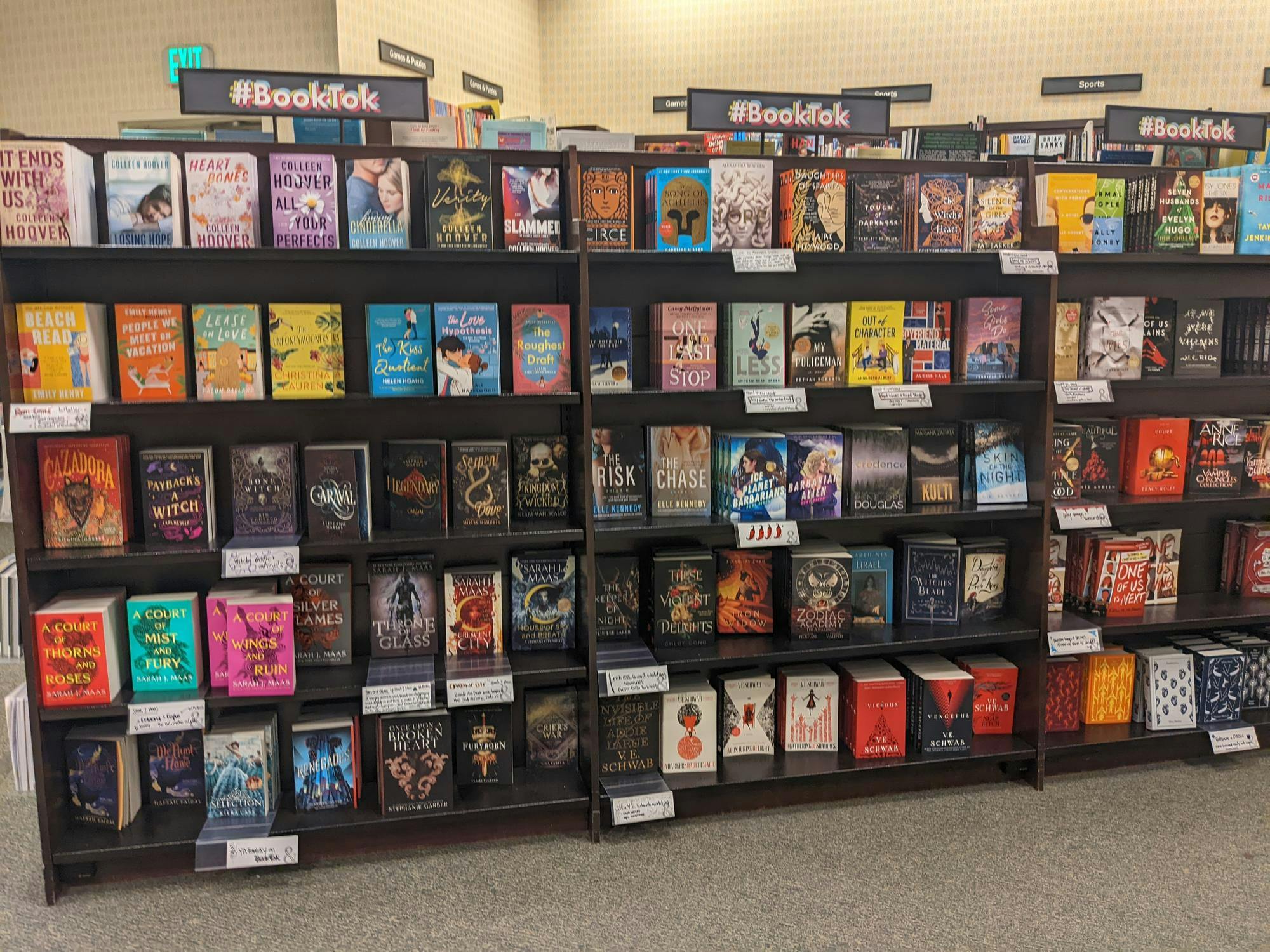
The power of BookTok has been well documented since its sizable growth during the COVID-19 pandemic. The canon recommended by BookTok is influential, with titles like “The Song of Achilles” by Madeline Miller and anything written by Taylor Jenkins Reed being deemed must-reads. Not only do readers opine on BookTok, they take their recommendations on what to purchase from the forum. Barnes & Noble now has entire ‘BookTok’ sections of their shelves to rake in consumer cash.
As with any time period in history, people like some books and dislike others. But now, BookTok has let this discourse play out on a much more public stage, with easy access to creating content and purchasing recommended books. I’m not immune to it: I bought and loved “The Invisible Life of Addie LaRue” because of BookTok. Even if you aren’t in tune with BookTok, though, it’s relatively common knowledge that its most public and controversial conversations center around romance novels (about which I have the most criticism). Yes, those romance novels with covers that look like they were designed in Canva.
Modern-day romance books, predominantly written by women, have very definable traits. The main character is typically a white woman who has a male love interest. After a ‘meet-cute’ (first meeting), the two love interests experience a variety of tropes from ‘enemies to lovers’ character arcs to ‘we have to share a bed.’ Most notoriously, modern-day BookTok-recommended romance books include smut. A lot of smut.
Historically, the romance genre and erotica/smut genres have coexisted, but I believe the genres only start turning into their modern-day equivalents in two places. The modern romance style gets its beginnings in the 1800s, with authors like Jane Austen and the Brontë sisters popularizing romances from female perspectives. The modern smut novel has its beginning in the 20th century, with 1970s and ’80s ‘bodice rippers’ popularizing abusive and dangerous relationships as sexy. These romance books, recognizable by just the cover, were always an erotica subgenre despite being less popular. However, BookTok has made smut mainstream.
What BookTok has done is allow for dangerous aspects of bodice rippers that romanticize abusive relationships, rape and misogyny to become normalized tropes alongside ‘golden retriever boyfriend’ or ‘enemies to lovers.’ This is extremely dangerous, especially as we know that the media we consume models behavior we emulate, whether on purpose or accidentally.
While there haven’t been clear studies about the effects of smut on the brain, we do know the negative effects of visual porn, which we can (and should) extrapolate to apply to smut novels. Men and women both tend to see women as objects if exposed to porn at an early age. Women who consume porn are also more likely to put themselves in dangerous sexual situations and allow more violent acts to happen to them. While smut has historically been considered tamer than porn, what we’re seeing with BookTok is a large community of people who imply that unhealthy relationships are desirable, which ultimately promotes and normalizes them. This is happening on a much larger scale than ever before, and that’s terrifying.
I am not saying that romance or smut should be denounced as genres. I appreciate a romance every now and again, and while I don’t consume smut, I will never condemn those who do enjoy it. What I do condemn, however, is consuming smut at this scale, glorifying abusive relationships and smut being the baseline expectation for newly published novels.
Bottom line, BookTok users and creators are falling for consumerism. We are consuming problematic fictional men and conflating depicted abuse with romance tropes instead of recognizing and celebrating the nuances of love and romance. In turn, we are then telling publishers via our money to give us more of this, instead of giving us healthy relationships to model behavior off of. It’s time for BookTok to do better.