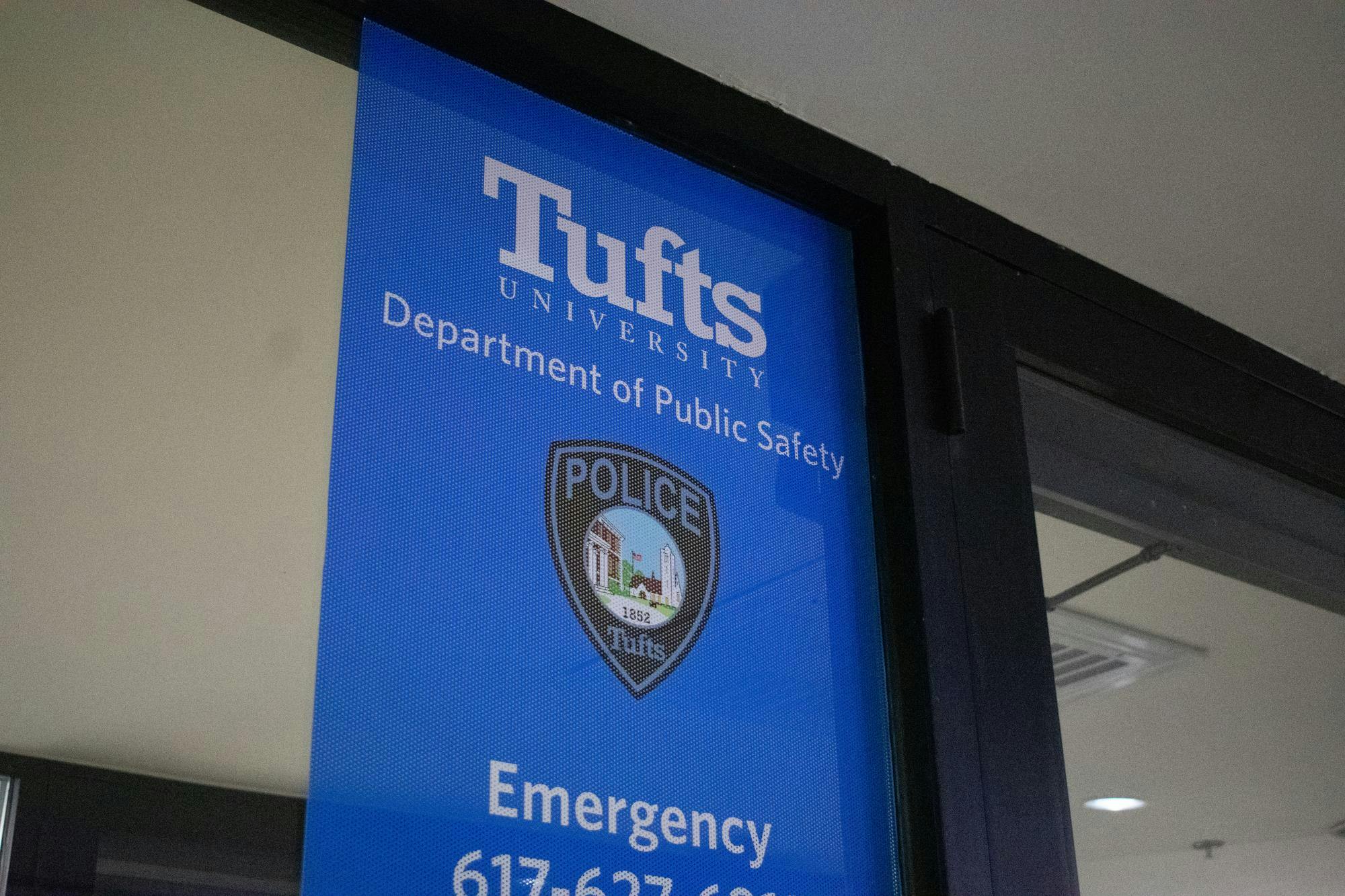
On Wednesday from 10-11 a.m., Tufts Public Safety will host a training session on civilian responses to an active shooter. The training, which has been offered every semester since 2022, equips students with strategies to address and reduce the risk of a potential active shooter situation.
Director of Public Safety Yolanda Smith outlined the array of skills students can learn from the training.
“Participants will learn how to recognize warning signs quickly, make informed decisions under stress, and take protective actions using the ‘Avoid, Deny, Defend’ model,” Smith wrote in a statement to the Daily. “In addition to personal safety strategies, the training provides an overview of Tufts’ emergency notification system, campus response procedures, the support resources available before an incident, and the post-incident recovery resources available to the community.”
When asked about the recent uptick in gun-related political violence, Smith emphasized that the safety team prioritizes securing public events.
“Our Public Safety team continuously monitors current events and emerging trends to inform and adapt the safety measures we provide to the community,” Smith wrote.
Sophomore Jay Vega added that, in relation to concerns about growing gun violence, things may worsen due to increasing hyper-partisanship.
“Political violence in general is probably going to increase with the state of our government currently and the polarization happening in the country. We have an administration that is very much pro-political violence and is currently using the military against people,” Vega said.
Junior Sophia Hillman said that the current national climate around gun violence and political violence is “awful and absolutely absurd,” but acknowledges at the same time that there is not much Tufts can do to combat national trends.
Vega, however, argued that the training would be more beneficial to a wider audience if the university sent out a summary of the event. They believed doing so would help students who could not attend in person and increase campus interest in the opportunity.
“If I have the availability in my schedule, I would want to go. I think if they gave some more information about what was actually happening at the training it would be helpful. Are we doing a drill? Or are we just talking for like two hours?” Vega said.
Vega also proposed adding the training as a mandatory component of first-year orientation, similar to the existing anti-harassment training. They added that it would ensure students are “all on the same page” about what to do in an emergency.
Hillman agreed that more people would attend the training if its contents were more widely publicized or if attendance was mandatory.
“I would definitely go to it next semester if I knew about it. I also think it could be one of the requirements … that could motivate me to go to it,” Hillman said.
She added that the strategies and techniques discussed in the training could also be shared in emails similar to the Jumbo Digest newsletters, which are sent regularly to the entire student body.
Smith acknowledged that not everyone may be able to attend the training in person and noted several ways in which Tufts Public Safety hopes to make the program more accessible in the future.
“We are currently developing a webinar component. We recognize that schedules can be demanding, and not everyone is able to attend in person—this new format aims to make the training more convenient and inclusive for all members of our community,” Smith wrote.
Until then, Smith emphasized that the in-person training sessions offered each semester remain valuable tools for students who are able to attend.
“We strongly encourage community members to sign up for the upcoming spring training sessions when they become available,” Smith wrote.
When asked about keeping the Tufts community safe, Smith reemphasized the department’s commitment to vigilance and preparedness.
“Our Public Safety staff dedicate extensive time to training for situations that may impact our community’s safety. Staying safe depends on all of us being vigilant, informed, and willing to share information appropriately,” Smith wrote.