
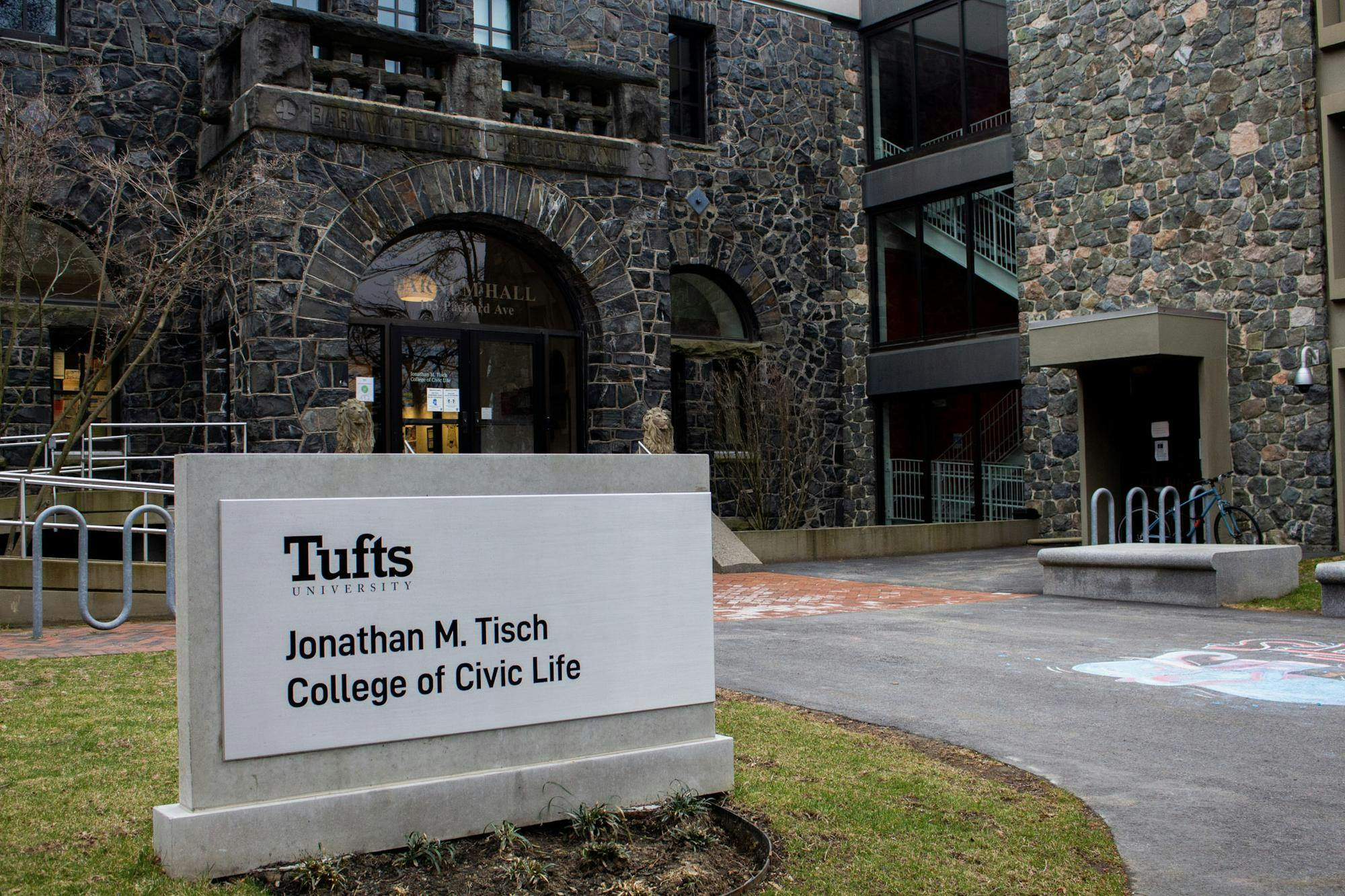
New York City’s recent mayoral race, which ended Tuesday, drew attention across the country — including from the Tisch family, one of Tufts’ biggest donors. Over the past six months, the family contributed over $1.3 million to Fix the City, a super PAC focused on opposing the mayoral candidacy of Zohran Mamdani, a democratic socialist who ultimately won the election.
According to records from the New York City Campaign Finance Board, Jonathan M. Tisch and his wife Elizabeth Tisch donated $250,000 to Fix the City. The family’s contributions have sparked conversation at Tufts about the large sums that can be spent through super PACs, as well as the family’s opposition to a progressive candidate like Mamdani, who has garnered strong support among students.
Fix the City has raised over $35 million, making it the largest outside political spending force in New York City’s history. It has spent more than $29 million to boost the campaign of former Gov. Andrew Cuomo and to attack his opponents in the election. Major billionaire donors included members of the Tisch family, who collectively ranked as the committee’s fifth-largest contributors.
Fix the City is a super PAC originally established to support Cuomo’s mayoral bid before expanding its mission in June 2025 to oppose the election of Mamdani. Super PACs, unlike traditional political action committees, do not contribute directly to political candidates or parties; instead, they spend independently on election related communications such as advertisements.
As Tufts Professor of Political Science Deborah Schildkraut explained, super PACs emerged as a workaround to campaign finance limits.
“They have some pretty strict limits on how much they can give directly to parties and candidates,” she said. “[A super PAC] doesn’t give money directly to candidates or parties, but is still spending on what’s called electioneering communications.”
Senior Curran Holden, vice president of Tufts Democrats, expressed her view in opposition to excessive money in politics through super PACs, calling herself a “professional Citizens United hater,” referring to the Supreme Court case Citizens United v. Federal Election Commission, which led to the creation of high-spending super PACs.
“There needs to be change … around our campaign finance system, which would allow for the creation of a campaign finance regulation system that’s much more comprehensive,” Holden said. “I think that in general, having less money in politics is a good thing.”
Maya Lawrence, a first-year from Brooklyn who voted for Mamdani, said she was aware of super PAC activity during the election and was not surprised to learn of the Tisch family’s involvement because Mamdani’s left-wing policies don’t align with the interests of the ultra-wealthy.
“I was also pretty happy with the outcome, as I voted for him. … I feel like a lot of people are particularly used to these kinds of super PACs being used by very wealthy families,” Lawrence said. “His policies that he was proposing sets a very specific incentive on more left-wing policies that are particularly, I wouldn’t say, anti wealthy people, but it doesn’t benefit them in any way.”
Holden mentioned that most members in Tufts Democrats supported Mamdani and criticized Cuomo due to his political record and history of sexual assault allegations.
The Tisch family, who has contributed at least $98 million to Tufts, is among the wealthiest in the United States, with an estimated net worth of $10.1 billion, according to Forbes. Their fortune originates from brothers Preston and Laurence Tisch, who built Loews Corporation into a multi-billion-dollar holding company beginning in the ’50s. Preston’s sons, Steve and Jonathan Tisch, both Tufts alumni, have since donated extensively to the university, funding several major facilities and endowments.
While the family did not respond to requests for comment, some speculate that their wealth or religious background could be factors in their opposition.
Mamdani-style politics are additionally a departure from the politics that have dominated New York since Mayor Edward Koch in the late ’70s, which was marked by the encouragement of business development after the city’s financial crisis in 1975.
“New York was in a rough spot economically, and it got out of that by reorienting its economy around Wall Street and around the financial sector,” Holden explained. “And that [reorientation] has been very successful in increasing the gross amount of wealth in New York City but … you also have to distribute it fairly,” Holden said. “And I think that there was a lot of opposition to that, partially from people who had a vested interest, but also from people who felt like the politics they knew for 40 years was changing, and that is, of course, scary.”
Mamdani has pledged to retain Jessica Tisch (Jonathan Tisch’s cousin) as New York City police commissioner, though he has previously criticized the New York Police Department as “racist, anti-queer and a major threat to public safety” following protests about the murder of George Floyd.
Mamdani has approved of Tisch’s current track record as commissioner. When asked if donations from her family to the Fix the City super PAC might suggest she is not interested in the job, Mamdani said no because “[he is] not hiring the family,” according to CNN.
Despite the Tisch family’s financial backing of Cuomo, Mamdani’s victory has energized many young voters, including those at Tufts, who may view the election as a rejection of billionaire influence in politics.
Correction: Some quotes from Holden in this article were taken and used out of context in regards to criticism of the Tisch family. These quotes have either been taken out or put in context. These updates were made on Nov. 11.



