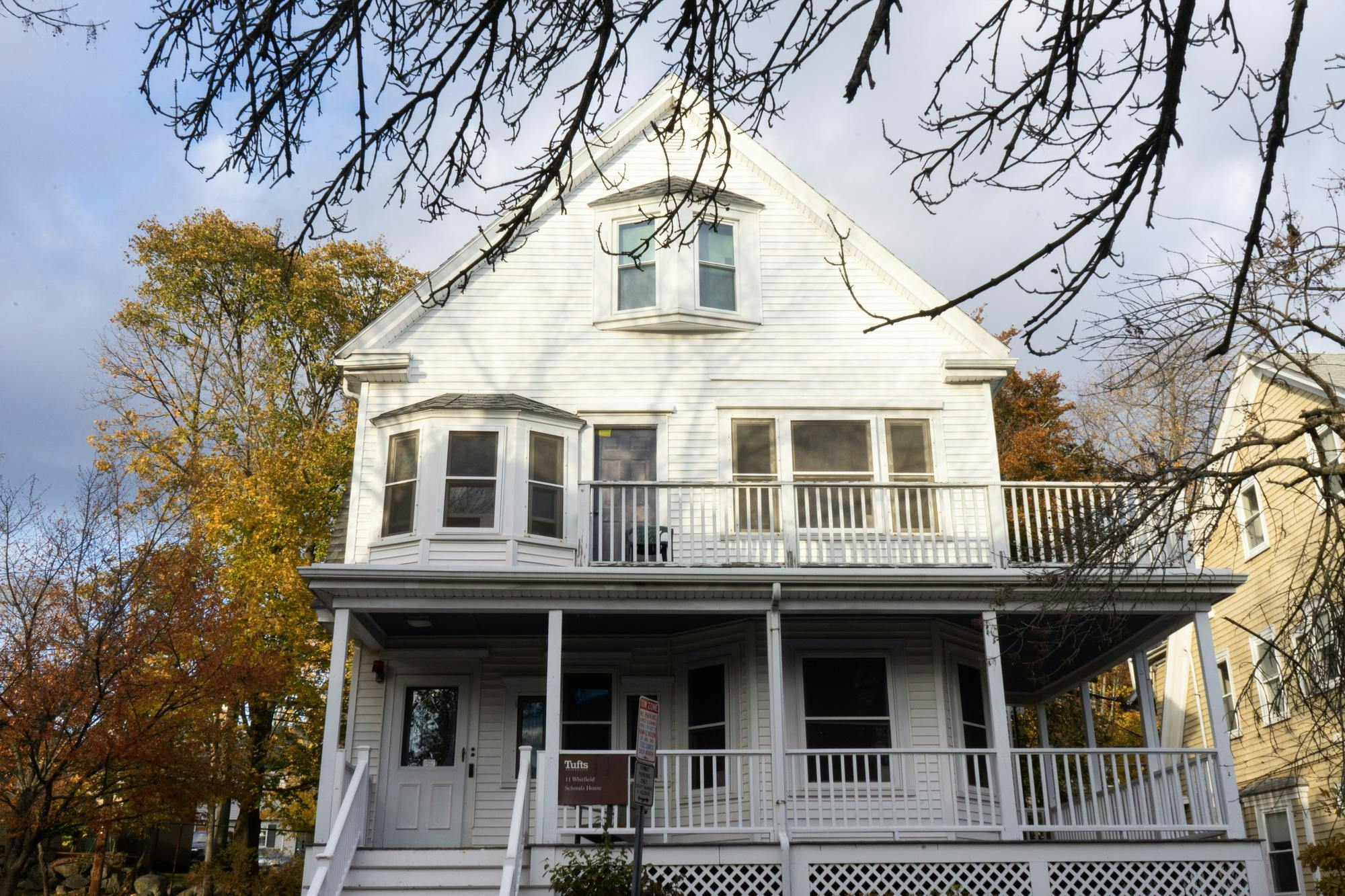
The Office of Residential Life & Learning ended its use of professional cleaning services in on-campus apartments and woodframe houses over the summer, requiring students and theme house managers to clean the residences themselves. The change, which was announced to students living in these houses in an August email, has led some students and faculty advisors to raise concerns about the burden on residents.
“When students move into their fall assignments, Tufts University will return to previous procedures for trash collection and cleaning of common areas in on-campus apartments and wood frame houses that were standard before 2020 and the COVID-19 pandemic,” the August email from ResLife reads.
They added that residents would be responsible for cleaning common spaces and supplying household products such as toilet paper, paper towels and soap.
ResLife Director Christina Alch wrote in a statement to the Daily that houses and apartment-style housing are more private than residence halls and contain fewer public spaces, which makes requiring residents to clean their own spaces more appropriate. The availability of professional cleaning for shared areas, she noted, is based on how many rooms a house or apartment has.
“The goal is for students to live more independently in their space, which includes being responsible for the upkeep of their spaces,” she wrote.
Senior Zara Ahmed, the house manager of the Spanish Language House, said the new policy has forced students to take on a heavy cleaning load.
“When you have to [coordinate] with a bunch of other kids that are also busy and scrub down the toilets and clean the kitchen floors and mop … it’s trying on the nerves after a while,” Ahmed said.
Ahmed explained that the maintenance issues have taken significant time away from her other responsibilities as house manager, such as event planning. The lack of a resident assistant in the house, she added, augments the problem.
“[My role is] not to put in all the work orders. It’s not to coordinate people in the house. It’s not to set cleaning schedules. These are all things that the RAs are supposed to be doing,” she said.
Maria Isabel Castro, the faculty advisor of the Spanish House, agreed that too much responsibility is falling on students.
“There is one person that is in charge and [she’s] a wonderful person, but it’s a motherly role,” Castro said. “I don’t think that’s fair. I don’t think that’s her job.”
Ahmed also called the policy “deeply unfair” and “complete bulls----,” noting that the change placed Language and Culture Houses at a disadvantage compared to other housing options. Unlike theme housing, students in off-campus housing, she says, are able to choose their landlords and housemates.
“You still have the restrictions of living on campus, but now you have the responsibilities of living off campus,” Ahmed said.
When asked about this differential treatment, Alch wrote in her statement that ResLife “expects students to engage in dialogue and conversation with their peers, especially those with whom they live, about their expectations regarding cleanliness in their shared living spaces.”
Castro pointed out that the problems may also increase existing wealth disparities, given that many students in theme houses cannot afford to live off campus.
“This is the population that doesn’t have [the money] to rent an apartment for September of 2026,” she said. “They cannot go off campus.”
Felipe Loyola, a sophomore living in the French House, raised similar concerns about the financial burden on students receiving financial aid.
“At the end of the day, even the value that Tufts gives you as a refund for your junior year or senior year for you to pay for housing is not enough to match external housing,” he said. “It’s kind of frustrating for you to have to spend more.”
German Language House faculty advisor Doris Pfaffinger, who has worked with the house since 2011, claimed that Tufts has cleaned Culture and Language Houses since before the pandemic. She also mentioned poor communication with faculty about the termination of professional cleaning services in the houses, noting that several faculty learned of the change from emails that students forwarded to them.
“Faculty for some other houses were not copied on [the] email, so we did not know that this change was implemented,” Pfaffinger said.
“All houses and apartments received the same general email when we reference this change being a return to how cleaning was conducted prior to the COVID-19 pandemic,” Alch wrote in her statement to the Daily.