
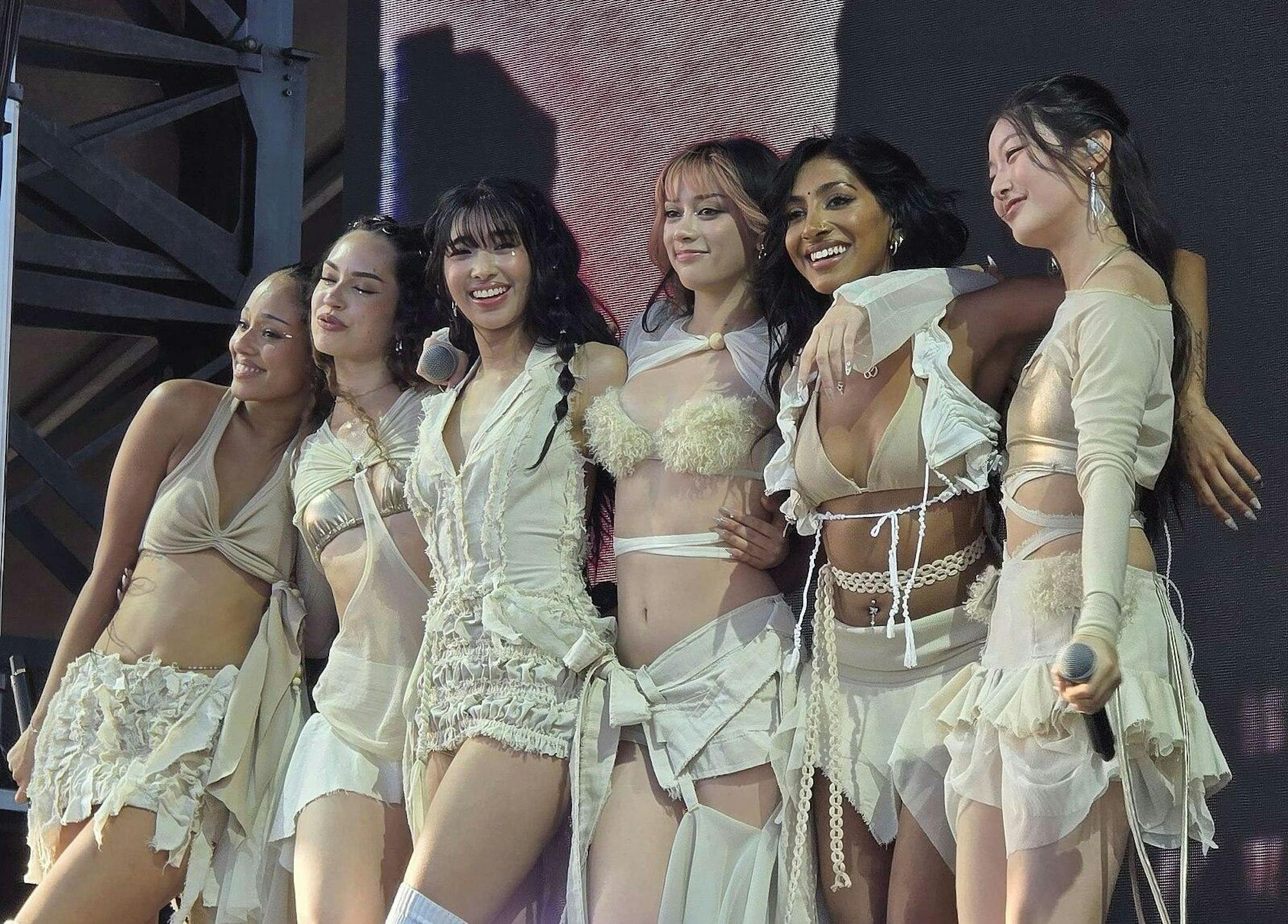
For the first time in nearly a decade, girl groups are returning to the Western mainstream with a velocity that feels long overdue. Watching FLO revive R&B’s legacy of stacked harmonies and technical vocal runs feels strangely comforting, almost like witnessing a tradition being carried forward rather than revived. Katseye’s rapid rise, along with two Grammy nominations, suggests that genuine pop excitement still exists outside the churn of algorithmic hype. From a distance, it looks like a Renaissance. Up close, it feels like something deeper — a cultural correction that many of us have been waiting for without realizing it.
Yet beneath that excitement sits an unspoken reality. Girl groups are rising again, but the commentary around them feels eerily familiar. The systems that made the 2010s so hostile to Western girl groups did not disappear. They simply adapted. They learned to hide behind digital veneers and anonymous accounts instead of tabloid headlines.
The last major wave of girl groups began with Little Mix and Fifth Harmony, and their trajectories still haunt the narrative. The departure of Little Mix’s Jesy Nelson cannot be separated from the pain she endured, yet the harm that followed her solo career cannot be separated from her history of appropriation. Camila Cabello’s exit from Fifth Harmony cannot be detached from the allegations of racism in her past, nor from the supposed exclusion that shaped the group long before she left. These stories may sound like scandals, but they reveal something more unsettling: the way girl groups, especially those filled with women of color, are asked to embody unity while being judged and punished as individuals. Their joy, their talent, even their mistakes, were never entirely their own.
When the girl-group landscape went quiet, the silence felt heavier. Arguably, solo pop women thrived because their individual identities were simpler to brand, oversee and fill in gaps of artistic niches, yet the collective model, where multiple women shared space and power, seemed to retreat from the Western imagination. Meanwhile, East Asian pop continued carrying the girl group format forward, sometimes beautifully, sometimes under pressures that felt painfully familiar: rigid contracts, impossible beauty standards and the persistent hum of misogynistic backlash. It was a reminder that the system, no matter where it lives, is often kinder to the idea of girl groups than to the women in them.
Now that FLO and Katseye are leading a new generation, it feels both exhilarating and uneasy. Their artistry is undeniable, yet the terrain they’re stepping into remains treacherous.
FLO’s harmonies require discipline, trust and a certain kind of emotional surrender, yet these qualities are dismissed as not catchy or palatable by people who refuse to see craft in young women’s work. The scrutiny they face about their accents and their attitudes feels less like critique and more like an insistence that girlhood itself be palatable before it can be celebrated. The online comparisons between members, the inter-band rivalry narratives and the harassment that spirals into threats all feels like a digital reenactment of the sexism that has shadowed girl groups for decades.
Katseye’s rise brings its own reflections. The praise they receive sits uncomfortably close to vitriol, almost as if the same hands applauding them are waiting to tear them apart. Their racial and cultural identities are dissected with a kind of cold curiosity that never seems to apply to male artists. And the comparisons start instantly: who is the star, who is the liability, who will leave first. It is difficult not to see how these narratives echo the very fractures that once broke other groups apart.
The sexism is old, but the delivery system is new. Digital culture has turned comparison into spectacle. What tabloids once did to women like Britney Spears and Christina Aguilera is now crowdsourced. It is harder to escape, harder to heal from and harder to name. The demand for perfect unity has not softened. It has hardened into something constant, something ambient, something that follows these women no matter how brightly they shine.
Girl groups have always challenged the idea that women are meant to compete rather than collaborate. That challenge might be why culture has never stopped trying to break them apart: The faces change, but the pattern remains. A society that struggles to accept one woman’s success without backlash seems almost allergic to the sight of several succeeding together. This is what makes the current resurgence feel both inspiring and fragile. FLO and Katseye are redefining what collective women’s artistry can sound like in this decade, yet they are also navigating an ecosystem that is not designed for their survival. Their rise is not proof that the industry has evolved; it is proof that these artists are choosing to rise anyway.
Perhaps that is why this moment feels so urgent. Girl groups are returning not because the world has become kinder to them, but because they are insisting on their place within it. Their revival is not simply a cultural trend. It is a form of resistance, and witnessing it forces us to ask what has changed, what has not and what it will take for their presence to be met with the care it deserves.



