
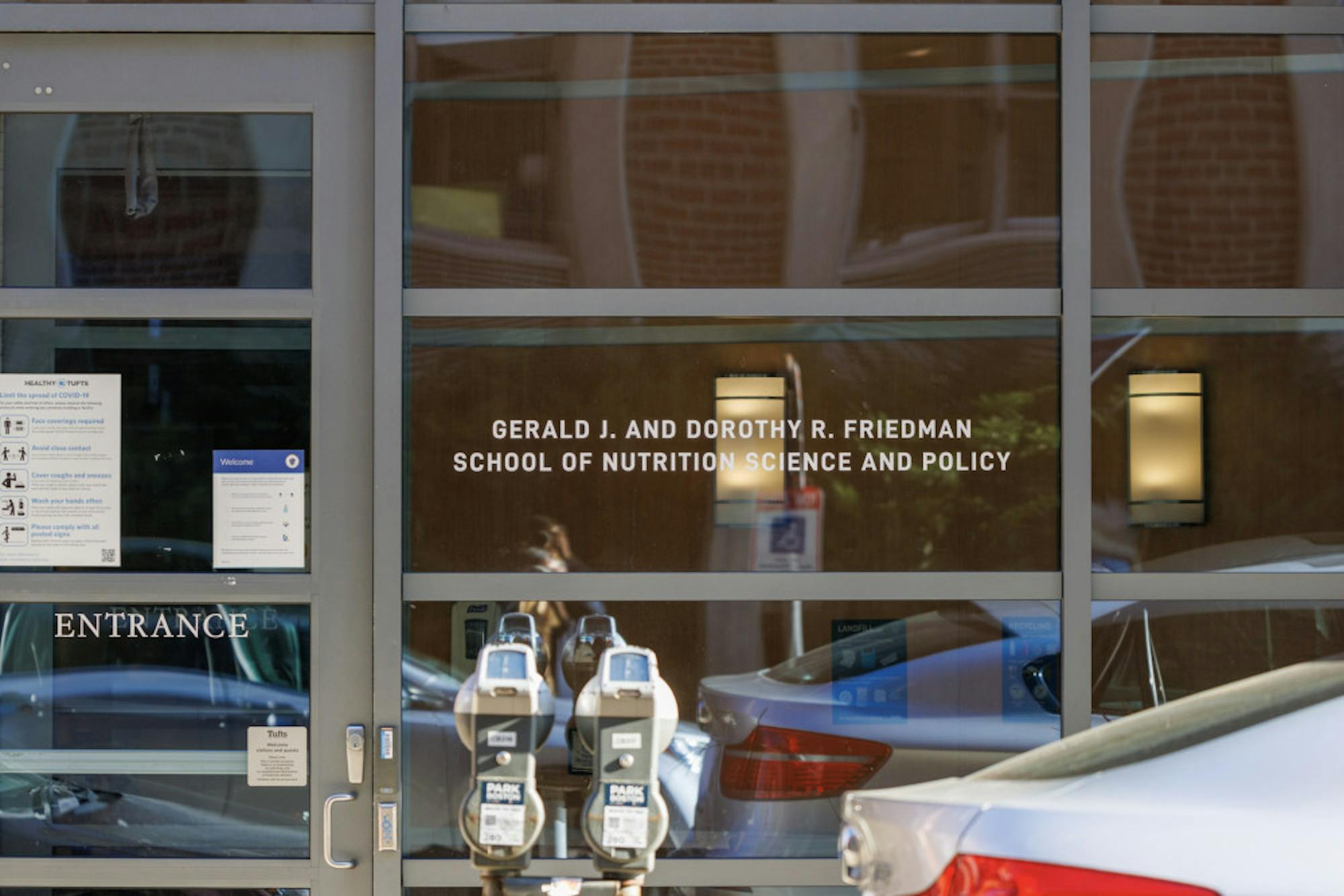
Tufts University has expanded its master’s programs in both public health and nutrition, offered through Tufts University School of Medicine and the Friedman School of Nutrition Science and Policy, respectively.
The School of Medicine upgraded its Master of Public Health program by bringing back the Global Health Science and Practice concentration and instituting an online counterpart to the Health Management and Policy concentration.
Beyond the curriculum offerings, the university also strengthened external partnerships with other universities. Tufts has a new combined JD/MPH program with Suffolk University, and has opened a new BS/MPH pathway with both Boston College and Saint Anselm College in New Hampshire.
The motivation behind these collaborations is to expand opportunities for students of both Tufts and its partner schools.
Associate professor at the School of Medicine Kimberly Dong said that “the push for [external partners] really … plays to each university’s or even college’s strengths to join together to meet the needs of their students and offer some efficiencies.”
Dong also believes that strengthening the long-standing collaborations that have existed between Tufts University and other institutions in and around Boston fosters long-lasting community relationships between students and faculty.
“I always tell our students: build your network as a student here because you’re all going to be public health colleagues … so get to know everyone,” she said. “Our network is your network — building and joining together with all of these other programs just enhances all of that which I think is really the collaborative nature [of] public health.”
The Friedman School of Nutrition Science and Policy has also been revamping its Master of Science in Nutrition degree. In the last year, the university released an accelerated program for the M.S. in Nutrition.
Isabelle Garcia-Fischer is the first accelerated M.S. student at the Friedman School and is set to graduate in December. She will have completed both her undergraduate and graduate degrees in four and a half years.
Garcia-Fischer has enjoyed her experience during the accelerated program at the Friedman School, which has extensive course offerings and an academically diverse body of students.
“My time at Friedman has been so well-rounded because of all the different perspectives that we all bring [and] the amount of disciplines that Friedman has,” Garcia-Fischer said. “There are so many avenues that you can go down when it comes to nutrition, and that is definitely one of the things I love the most about the curriculum.”
Fischer also mentioned that she appreciated the program’s online option, as it allowed for a diversity of classmate perspectives.
“[It’s] actually really cool, because I’ve had people in class that are currently in California or that are actually in Africa,” she explained. “In that sense, we have a ton of perspectives.”
Associate Professor and Program Director of the Accelerated Master of Science program at the Friedman School Jennifer Coates hopes that the accelerated program will help build a stronger relationship between the undergraduate programs at Tufts and the graduate program at the Friedman School.
“It’s silly that there isn’t a better, tighter connection because we’ve got interested students at Arts and Sciences with unmet needs for further study … and then [at the Friedman School] we have all these offerings and faculty that would love to work with undergrads,” Coates said.
More recently, the university has begun a collaboration with the College of the Holy Cross, allowing its students to pursue higher education at the Friedman School.
“It’s very similar, in some ways, to the structure of the accelerated M.S. with Arts and Sciences,” Coates said. Although, “they don’t have a graduate school at the College of the Holy Cross, so what that means is that all of their coursework is done at the Friedman School.”
The collaboration came from personal connections between Tufts University and the College of the Holy Cross. Ultimately, the goal of collaborations and inter-school connections is to benefit students at both schools and allow the Friedman School to expand nutrition as an area of study.
“I really hope that through this cooperation across … schools that we can not only create wonderful, new, exciting opportunities for studying, practicing, applied experiences and research for students, but really elevate the profile of nutrition and food at Tufts,” Coates said.



