
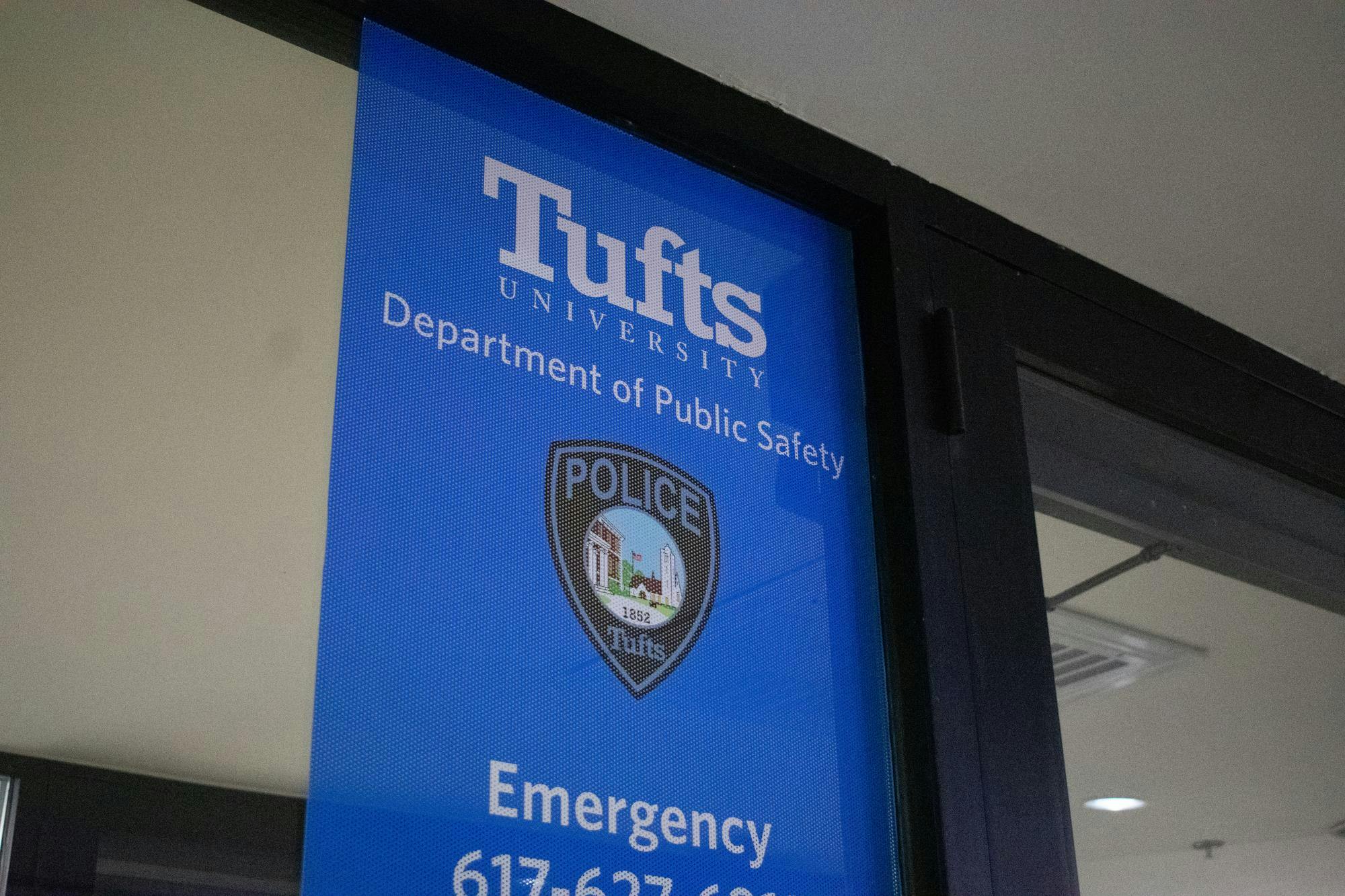
Tufts officials reaffirmed existing campus safety protocols after the December shooting at Brown University that resulted in the death of two students. Yolanda Smith, chief of police and executive director of public safety at Tufts, said the university would continue to review its safety protocols after students returned to campus this month. It was not immediately clear whether specific changes were made over winter break.
“As we begin the new semester, we will continue to evaluate our security posture based on current conditions, community needs, and best practices in campus safety,” Smith wrote in a statement to the Daily. “We regularly assess access protocols, patrol patterns and technology enhancements to ensure they align with our safety goals. Any future adjustments will be communicated clearly to the community.”
In an email sent to the Tufts community two days after the Brown shooting, Smith announced that the Office of Public Safety would implement temporary security enhancements, including additional card-access restrictions in select buildings on the Medford/Somerville campus. Citing security concerns, she did not specify which buildings were subject to restrictions .
“The shooting at Brown University was tragic and heartbreaking,” Smith wrote in a statement to the Daily. “At Tufts, we immediately reviewed our security posture, increased patrol visibility and reinforced coordination with local law enforcement partners. While there was no known threat to Tufts, we took proactive steps to reassure our community and maintain heightened awareness.”
Although Tufts is more than 40 miles from Brown, some students said the shooting felt close to home. One student, who requested anonymity, said that a shooting occurring on a college campus was frightening.
“I was just kind of glued to the news the whole day,” they said. “I think most people [at Tufts] know someone or know someone who has a friend [at Brown]. … [Brown is] so comparable to us, [so] I think it hit harder.”
Following the shooting, sophomores Alexander Smith and Grant Pinsley formed a Tufts chapter of Students Demand Action, a gun violence prevention advocacy organization affiliated with Everytown for Gun Safety that was founded after the 2018 shooting at Marjory Stoneman Douglas High School in Parkland, Fla.
“The most immediate reason [for starting this chapter] was because of the Brown shooting,” Alexander Smith said.
Smith said he became passionate about gun safety after attending a March for Our Lives protest and was surprised to learn Tufts did not already have a chapter of SDA.
“I realized that this is something that I’ve been passionate about for a while and I haven’t really done anything about it,” he said.
While SDA advocates for federal gun control legislation, Alexander Smith and Pinsley said their chapter would also focus on local issues. The group plans to oppose efforts to repeal Chapter 135, a 2024 Massachusetts law that significantly tightened firearm regulations. Voters will decide whether to uphold or repeal the law following a successful signature solicitation process.
Alexander Smith said that while the university has communicated effectively about safety, broader action is needed to address gun violence.
“Making all of these buildings card access [isn’t] going to solve the problem of gun violence,” Alexander Smith said. “I think it needs to be a more state and federal approach.”
Despite these concerns, other students described feeling safe at Tufts.
“I’m an SMFA student, so I go to the Boston [campus] a lot, and I love coming back to Medford because it does feel drastically more safe,” the anonymous student said.
Yolanda Smith described campus safety as a “shared responsibility.”
“We encourage everyone to stay alert, aware of their surroundings, and report anything that seems unusual or concerning,” she wrote. “‘If you see something, say something’ is more than a slogan.”
She emphasized that Tufts aims to balance security with regular campus life.
“Our goal is always to enhance safety without disrupting the vibrant, open campus experience that defines Tufts,” Yolanda Smith wrote. “Our Public Safety team is deeply committed to the well-being of every member of the Tufts community. We strive to be visible, supportive, and responsive partners.”
Amid the security concerns, the Office of Public Safety announced that the Massachusetts Police Accreditation Commission will begin an assessment of Tufts University Police Department in January.
“The process occurs on a regular cycle — typically every few years — and involves external assessors reviewing our compliance with hundreds of standards,” Smith wrote. “TUPD has successfully achieved accreditation in previous cycles, and we are committed to maintaining that level of excellence.”



