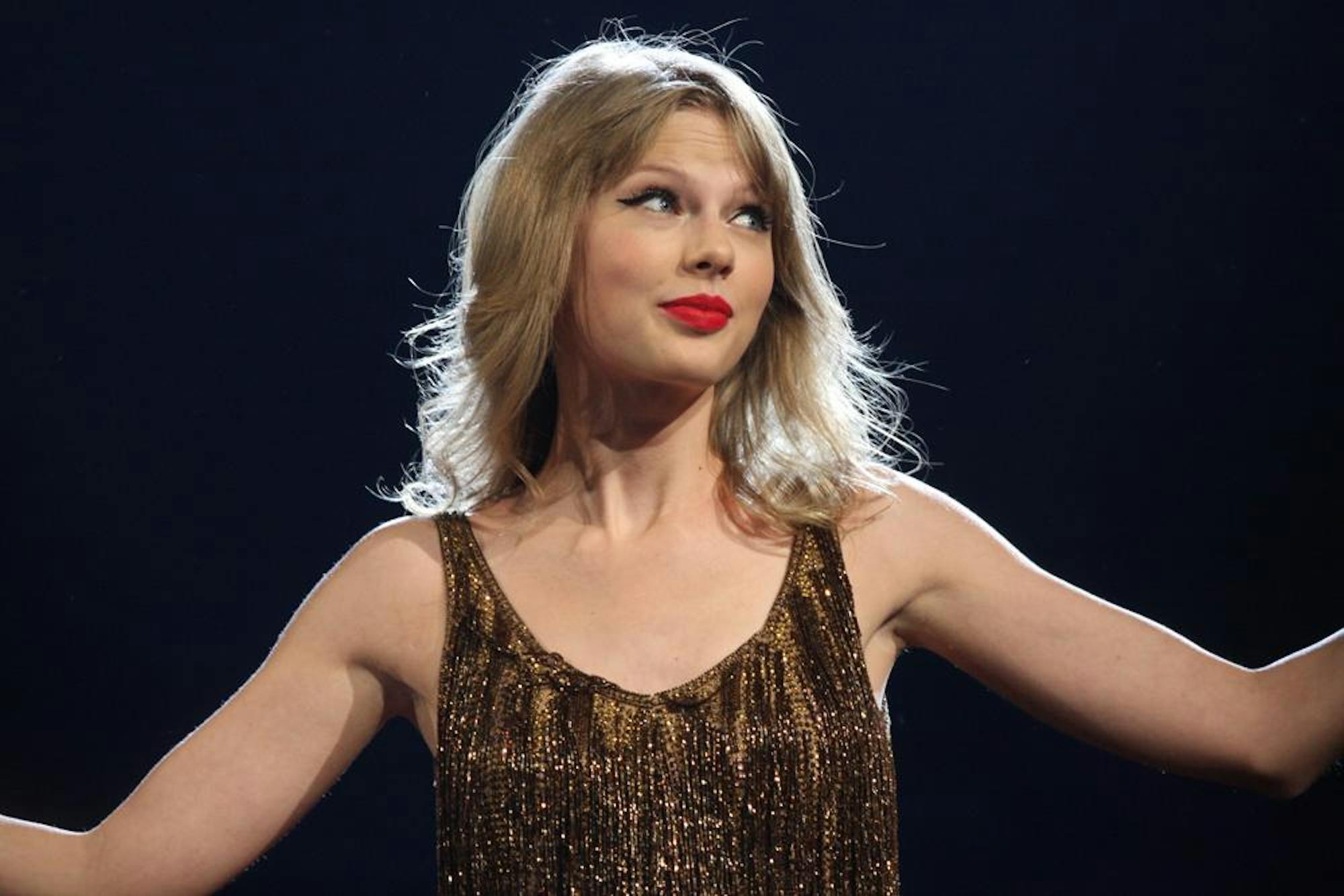
Celebrities are some of the most talked-about people in our society, and social media only amplifies this effect, giving us seemingly constant access to these stars’ lives. If there’s any doubt about whether people take advantage of this access, just look at the like counts on some of these celebrities’ posts. Take Taylor Swift, for example, who is arguably not only one of the most famous celebrities but also one of the most influential women in the world. Swift’s engagement announcement post received an impressive 37 million likes. This means that, including those who saw it and didn’t like it, more than 37 million sets of eyes landed on this post. Although I’m a big fan of Swift, I also believe that she — and many other high-profile celebrities — are not doing enough to advocate for the underprivileged.
Whether it be the suffering of Palestinians in Gaza, the deaths of both immigrants and U.S. citizens because of Immigration and Customs Enforcement, or any of the other tragedies currently happening in the world, Swift and many other celebrities have kept quiet in interviews and on social media. While some might argue that speaking on these issues is not their responsibility as artists or actors, I would argue that it is their responsibility as human beings.
The influence their celebrity status brings makes their advocacy even more imperative. It should be noted that Swift has previously engaged in political advocacy, endorsing Democratic candidates in Tennessee’s 2018 primaries and then Kamala Harris in the 2024 presidential election.
However, if Swift is against Trump, then why is she remaining silent about the horrors of his administration? One of her posts encouraging her followers to register to vote reportedly led to more than 35,000 registrations. Just one post by Swift speaking out against ICE-related tragedies in Minnesota could have a similar level of impact, potentially reaching the screens of her 280 million followers. Celebrities have the potential to inspire millions to protest and push back against policies they see as immoral, yet many continue to disappoint.
Along with this silence, an equally troubling phenomenon is performative advocacy from certain celebrities. In one video, Jack Antonoff is seen sporting an “ICE OUT” pin on the Grammys red carpet. When it comes time to answer the expected question of why the pin’s message is important, he is barely able to formulate a coherent thought. Stumbling over his words, he says, “It’s terrible … it’s time to … for every reason you can imagine, I think,” and — making a last-ditch effort to recover — adds, “I’m getting speechless trying to even talk about it.”
Perhaps the reason it is so embarrassing to watch is because his statement embodies the effects of privilege. Antonoff, as a rich white male celebrity, is able to pretend to care about causes that he knows are less likely to affect him directly due to the safety net of his wealth and status.
However, one can also find examples of celebrities who have been exemplary advocates. In one of his acceptance speeches at the Grammys, Puerto Rican rapper and singer Bad Bunny stated, “We’re not savage, we’re not animals, we’re not aliens. We are humans, and we are Americans.” This is a direct refutation to Trump’s election message that Latin American immigrants are “savages” and “animals.” Bad Bunny has been on the rise in the music industry after not only winning three Grammys in one night, but also performing at Super Bowl LX one week later. With 14.4 million viewers tuning into the Grammys this year and many others watching highlights on social media, he was undoubtedly able to spread his message widely.
Global sensation Billie Eilish also used part of her speech to speak about injustices committed by ICE. Eilish began her speech by sincerely voicing a popular phrase of the anti-ICE movement: “No one is illegal on stolen land.” She finished her speech by cursing out ICE, which I believe was quite provocative. What celebrities like Billie Eilish and Bad Bunny have in common is not only their influence over millions, but also their bravery in speaking up for those who can’t speak up for themselves. And while you, the reader of this article, likely don’t share their global influence, you can still share their bravery. Please don’t go silent when our country needs you the most.