
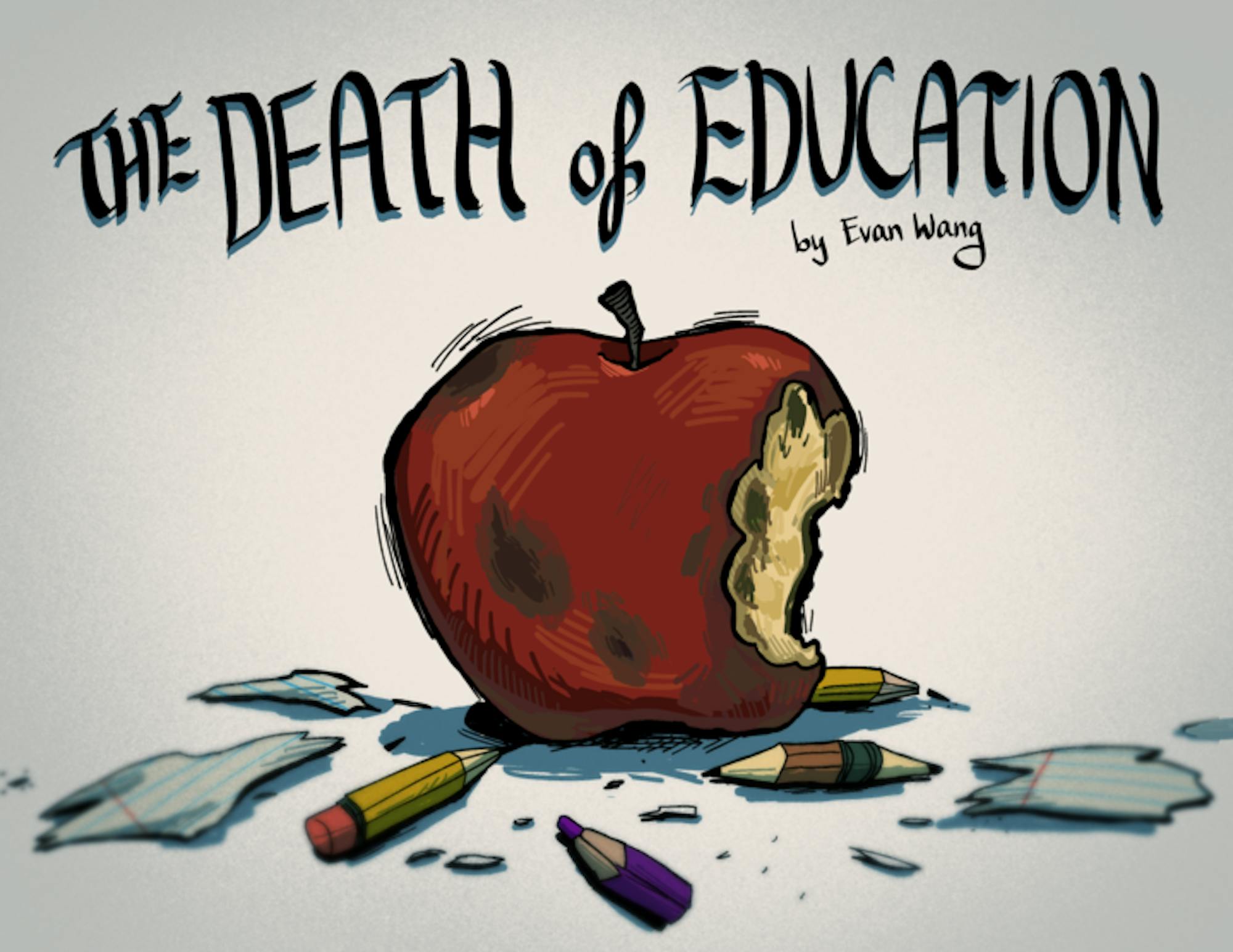
As the spring semester picks up, it’s important to remind ourselves that the average National Assessment of Education Progress scores in math, reading, science, civics and U.S. history for students in the United States are now back to what they were in the 1990s. This decline in student performance has been occurring since 2013; it has only been exacerbated by the COVID-19 pandemic and the post-pandemic inability to curtail chronic absenteeism. Presently, 74% of tested countries outperform U.S. students in science, and a staggering 86% outperform them in reading.
While our public education system has become dysfunctional and outdated, there are still teachers and administrators hard at work to ensure we do not continue down this path. Yet, in some parts of the country, this trend is being reversed with ease.
The clearest example of how the education system can be turned around lies not in the well-funded schools of New England or California; instead, it comes from the most unexpected of sources — the deep South. Ten years ago, Mississippi ranked No. 46 out of 50 states in fourth-grade reading. Today, it is ranked ninth nationally and first when adjusted for factors such as poverty and race. These results are now being replicated in neighboring states, including Louisiana and Alabama.
So, what did Mississippi do to become a leader in public education? It returned to the basics: presence in the classroom. A child’s chronic absence from school now warrants check-ins and warnings for parents, and schools are issued report cards based on student performance. When both parents and administrators are held accountable, students are better positioned to learn. These states are doing amazing things for historically disadvantaged students. Black fourth graders in Mississippi now outperform Black fourth graders in our very own Massachusetts in reading. The high school graduation rate in Mississippi has also risen to an amazing 89%.
This is the kind of education reform America deserves. We should all be following Mississippi’s example in public education instead of the so-called ‘school choice movement,’ which only seeks to destroy what little public education remains.
This article is meant to show what a dedicated and focused movement can do for our youth, not to let political figures and public leaders off the hook. Students still need help in a variety of ways, even as test scores rise. U.S. students cannot be allowed to go to school hungry, distracted by phones or overwhelmed by rubbish AI technologies. They deserve well-paid teachers and adequately staffed schools. While these problems are important, Mississippi and other Southern states show us that public education still has a fighting chance. With the right resources and leadership, the U.S. public education system can truly be one of the best in the world.



