
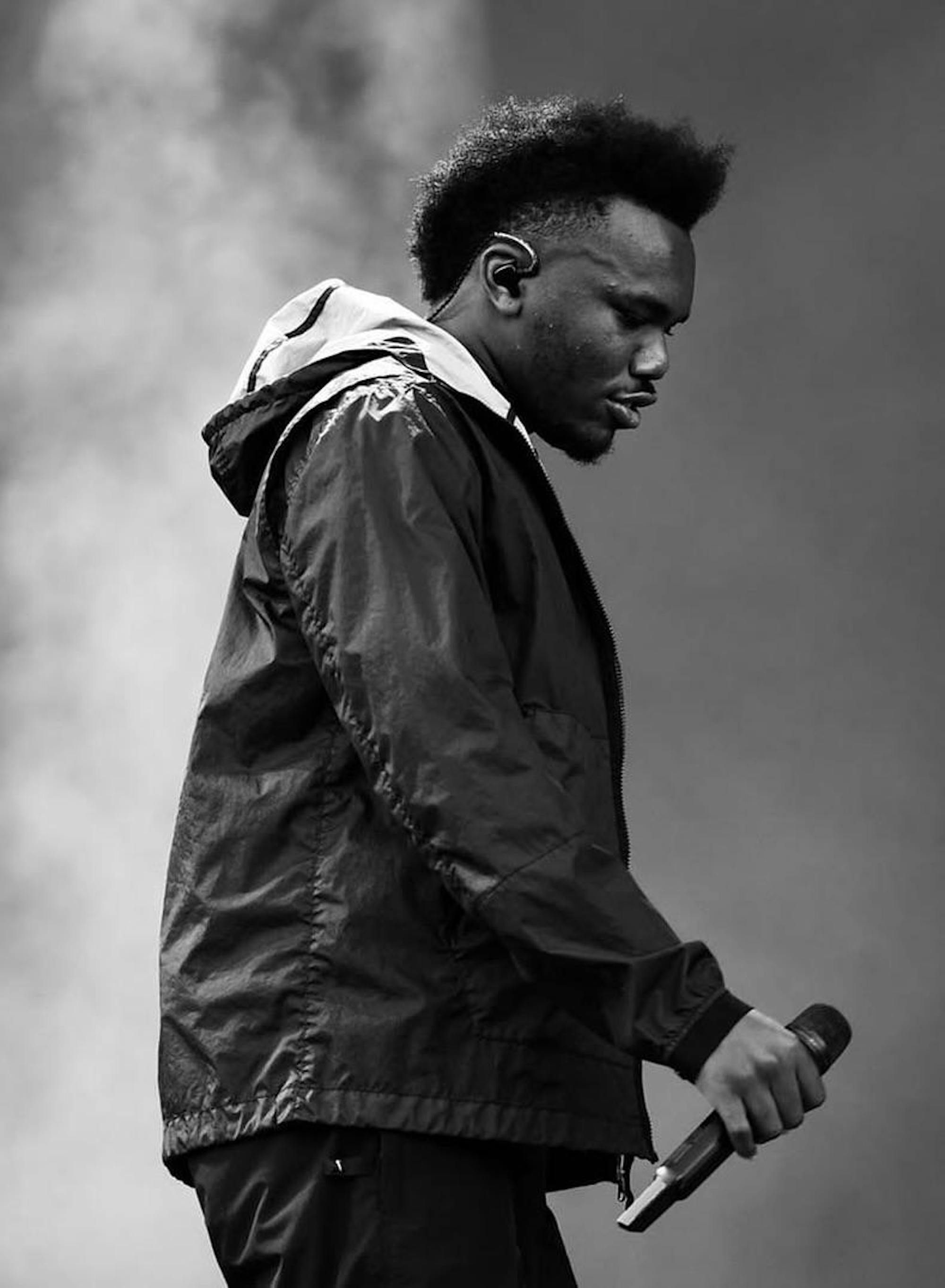
When Baby Keem’s first studio album, “The Melodic Blue,” dropped in September 2021, a future of chart-topping superstardom seemed almost inevitable for the Las Vegas-raised rapper. Similar to the reception of his first hit single, “Orange Soda,” the album’s release was followed by near-universal praise, and for a while it looked as if Keem’s arrival as a mainstay of modern hip-hop had come ahead of schedule. The summer following the release of “The Melodic Blue” saw Keem playing to the world’s biggest crowds — four nights at Los Angeles’ Crypto.com Arena, two at London’s O2 Arena and a particularly memorable livestreamed stop in Paris — as a central presence on his cousin Kendrick Lamar’s Big Steppers Tour. He dropped seven fresh tracks as a deluxe album in October of the following year. Then he disappeared.
Now, far from anonymity but lacking the incessant buzz that surrounded his initial burst onto the scene, 2 Phone Baby Keem has returned with “Ca$ino,” a wandering yet introspective peek behind the mask of the starboy-turned-enigma. This 11-track LP finds Keem balancing two impulses: a turn inward toward his upbringing as Hykeem Carter Jr. shaped by a fractured Las Vegas home, and an outward projection of the brash confidence that has become his artistic signature.
“Put a pause on the lifestyle, I grew up and changed lanes,” Keem admits over a skeletal, piano-driven beat sampling Natalie Bergman’s “You Can Have Me” on the opener “No Security.” The following track, “Ca$ino,” swaps restraint for Playboi Carti-esque rage rap, but the emotional sentiment remains intact. Even amid the distortion and a strange interpolation of “Blitzkrieg Bop,” Keem continues to present his growth as a product of loss: “I hit rock-bottom when I was gone and now I got nothin’ to lose/ I keep both scars, I feel new pain and I don’t even do tattoos.”
Throughout the record, Keem struggles to balance the pensive tone of his lyricism with his own inclination towards decisive, uptempo anthems. Lamar lends his voice for “Good Flirts,” a catchy but largely insubstantial love song that lacks both the musical depth and lyrical interplay of earlier collaborations like “range brothers,” “family ties” or “The Hillbillies.” The album’s penultimate track, “Dramatic Girl,” is initially exciting as a pop-rap detour, but the absence of lyrical or sonic complexity leaves the track overly dependent on its chorus to generate mood.
The album hits its highest notes by dialing itself down. There is much to be gleaned from the moments where Keem rejects striving for popularity in favor of authenticity, and it is in these moments that the genius of “The Melodic Blue” can be most clearly seen. On “I am not a Lyricist,” Keem most directly channels his past: “A child with the wolves, everyday I am/ That slot machine that nobody held.” Here, with a flow so closely borrowed from André 3000 that it could easily be mistaken as a feature from the Outkast member, he is able to create one of the more emotionally affecting rap tunes in modern memory. “Circus Circus Free$tyle” is another highlight, as Keem seems to finally find the ideal balance between soul-searching and his trademark boisterousness. It’s a unique track — featuring two beat switches and a dizzying range of vocal registers — that nevertheless reflects the lessons Keem has absorbed as his cousin’s protege, particularly in its restless inventiveness.
Decidedly an exercise in emotional catharsis, it’s fitting that the LP’s final track is “No Blame.” Though the piece starts with the sound of a losing slot machine — casino sounds serve a motif throughout the album representing his mother’s gambling addiction — Keem makes sure that his final message is a resonant one: “I don’t blame you, mama.” In this sense, the track stands in contrast to “Life of the Party” by Kanye West and André 3000 or Clipse’s recent “The Birds Don’t Sing,” both of which process grief through attempted reconnection. Keem, by comparison, treats growth as a conscious letting go, emphatically choosing forward momentum over his emotional past.
Though some of its less audacious entries prove to be forgettable missteps, “Ca$ino” nonetheless affirms that Baby Keem is still one of the current generation’s most formidable voices. The fervor with which he emerged in the mainstream half a decade ago may have subsided, but it has been replaced by a newfound maturity. He’s got a 36-date international tour on the horizon, so it's unlikely we’ll see the Booman disappear any time soon, but if “Ca$ino” proves anything, it’s that Keem is no longer interested in being everywhere at once.



