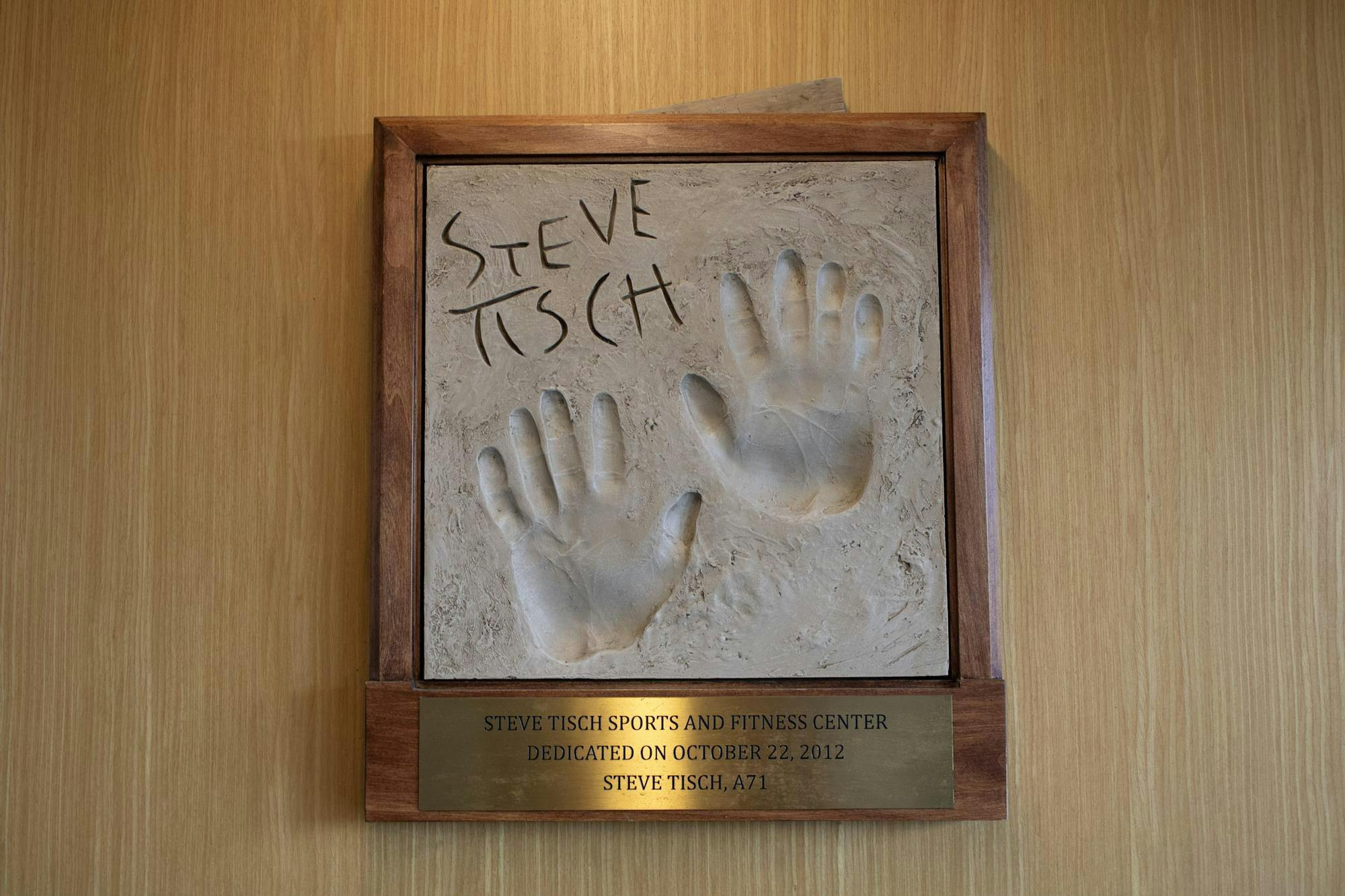
The name Tisch seems ever-present in our lives as Tufts students. From the library to the fitness center, the name is pervasive across campus. Steve Tisch, who graduated from Tufts in 1971, currently serves as chairman, co-owner and executive vice president of the New York Giants following a career in film production.
Following the recent revelation of frequent communication between Tisch and convicted sex offender Jeffrey Epstein, we, the Daily’s Editorial Board, have been considering the implications of these associations, particularly when it feels like half of the Tufts campus bears his name. The Daily has reported on various files indicating that Epstein connected Tisch with numerous women in 2013 and 2014. In response to those files, Tisch stated, “We had a brief association where we exchanged emails about adult women, and in addition, we discussed movies, philanthropy, and investments. I did not take him up on any of his invitations and never went to his island.” However, the stain of associating with someone as notorious as Epstein and employing that connection to solicit women is irrefutable. The question at the forefront of the community’s mind is: How will Tufts address it?
As the Editorial Board, we propose that the administration look to its response to the Sackler opioid crisis as a model. In 2019, Tufts resolved to remove the Sackler family name from the medical school building and various programs. In the 1990s, the Sackler family founded Purdue Pharma, which later produced OxyContin, a pill stronger than morphine, directed towards cancer patients and those with chronic pain. The Sacklers profited immensely from the drug's widespread use, ultimately accumulating enough wealth to become one of the richest families in the United States. They committed significant wealth to Tufts, resulting in five centers, programs and laboratories bearing their name.
However, following 2019 lawsuits accusing the family of prioritizing financial interests over public health by misleading the public about OxyContin's risks, Tufts decided to rename associated buildings, stop accepting donations from the Sackler family and instate a program to educate the Tufts medical community about the opioid epidemic. Then-University President Anthony Monaco stated that “in making the decision to remove the Sackler name, which will begin immediately, we are not seeking to erase this chapter of Tufts’ history.”
Tufts’ current administration should consider this precedent. It’s indisputable that Tisch has made a significant impact on the development of the campus through his donations to several buildings. However, to ignore his association with Epstein would dismiss the university’s stated core values: honesty, integrity, ethics and cultural competence, among others. Ideally, buildings bearing Steve Tisch’s name would be renamed to reflect Tufts’ condemnation of such fraternization. While this may be unlikely, at minimum, we propose that the Tufts administration should release an official statement addressing and condemning Tisch’s communications with Epstein. A public acknowledgment would demonstrate a commitment to transparency and ethical accountability, even though we hope to see Tisch’s name fully stripped from the fitness center and the library. In addition, the university should follow the example of its response to the Sackler crisis by educating the community about the Tisch family’s association with Tufts and about the broader harms of sex trafficking and abuse, thereby addressing Epstein’s heinous crimes.
Ultimately, we hope that Tufts chooses to acknowledge Tisch’s relationship with Epstein and disaffiliate from his actions to preserve the university’s commitment to ethical, honest and principled civic engagement.