
In his Jan. 29, 2025 executive order “Additional Measures to Combat Anti-Semitism,” President Donald Trump ordered the secretaries of Education, State and Homeland Security to monitor activities of international students that could warrant deportation due to potential violations of the order.
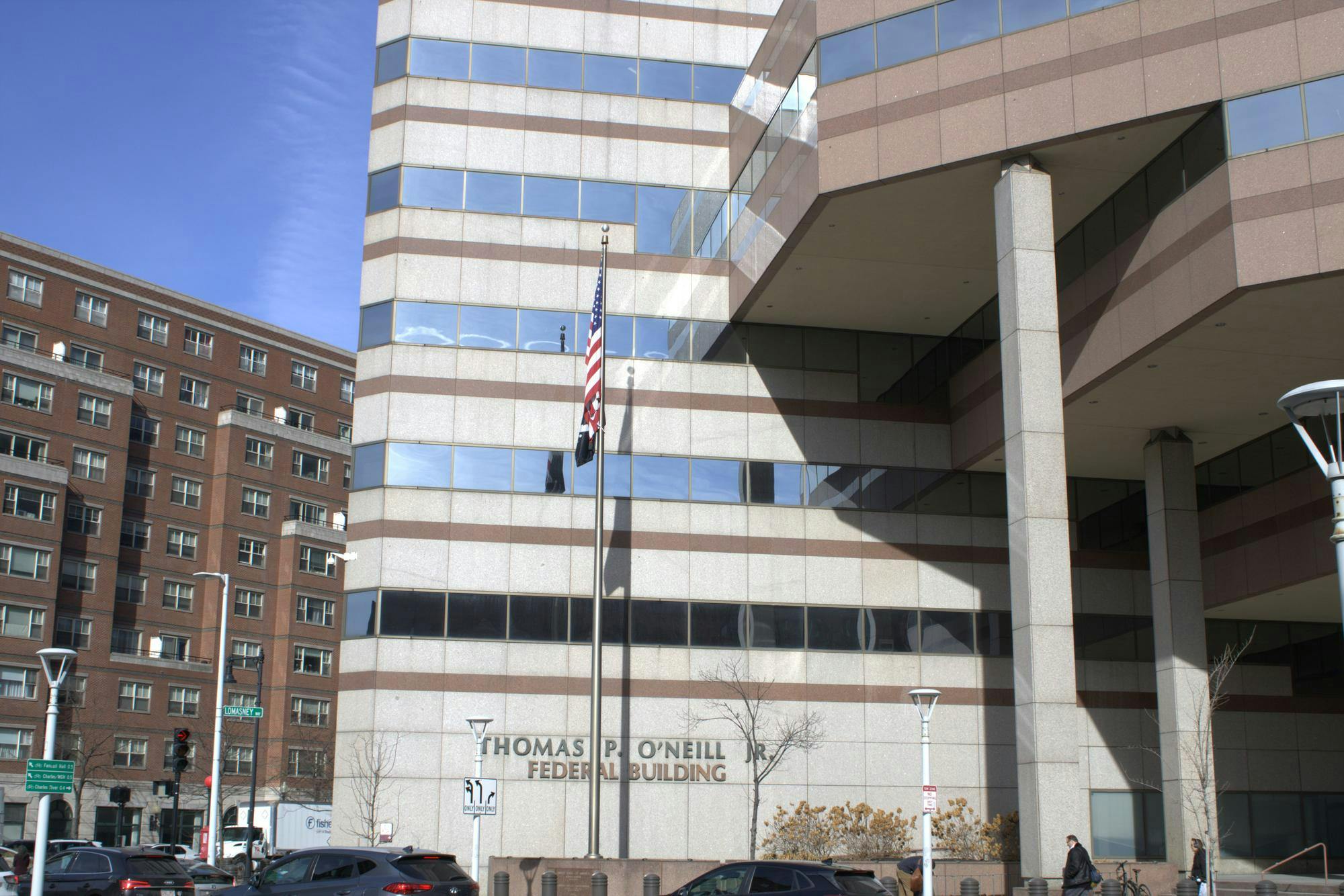
55 days later, on March 25, 2025, Öztürk was arrested in Somerville by Department of Homeland Security agents and shuttled between Massachusetts, New Hampshire and Vermont before being flown to an Immigration and Customs Enforcement facility in Louisiana. During a press conference, Secretary of State Marco Rubio informed the public that her F-1 student visa had been revoked.
Before silently revoking her visa, members of the State Department knew and were told that there was insufficient evidence to do so. But based on the recommendation of DHS, and to comply with Trump’s order, the department revoked it.
Evidence was unsealed earlier this year containing the dossier and memos that led to the silent revocation of Öztürk’s visa and her subsequent arrest.
The HSI dossier
A team within U.S. Immigration and Customs Enforcement’s Homeland Security Investigations prepared a dossier on Öztürk on March 17, 2025.
The dossier included her profile on the Canary Mission website, a Daily article from Feb. 27, 2024 that summarized four resolutions submitted by the now-inactive Coalition for Palestinian Liberation at Tufts to the Tufts Community Union Senate, a Daily op-ed Öztürk co-wrote in March 2024 and a post on X of a poster on Tufts’ campus with the words “Bring the war home.”
Canary Mission contains profiles of pro-Palestinian students, professors and other individuals whom they deem to be promoting “hatred of the USA, Israel and Jews on North American college campuses and beyond.”
The HSI dossier contained Öztürk’s known residencies, social media and email addresses, which are redacted in the unsealed version.
In an undated letter to Senior Bureau Official John Armstrong, Andre Watson, former assistant director of HSI’s National Security Division, outlined the contents of the dossier, claiming that Öztürk had “engaged in anti-Israel activism in the wake of the Hamas terrorist attack on Israelis on October 7, 2023.”
“I am writing to provide a summary of the actions by Rumeysa OZTURK for consideration of actions that may constitute violations of President Trump’s executive orders on anti-Semitism,” Watson wrote.
Watson is now Senior Account Executive for SOSi, a private defense and government services firm.
Watson then outlined the content of the March 2024 op-ed and tied the writers to Tufts Students for Justice in Palestine, which was suspended from Nov. 6, 2024 until January 2027 for policy violations, including the use of images of weapons and urging students to “escalate” and “Join the Student Intifada” in a post about a protest to be held on Oct. 7, 2024.
“The authors also state that Graduate Students for Palestine joins Tufts Students for Justice in Palestine (SJP) and other student groups to reject the University’s response to the resolutions,” Watson wrote.
Watson noted SJP’s suspension, using a Boston.com article to demonstrate the specifics of why the Tufts administration had suspended the group.
“HSI is concerned that OZTURK’s involvement in these activities and associations with these groups may undermine U.S. foreign policy by creating a hostile environment for Jewish students and indicating support for a designated terrorist organization,” he wrote.
Watson then recommended that Armstrong review the dossier to determine whether or not Öztürk’s presence in the U.S. would have “potentially serious adverse foreign policy consequences.” If the determination was made, HSI would begin removal charges against Öztürk.
Watson also added that with the evidence provided, Rubio should determine whether to immediately revoke Öztürk’s F-1 student visa. He concluded that the revocation would support a “ground of removability” under the Immigration and Nationality Act, a 1952 law that allows the Secretary of State to deem noncitizens deportable for reasons related to national security.
The action memo to revoke Öztürk’s visa
On March 21, 2025, Stuart Wilson, deputy assistant secretary for Visa Services in the Bureau of Consular Affairs, wrote an action memo for Armstrong with two recommendations: Silently revoke Öztürk’s F-1 visa without notice and notify DHS about the revocation.
Wilson’s memo stated that Öztürk had been involved in actions protesting Tufts’ relationship with Israel.
Wilson acknowledged that DHS had not provided evidence that Öztürk had engaged in antisemitic activity or made public statements supporting any terrorist organization.
“Nor has DHS/ICE/HSI shown any evidence that OZTURK was involved in any activities which resulted in TSJP being suspended from Tufts,” Wilson wrote.
According to Wilson, DHS had not found alternative grounds of removability that would apply to Öztürk, nor had it made any indications for plans to terminate Öztürk’s Student Exchange Visitor Information Service registration, which was terminated on the day of her arrest — March 25, 2025.
Wilson then recommended that Armstrong, under State Department policy, approve the revocation of Öztürk’s F-1 visa “based on the totality of the circumstances presented.”
After signing off on the action memo’s recommendations with his initials, Armstrong wrote a memo to Watson on March 21, 2025, stating that the Bureau of Consular Affairs had approved the revocation of Öztürk’s visa. He noted that the State Department would not notify her of the revocation.
The next day, DHS issued an administrative warrant for Öztürk’s arrest due to a document that had initiated removal proceedings.
On March 25, 2025, DHS issued Öztürk a Notice to Appear in immigration court for removal proceedings, based on the revocation of her visa.
Several courts, including a Boston immigration judge, have found that the 2024 op-ed provided insufficient grounds for DHS to deport Öztürk.
District Judge William K. Sessions III of Vermont — the same judge who ordered Öztürk’s release from ICE custody in Louisiana on May 9, 2025 — noted that her detention could “[chill] the speech of the millions” and was a potential violation of her constitutional rights.
On Sept. 30, 2025, District Judge William G. Young of Massachusetts found that the administration’s “ideological deportation policy,” stemming from the Jan. 29, 2025 executive order, was a violation of the First Amendment.



