
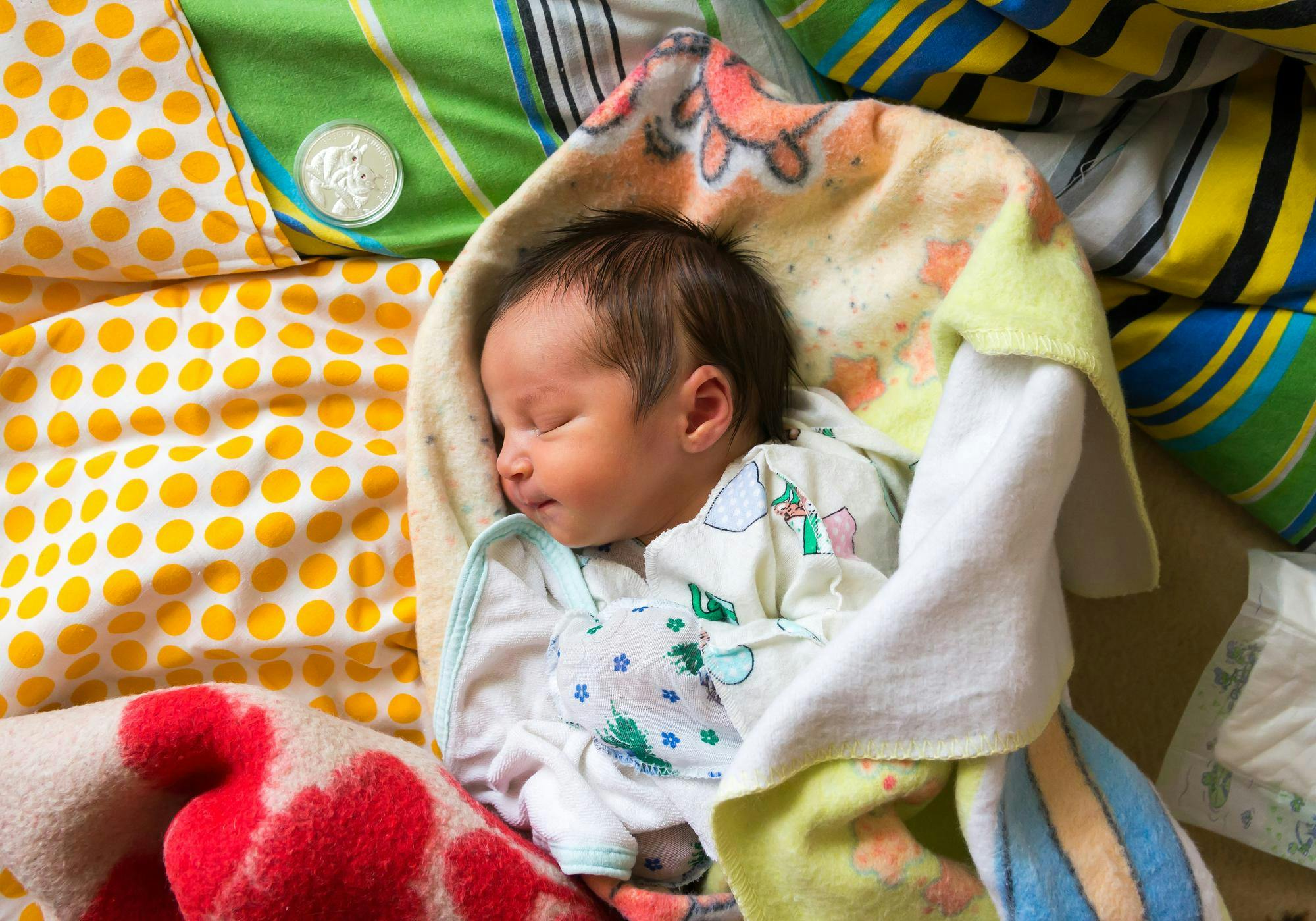
The survival rate in infants with severe combined immunodeficiency, a rare hereditary disease that prevents the body from producing immune cells, is 96% when they receive a bone marrow transplant in their first 3½ months of life. If transplantation is delayed, that number drops to 70%. Without treatment, most children die before their first birthday. This condition is rarely visible at birth and only becomes apparent after a major infection, often outside of the window of opportunity for treatment.
The importance of early intervention and lack of visible presentation of many diseases necessitates newborn screening. However, current screening methods only test for 30–80 conditions — far from the over 10,000 known rare diseases. Dr. Wendy Chung, a clinical and molecular geneticist and chief of pediatrics at Boston Children’s Hospital, came to The Boston Globe’s Rare Disease Summit to discuss her solution to this problem.
While at the Children’s Hospital of NewYork-Presbyterian, part of the Columbia University Medical Center, Dr. Chung founded the GUARDIAN study. GUARDIAN, or Genomic Uniform-screening Against Rare Diseases in All Newborns, can detect up to 450 rare diseases. Even better, it does this with the same heel prick already used for standard newborn screening.
How is this possible, and what differentiates GUARDIAN from other newborn screening? Standard screenings rely on laboratory techniques such as tandem mass spectrometry, immunoassays, enzyme activity assays and hemoglobin analysis. While powerful, these tests are limited to a handful of conditions such as inborn metabolic errors, congenital hypothyroidism, congenital adrenal hyperplasia, cystic fibrosis and sickle cell anemia. GUARDIAN takes a new approach: It utilizes whole genome sequencing to detect hundreds of conditions with one test. WGS is a process in which genomic DNA is isolated and broken into pieces. These pieces are then inserted into vectors for stabilization and amplification, after which they are sequenced. A computer stitches together the entire genomic sequence, which can be further analyzed. This method gives scientists the flexibility to easily and rapidly add new conditions as they arise and as new treatments become available.
The importance of GUARDIAN became apparent to a pair of New York parents after the birth of their daughter. When she was born, her parents were offered the chance to be part of the GUARDIAN study. Despite expecting nothing to come of it, they agreed. When their daughter was six weeks old, however, she started to have seizures. GUARDIAN provided answers within weeks, before her doctors finished their own tests. She was diagnosed with CDKL5 deficiency disorder, a rare disease that causes early-onset seizures, low muscle tone and developmental delays. According to her parents, this diagnosis gave them power. They were able to “make changes immediately that were practical and had real implications” for how they took care of her. Following their daughter’s diagnosis, these parents found a neurologist who specialized in CDKL5 deficiency disorder and connected with other families with this condition, people who understood their journey in a way few others could. Because they participated in GUARDIAN, this family was able to avoid the average “four to five year” rare disease diagnostic time and get a jump start on interventions, experimental therapies and community building.
Since its inception in 2023, GUARDIAN has screened over 20,000 babies. Out of these babies, 3% were diagnosed with a rare disease as a result of GUARDIAN – much higher than the original 1% estimate. This number indicates that estimated rates of rare disease prevalence are being severely underestimated — and that kids are consistently falling between the cracks of our medical system.
GUARDIAN is a pioneer program that makes sure no child gets left behind. As it is a research study, families must actively opt in to have their child screened. Of the families given the option to participate, 74% did, with equal representation across all the communities served by the New York-Presbyterian network. GUARDIAN is primarily helpful because it enables children to access treatment sooner and, in many cases, before a disease has had the chance to cause irreversible damage. Rare disease treatments, though, tend to be exceedingly expensive and clinical trials often time-consuming, inaccessible and far from home. Given this, how can we build systems that increase accessibility to these lifesaving interventions, particularly for historically underserved communities?
Another critical, and often unaddressed, part of the rare disease burden is their toll on patient and caregiver mental health. Compared to the 5.7% of otherwise healthy U.S. adults experiencing depression, 69% of those with rare diseases report being depressed. Another 82% of rare disease patients report experiencing anxiety — a stark difference from the 19.1% of the general population. Caregivers similarly face significant psychological strain. Although this issue has no cure-all solution, increasing the accessibility of supportive resources is a critical first step. Beyond just genetic counselors, GUARDIAN involves social workers and patient navigators who can work with families during their diagnosis journey. These early support systems, in addition to highly reduced diagnosis times and early access to community and support groups, can reduce the mental, emotional and financial strain of rare disease.
GUARDIAN is in the process of spreading to Boston, where it should be in place by the end of the year. Massachusetts currently uses the New England Screening Program, which only tests for about 45 conditions. The movement of GUARDIAN to Boston therefore has the opportunity to massively impact the families involved. Next door to Boston is Cambridge: a large biotechnology hub which holds over 250 biotech companies, with more than 120 in Kendall Square alone. The soon-to-be proximity between treatment incubator and extensive rare disease testing is bound to produce revolutionary results. It is still undetermined which hospitals GUARDIAN will come to, though. Will it begin at largely white, upper-class hospitals like Mass General Brigham, or will it serve underrepresented patients at a safety net hospital like Boston Medical Center? Or will it be able to combine the two, extending its services to anyone willing to participate? Wherever it lands, GUARDIAN promises to redefine how we approach rare disease diagnosis and care.



