
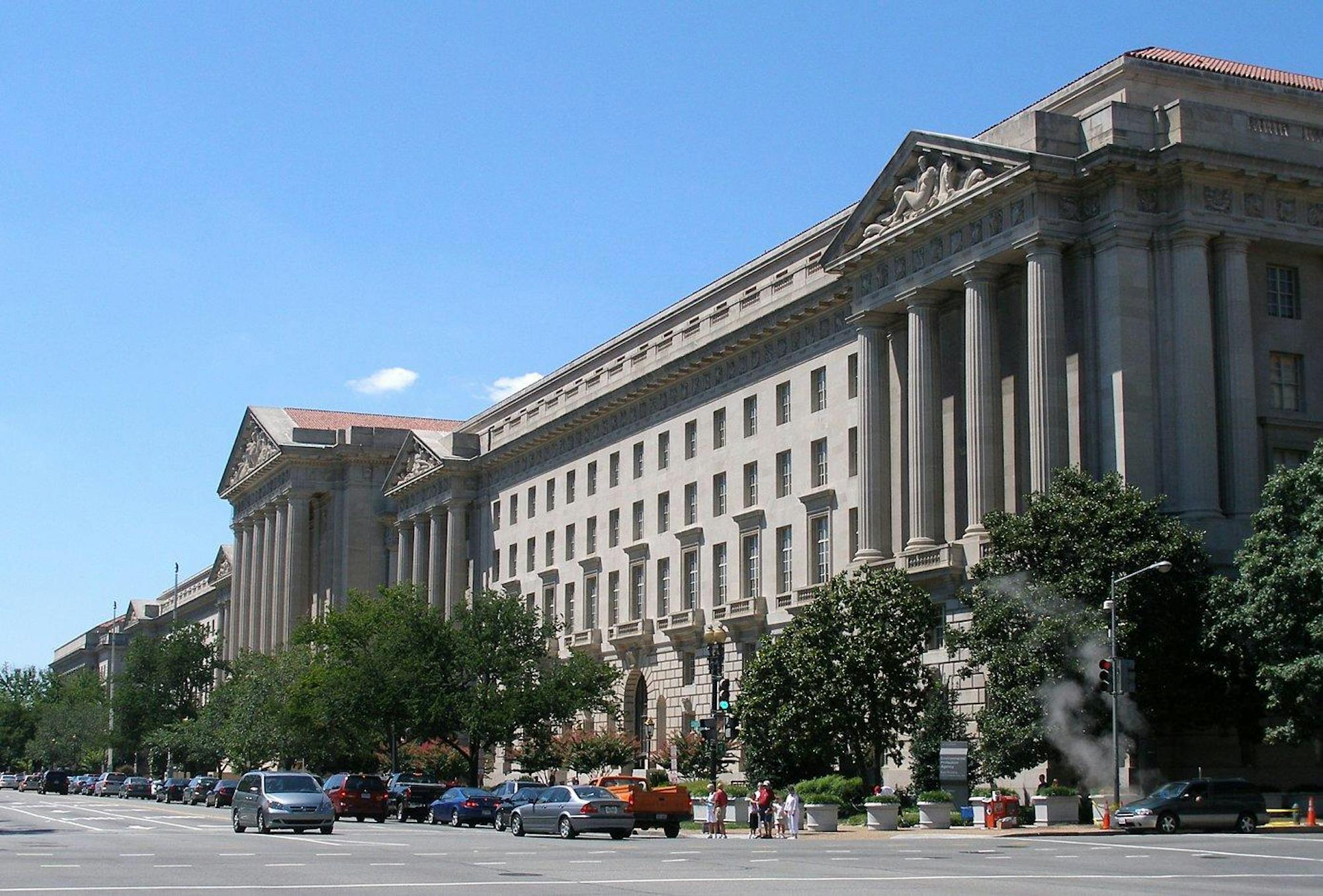
President Donald Trump’s enforcement of anti-environmentalist policies is nothing new. He started his second term by removing almost all mentions of climate change from the Environmental Protection Agency’s website, reversing a key ruling on greenhouse gases and most recently, ordering the Department of Defense to purchase electricity from coal plants. There have also been a number of quieter, less flashy actions enacted under this current administration that have flown under the radar. It’s easy to shake our heads when Trump says “drill, baby, drill,” but the actual legislative impacts of this administrative goal can often go ignored.
While the Trump administration has been working to dismantle institutions like the EPA, it’s important to note that the agency was losing power before he even started his second term. The most notable instance is the 2023 Supreme Court case Sackett v. EPA. In this case, the Sackett couple had wetlands on their property, and the EPA ordered that they stop filling in the property and return it to its original state. The EPA claimed that the order fell under its jurisdiction via the Clean Water Act, but once the case reached the Supreme Court, the powers of the Clean Water Act were strictly limited. In its decision, the court ruled that wetlands must fulfill very specific requirements in order to be protected, and this precedent has completely gutted the act’s authority.
In 2024, Loper Bright Enterprises v. Raimondo reached the Supreme Court. The case centered on a group of commercial fishermen who sued the National Marine Fisheries Service over the service’s attempt to require them to pay for at-sea monitoring programs. While the premise may seem benign, the Supreme Court’s decision actually led to a major overhaul of the Chevron deference precedent — the idea that when a law is vague, courts should defer to federal agencies due to their limited knowledge.
Supreme Court cases are certainly much less interesting to read about than Trump’s State of the Union address. However, paying attention to the court’s decisions is vital to understanding the state of environmental law today. We can trace a pattern across the past several years of rulings — one that has steadily weakened both the EPA and key environmental legislation. Now, the EPA has less authority to rule on factors destroying our planet, such as pollutants or greenhouse gases. These rulings cleared the way for the Trump administration to undo the past several decades’ worth of environmental science agreements. They also make it harder for environmental groups to bring lawsuits against those harming the environment, making the path forward for advocates very uncertain.
When decades of environmental precedent are undone, it’s easy to feel dejected about the state of our legal system. But this doesn’t mean the environmental movement has to halt — it just has to evolve. Many environmental experts have begun to emphasize state legislation, following the examples of states like Massachusetts, which has its own Environmental Policy Act Office and strict legislation that emphasizes environmental protection and damage mitigation. This legislation or judicial interpretation isn’t inherently partisan, as demonstrated by a ruling from a Montana judge that state agencies violated the right to a clean environment.
We as young people do hold political power, in spite of how it may feel, and that includes voting. With midterm primaries and elections coming up over the next several months, Americans can shake up the current Republican stronghold in Congress. That could mean the difference between environmental legislation state by state or the ability to block Trump’s agenda. We can’t give up hope in the face of recent Supreme Court cases or overturned rulings. We must evolve.



