
At least 55 million people are living with dementia worldwide. Among the various forms of dementia, Alzheimer’s disease — a neurodegenerative disorder that is caused by a loss of neurons — is the most common. Alzheimer’s progressively impairs thinking and behavior, eventually leading to serious memory loss and affecting a person’s ability to do everyday tasks. It may begin with mild forgetfulness, but over time, patients experience frequent memory loss and increasing confusion about everyday tasks and their surroundings.
Scientists believe that one major cause of Alzheimer’s is the buildup of amyloid beta plaques in the brain. The brain naturally produces a large protein called amyloid precursor protein, which is normally cut into smaller, soluble and harmless pieces. However, when APP is cut by beta-site APP-cleaving enzyme 1, it initiates a harmful process that produces amyloid beta. Studies show that BACE1 levels and activity increase by about 30% in patients with Alzheimer’s disease compared to individuals without dementia. The resulting amyloid beta forms sticky clusters that accumulate between neurons, disrupting communication and eventually leading to cell death. As neurons die, the brain begins to shrink: the brain’s ridges — gyri — narrow, and fluid-filled cavities enlarge.
Many studies have focused on developing BACE1 inhibitors. However, previous research at the University of Connecticut found that the depletion of BACE1 had only “partially restored synaptic function,” which suggests that BACE1 may also be required for optimal brain cognition. However, this strategy has proven difficult.
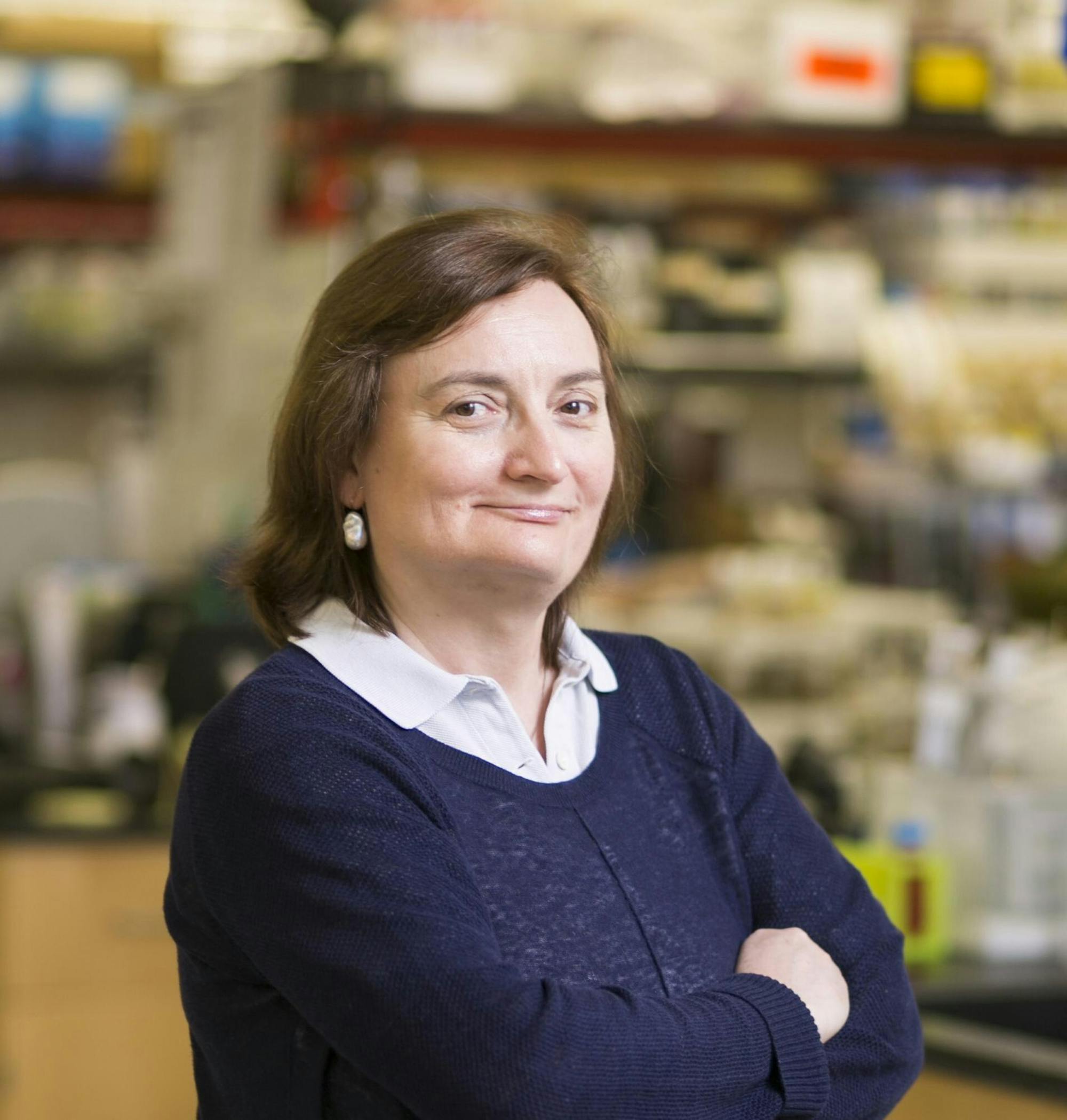
Exploring alternative functions of BACE1 is a focus of the Tufts lab run by Professor Giuseppina Tesco.
“BACE1 is a protein that not only is involved in beta amyloid generation, but also in the processing of other proteins, and they are critical for neuronal function,” she said.
Tesco notes that there are potential side effects that may come with completely inhibiting BACE 1 that are “critical for the neuron to function.”
Therefore, in the Tesco Lab, a team of undergraduate researchers has revealed a different strategy. The lab showed that depletion of Golgi-localized γ-ear-containing ARF binding protein 3 stabilizes BACE1 and increases its activity. This is specifically due to the molecule’s role in our body: GGA3 helps transport BACE1 to lysosomes — the cell’s recycling centers — where it is broken down and destroyed. This process keeps BACE1 levels under control. When GGA3 levels decrease, however, BACE1 accumulates, potentially accelerating amyloid beta production. Rather than fully blocking BACE1, they modulate its levels by preserving or enhancing GGA3 function.
“We don’t want to inhibit BACE[1] at a level that would cause side effects but [instead] modulate BACE activity,” Tesco explained.
Tesco compared the process to controlling a river. Instead of completely damming the river — which could disrupt essential functions — you slightly redirect its flow. By adjusting the course just enough, you reduce the risk of flooding downstream. Similarly, completely blocking BACE1 could interfere with its normal roles in the brain, including the production of proteins essential for neuronal health. Modulating its activity, rather than shutting it down, may offer a safer therapeutic strategy. Tesco’s research also explores how preserving GGA3 function could benefit patients beyond Alzheimer’s disease.
“There are conditions in which GGA3 decreases, for example, in stroke or traumatic brain injury,” she noted. Protecting GGA3 in these contexts may help prevent harmful increases in BACE1.
Looking ahead, Tesco is investigating a newly discovered variant in the GGA3 gene. Future research may focus on identifying a subset of Alzheimer’s patients who carry this genetic variation, with the goal of developing targeted therapies specifically designed to restore GGA3 function in those individuals.
Additionally, Tesco’s research expands beyond molecular pathways into patient-specific disease modeling. She emphasized the use of patient-derived, induced pluripotent stem cells, which allow scientists to reprogram adult cells — such as skin or blood cells — into stem cells that can then be transformed into neurons in the laboratory. These lab-grown neurons provide a powerful tool for studying how Alzheimer’s develops in individual patients, opening the door to more personalized treatment strategies. Tesco also highlighted the importance of three-dimensional cell culture systems, which better replicate the complex environment of the human brain compared to traditional flat cell models. By mimicking Alzheimer’s disease features more accurately in vitro, these advanced models may accelerate the development and testing of future therapies.



