The podcast is a hot topic among media forms — an infinite, on-demand radio ecosystem of entertainment and indoctrination. Given its rather recent climb into the mainstream, the podcast remains mostly untrodden ground as far as film goes — and that makes it very fertile ground. “Undertone” is a bold experiment with the podcast in film, using it as a conduit of psychological and supernatural terror.
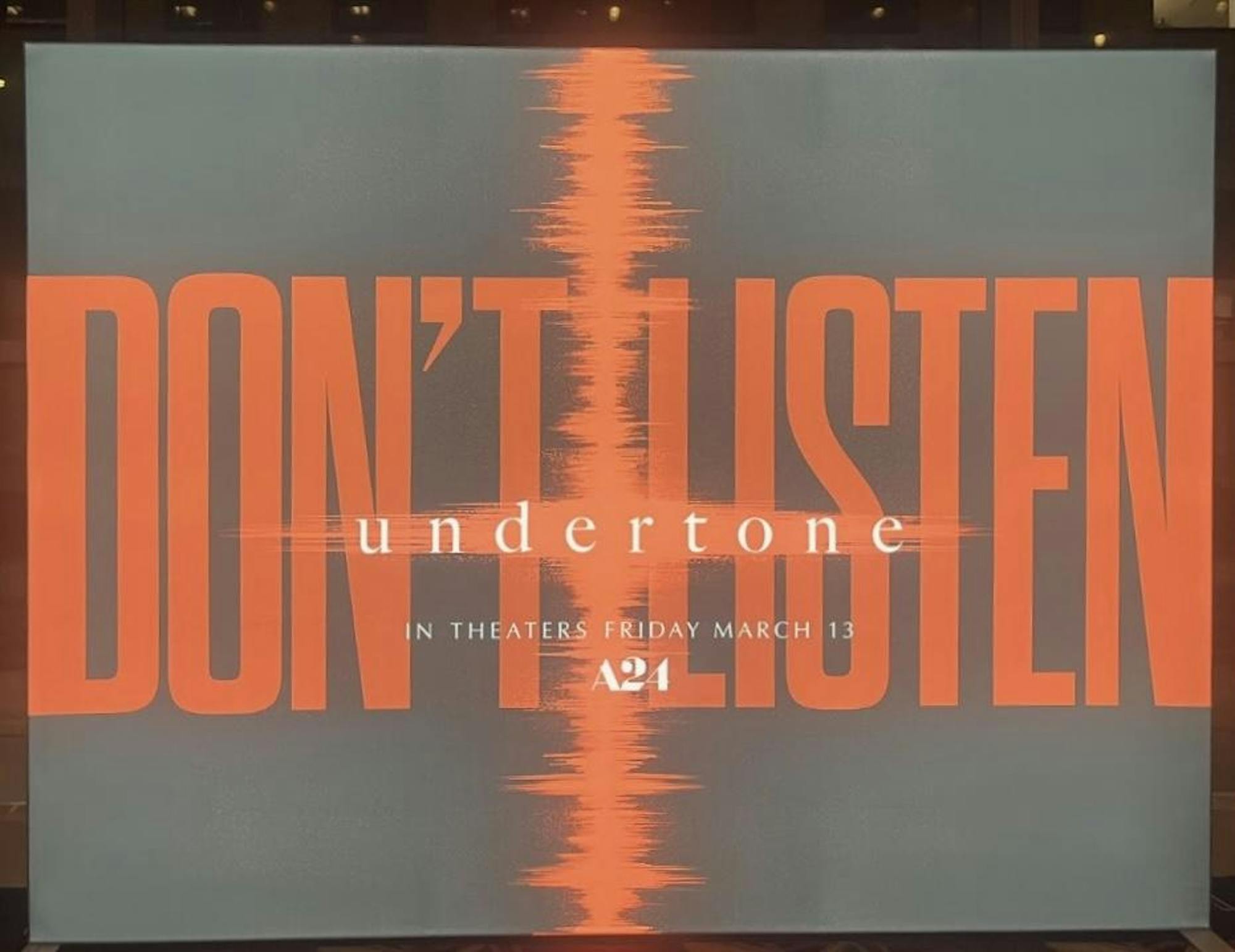
“Undertone” is a new Canadian horror film written and directed by Ian Tuason. The film premiered at the Fantasia International Film Festival in late July 2025 and is set to hit U.S. and Canadian theaters (distributed by A24 and VVS Films, respectively) on March 13. Nina Kiri stars as Evy, a paranormal podcast host who is stuck caring for her dying, devoutly Christian mother (Michèle Duquet).
As far as protagonists go, Evy is a pretty nondescript one — a blank onto which we can project ourselves. In the podcast she hosts with her friend Justin (Adam DiMarco), she is the skeptic of the pair. But outside of that dynamic, Evy comes across as an increasingly distraught everyman. Kiri pulls off the emotional escalation very well — with a paranoid look over the shoulder and the childlike hushing of the voice.
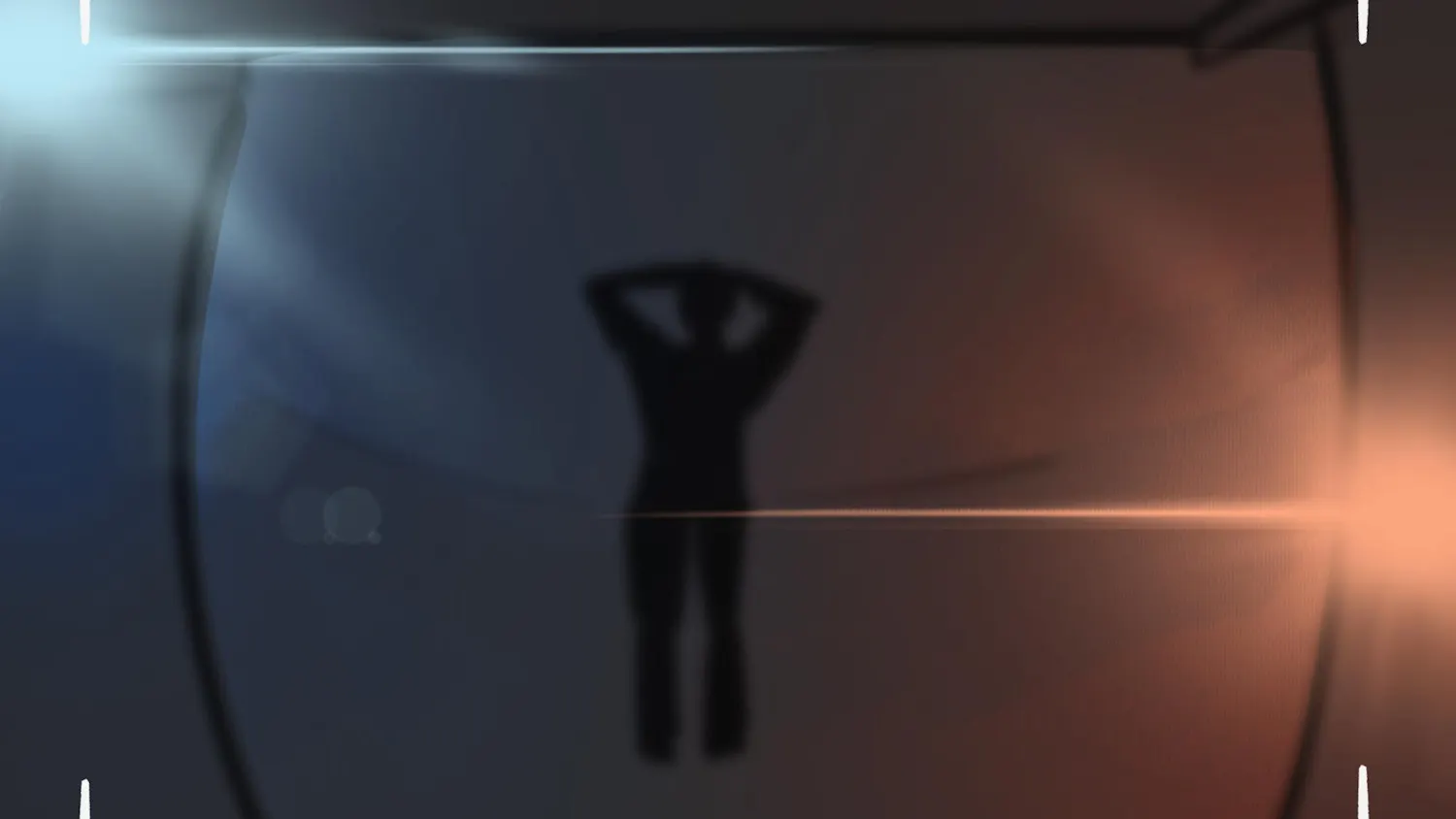
“Undertone” is, at its most basic level, a horror of domestic isolation. The stuffy little house that Evy and her mother occupy feels stuck in time, and the camera never goes outside its walls. The rooms are often shot at slanted angles, and there are frequent close-ups of items such as religious art, crosses and a kettle. Evy is frequently shot from behind, as if the camera itself is the malicious presence looming over her. It all creates a deliciously claustrophobic atmosphere, trapping us in the house with Evy.
The use of sound in “Undertone” is especially inventive for a horror movie. The aural, rather than the visual, is the film’s primary space of horror. The sound of Evy’s mother’s breathing creates a constant, rhythmic weight. Evy’s podcast also, of course, plays a major role. A series of 10 mysterious audio files featuring ominous recordings of a young, expecting couple (Keana Lyn Bastidas and Jeff Yung) sent to the podcast is what drives the horror forward.
The paranormal podcast frame offers a huge opportunity for information dumping — and “Undertone” takes full advantage of it. Overexplanations through shots of Wikipedia pages, clips of nursery rhymes and narrations from Justin are a major detriment to the horror. It’s as if the film is holding the audience’s hand and drawing the lines between the dots for us. There is little mystique left over.
One of the scariest aspects of “Undertone” is the behavior of Evy’s mother, who appears to move only when Evy is not looking. It all feels like a primal kind of alienation — suddenly, the mother is not the mother, but something unfamiliar and untrustworthy. And that makes for really good horror. Mundane sights such as a picture on the wall tilted slightly off-kilter or the presence of a glass of water on the nightstand become spine-chilling when we see them through Evy’s eyes. Duquet’s performance as the mother is just great. She is the definition of subtlety, managing to be lifeless and unnervingly animated in the same moments.
As the insistent Christian imagery would suggest, “Undertone” soon reveals itself to be a standard demonic horror rather than a purely original one. This is a quite predictable turn and thus a bit of a disappointing one. Everything — from the audio files to Evy’s newly discovered first-trimester pregnancy — is heavy-handedly connected to Abyzou, a female demon who causes miscarriages. And of course, Justin and Evy’s back-and-forth on the podcast practically gives us a crash course in ‘Abyzoulogy.’ At the very least, the trope-heavy-Catholic-guilty-demon foundation does give the film’s podcast pioneering something recognizable and visually powerful to latch onto.
Another issue arises with “Undertone”: its connection between the paranormal podcast and the mother. These two aspects never really thematically mesh. With his emphasis on pregnancy, the mother-daughter relationship and the domestic space, Tuason is clearly probing female-bodied horror in “Undertone,” but he does so pretty clumsily. He reaches for some kind of feminist commentary but never quite grasps it. The mother who sits up in bed behind Evy’s back and the audio files that contain a demonic incantation are indeed scary on their own and in combination, but they never manage to say something insightful.
The escalation of horror is very satisfying throughout the course of the film, the story building to the meeting of the visual and the aural in a swirling, shattering climax. Though the dialogue in “Undertone” is anything but subtle, the film’s use of unsettling visuals and unassuming yet eerie sounds is masterful until the very end. The only thing scarier than the sound in “Undertone” is the silence — a silence that is always waiting with bated breath.