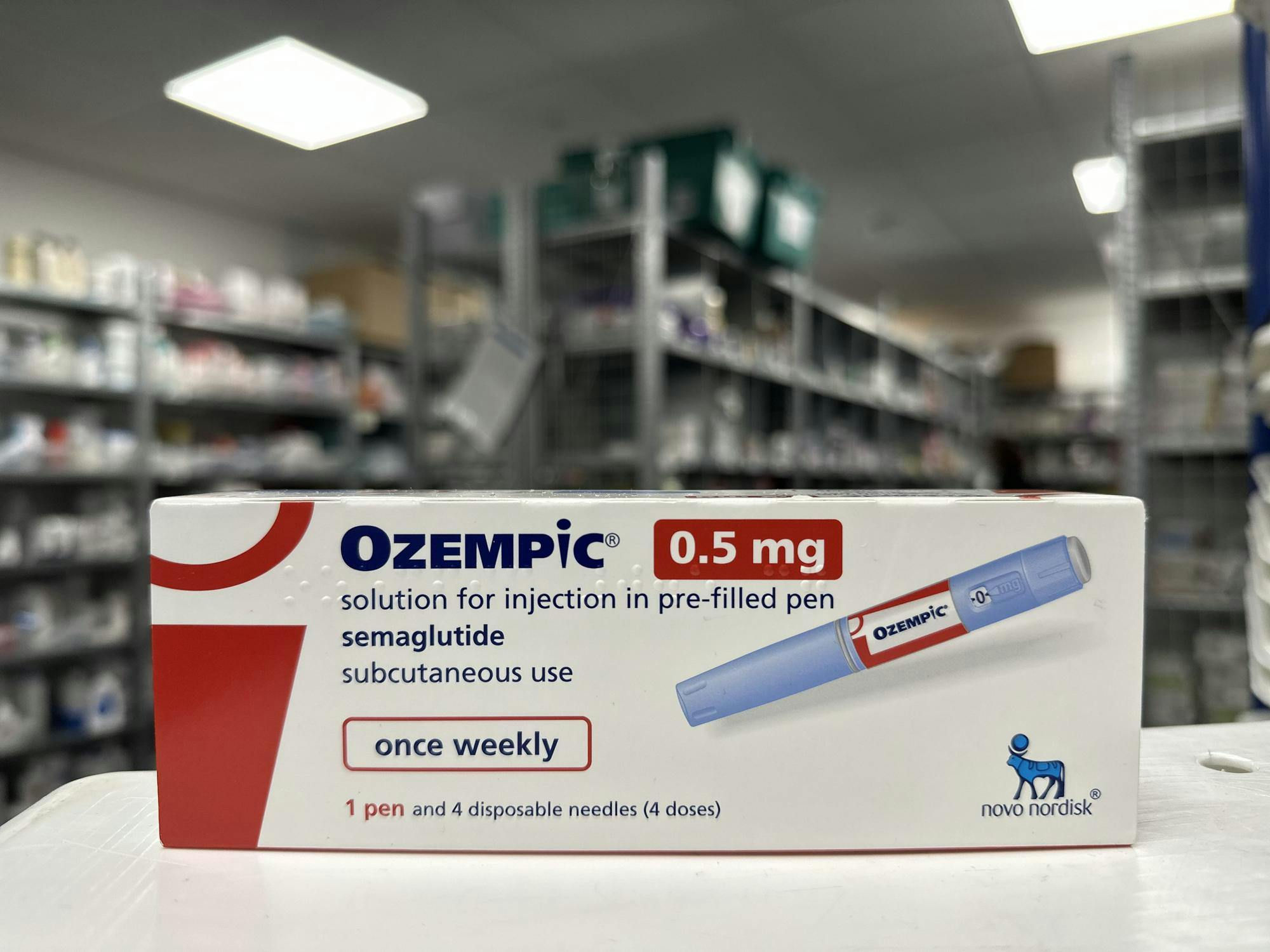
Women’s bodies have always been subject to waves of trends, but this year’s ‘Ozempic epidemic’ has brought them back to the forefront of public discourse. Widespread discussions online have noted the changing physical appearances of various celebrities, especially Ariana Grande, in conjunction with conversations about the prominence of GLP-1 drugs. Originally developed to lower blood sugar levels in diabetes patients, several of these medications have been approved by the FDA for weight loss. GLP-1s have become especially accessible and normalized, with drugstores like Walgreens and CVS promoting their use.
Increasing GLP-1 usage has prompted varied responses, ranging from public praise for celebrities’ ‘healthier’ appearances to criticism of celebrities who use GLP-1s instead of losing weight the ‘traditional way.’ In conversations surrounding GLP-1 drugs, some of the buzz has become a witch-hunt to deduce which celebrities seemed to have used Ozempic or other medications for drastic weight loss. Terms like “Ozempic face” and “Ozempic bodies” have become widespread across the Internet.
To me, the ‘Ozempic epidemic’ indicates that the notion of an ideal body type never went away, even after social movements focused on body positivity. The way we, as women or as a society, have viewed our own or others’ bodies is still plagued by these prejudices.
Conversations around GLP-1 usage often center on Ariana Grande’s appearance, with many people pointing out her apparent drastic weight loss. Online comments like “Don’t comment on peoples bodies’ soon y’all will be commenting on peoples corpses” highlight a true concern people have for Grande’s wellness. There are also other posts that want to hold Grande accountable for her appearance, with comments like “I think it’s extremely worrying that young girls will begin to see this as a beauty standard to try to achieve.”
The statements seem to ignore the fact that we, the public, know nothing about these individuals’ private lives. “I think we should be gentler and less comfortable commenting on people’s bodies,” Grande said, addressing the concerns on TikTok. “The body that you’ve been comparing my current body to was the unhealthiest version of my body. I was on a lot of antidepressants … and eating poorly,” she added. The public reaction to her appearance has affected Grande so much that she has withdrawn from the upcoming revival of the musical “Sunday In The Park with George.” She made the announcement as part of her decision to take a break from the spotlight. After the announcement, she stated on tour that “I heard my fans were worried negativity was ruining things for me but … that could not be more than the opposite.” She added that “boundaries need to be set, human beings do need a break sometimes.”
If she is indeed suffering from some kind of eating disorder, these overwhelming and critical comments would not help her in any way. In fact, the public’s spotlighting seemed to have even worsened her mental health. Some may not have been malicious, but there is a lack of sensitivity in these public conversations.
Meghan Trainor, a singer-songwriter famous for promoting self-love and body positivity in the 2010s, including in her hit song “All About That Bass,” has also been in the spotlight for her use of GLP-1 medications. Recently, many have noted that she seems to have lost a significant amount of weight. In 2025, she gave a “shoutout” to Mounjaro, a tirzepatide injection used to treat type 2 diabetes, for helping her after her second pregnancy.
My critique is not necessarily about her weight loss journey. These celebrities likely have the financial resources to employ a team of nutritionists, doctors and personal trainers to support their health. Yet, Trainor’s entire brand and image was built around promoting curves. Her case highlights a key issue with the era of body positivity, which is that many people — especially celebrities at the forefront of the social movement — don’t seem to believe their own message. Ultimately, the notion that the ideal body type is skinny persists.
The issue with the ‘Ozempic epidemic’ is that the public seems consistently unable to converse about people’s bodies, especially women’s. The use of GLP-1s also underscores that societal expectations and outlooks still shape how we view our own bodies, even among those who have promoted the acceptance of different-looking body types. Indeed, we have generally moved away from the toxic female body standards of the 2000s, but with the progression and normalization of Ozempic-like GLP-1 drugs, the future seems unclear.