The Somerville School Committee voted in late August on its preferred design option for a new PreK through eighth grade school at 115 Sycamore Street, sending the proposal to the Massachusetts School Building Authority for approval. The design proposes a 925-student school building at the site, which would merge both the Benjamin G. Brown and Winter Hill Community Innovation schools.
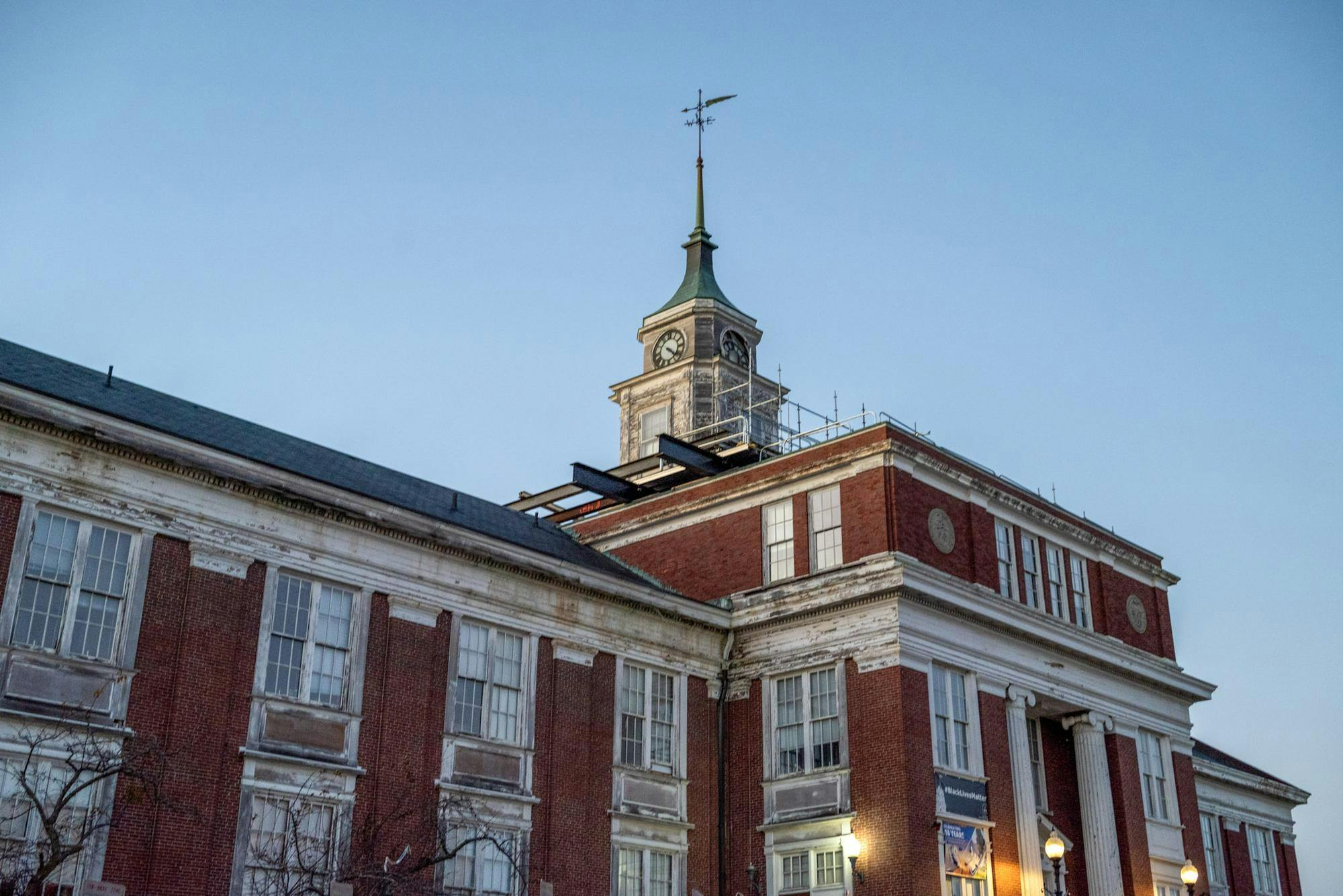
Winter Hill’s Sycamore Street building was closed in 2023 due to structural concerns following a concrete collapse, while the 100-year-old Brown School faces infrastructure concerns. Winter Hill has since been operating out of the Edgerly Education Center.
“There are two school buildings that are beyond their usable lifespan in Somerville,” Emily Ackman, chair of the Somerville School Committee, said.
Throughout the process of determining how to replace Winter Hill, there has been considerable community opposition to the larger schoolhouse, with critics arguing that it will reduce educational quality and walkability in the city.
Council President Lance Davis, a full voting member of the School Committee, was the lone vote against the proposal in the most recent vote, instead supporting a smaller 690-student construction which would replace Winter Hill without necessarily closing Brown.
“The proposal to request the funding and ultimately build a massive, nearly 1,000-seat school at the expense of two of our smallest and most creative, successful or innovative schools, based on various metrics, is a huge mistake,” Davis said.
This vote in favor of the merger marks an important step towards the restoration of the Winter Hill school. Expediting the process is what convinced Leiran Biton, vice chair of the School Committee, to change his vote in favor of the 925-student school.
“In the spring, I stood with both the Brown School and Winter Hill School communities to oppose the consolidation of the two schools. However, that debate is over,” Biton wrote in a statement to the Daily. “On August 17, I voted to advance the plan to the MSBA in order to avoid any delays in the new school project.”
“This process has already been delayed, quite a bit,” Ackman said. “Part of the Winter Hill community’s enthusiastic backing of the current mayor is that one of his very loud commitments is that we’re going to move this process along as quickly as possible [and] I think that is what is happening.”
Opposition to the larger schoolhouse still exists in the community, especially from families of Brown School students who expressed concerns about the ability of a larger school to tailor to students’ needs.
“What has happened that I was very much not on board with is the question of closing the Brown became just a footnote to the decision of what kind of school to build to replace Winter Hill,” Brown parent Ksenia Samokhvalova said. “So there was never really a discussion about closing the Brown. It was just kind of a foregone conclusion.”
On their website, a group of Brown School parents refutes the city’s claims that research on school size and student outcomes does not show a clear educational advantage to smaller schools.
Ackman noted that, despite drawbacks that may come with a larger school, a 925-student facility would serve as a new community asset, providing space not only for students but also for a range of other community functions.
“The last MSBA-funded building that we were permitted to build is the high school. It’s a really wonderful building that has opportunities for community engagement,” Ackman said. “Our hope is that with a newer building we can again do something like that.”
Davis, however, argues that the school’s value as a community space should be considered separately from its value as an educational facility.
Families also worry that a larger school would reduce walkability for families living farther from the new school.
“In the likely event that this decision leads to the ultimate closing of the Brown School, that will leave a massive hole on a map where ... there is no elementary school in a significant district distance, so it will inevitably result in more cars on the road in the mornings and afternoons,” Davis said. “I think this decision will very clearly only put folks at more risk.”
Ackman acknowledged Davis’s point, but believes that many Somerville students use buses, electric bikes and other modes of transportation to get to school, noting an absence of traffic from Winter Hill students commuting to the Edgerly Building.
Ultimately, the decision to build a larger schoolhouse was seen to have financial benefits because it allows Somerville to address the needs of both Brown and Winter Hill through one MSBA-supported project, potentially reducing the need for another costly school construction project in the future.
“Finance is a part of it,” Ackman said. “[This plan] ultimately saves taxpayer dollars.”