
This review contains spoilers for “Whistler” by Ann Patchett.
“Whistler” by Ann Patchett opens with what seems like a meet-cute: In a city of 8.58 million people, Daphne Fuller, the protagonist, runs into a man from her past at the Metropolitan Museum of Art. Except the man is old, and he is following her.
He is not a stranger nor an ex-lover, but her former stepfather, Eddie Triplett. This novel is a love story, though not a romantic one. It is about the people who come and go in our lives and who become family through connection rather than blood.
Though the two have been estranged for 44 years, Eddie swiftly introduces Daphne as his daughter to everyone. This includes Skip Hotalling, who has been Eddie’s lover since college, even during Eddie’s marriage to Daphne’s mother. The novel continuously revisits the idea of a stepfather-stepdaughter relationship — Patchett draws attention to each time Eddie calls Daphne his daughter, and to how “stepfather” is an “honorific bestowed or withheld by the stepchild.” From the beginning, it’s clear that Eddie and Daphne share a deep, special attachment with no legal or biological ties. The question is why Daphne, exactly.
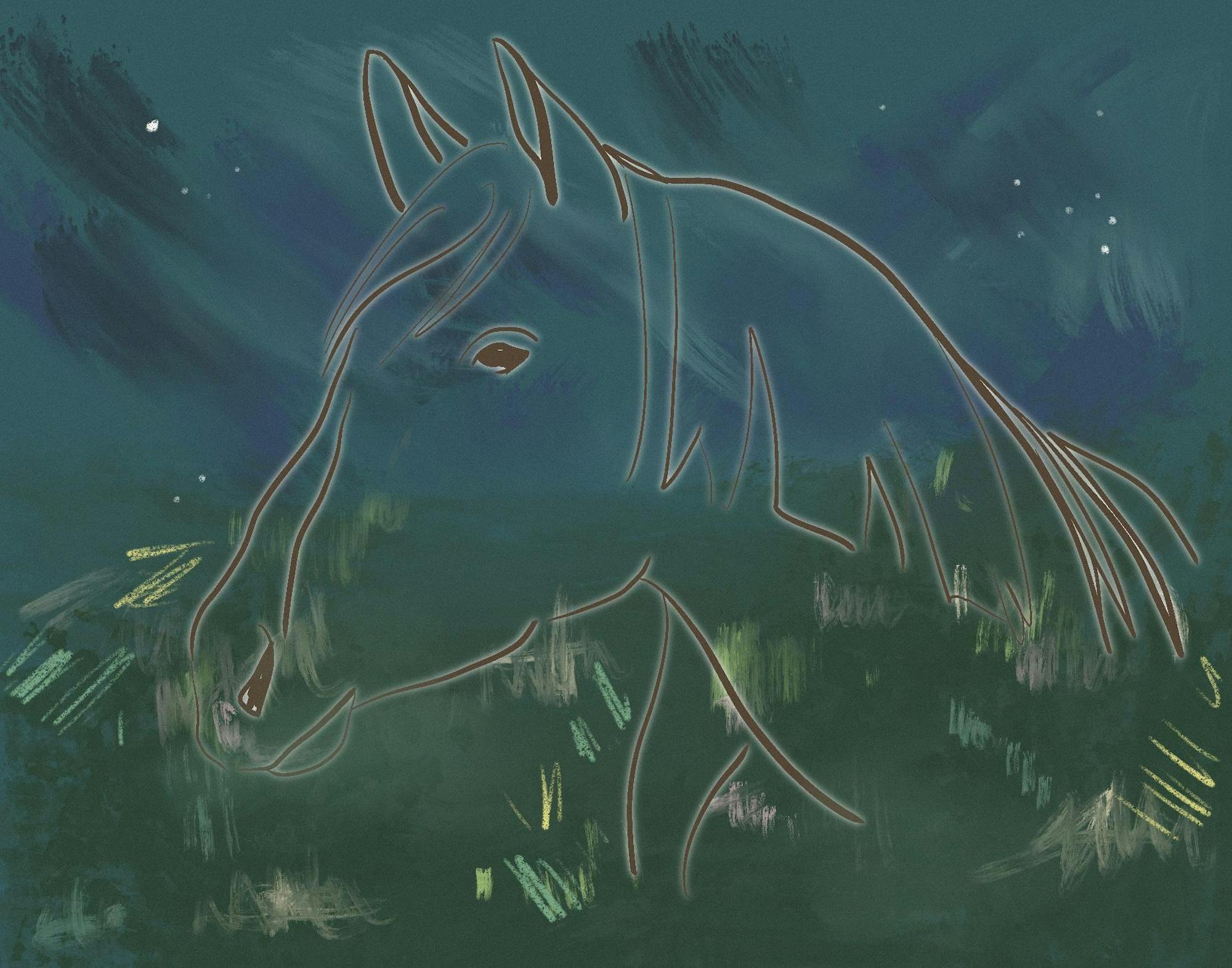
The answer traces back to one fateful night, when the two were stranded on the side of the road in the dead of winter following a car accident. The novel oscillates between those traumatic days and the present. To distract nine-year-old Daphne from the severity of the situation, Eddie recounted a memoir proposal about a horse named Whistler, named for the way he ran to his handler at the sound of a whistle.
One night, the handler fell, cracked her ribs and was left alone in the forest, afraid she would pass away. As in many other loyal animal stories, she whistled, and the horse valiantly carried her to her farm. Like Whistler and his handler, Daphne and Eddie had been separated ever since that night, but eventually reunited. And like the memoir, the relationship between Daphne and Eddie is one that turns trauma into a tale of surviving, staying loyal and promising to return, even if it takes four decades.
Near the end of the novel, Eddie is diagnosed with leukemia and begins contemplating how he will pass away. Daphne tries to comfort him, and the two share a tender moment when he tells her what he learned at a dharma lecture: After death, the body doesn’t know it is dead and needs someone to remind it. They pray and remind the deceased people in their lives so that none of them are left wandering and lost.
Meanwhile, Daphne’s sister, Leda, has remained in the dark about the night of the crash for all these years. Only when everyone gathers at the hospital for Eddie does Leda learn what happened: It was Daphne who saved the two of them, while Eddie was forced to stay in the car because of his broken ankle.
In Daphne and Eddie’s final conversation, Eddie suggests that she turn their story into a book, and says, “In the book, I don’t die. In the book, we’re sitting on this bench, talking about a book about the two of us, and then the story stops with us waiting for Jonathan and your mother to come back.”
One interpretation of this could be that during the original events, Eddie froze and died in the car while Daphne was outside searching for help. In this interpretation, the whole novel could have been Daphne’s way of ensuring Eddie is not a lost soul by reminding him that he is dead, 44 years after she has finally processed her own grief.
Although Daphne could not be Whistler, who ultimately returned to her handler, the reimagined story in which Eddie survives the crash is a testament to the bond between father and daughter. In it, she reconnects with her love for Eddie and ensures that he is never forgotten, keeping her promise to return to the memory of her stepfather despite the trauma and loss.



