
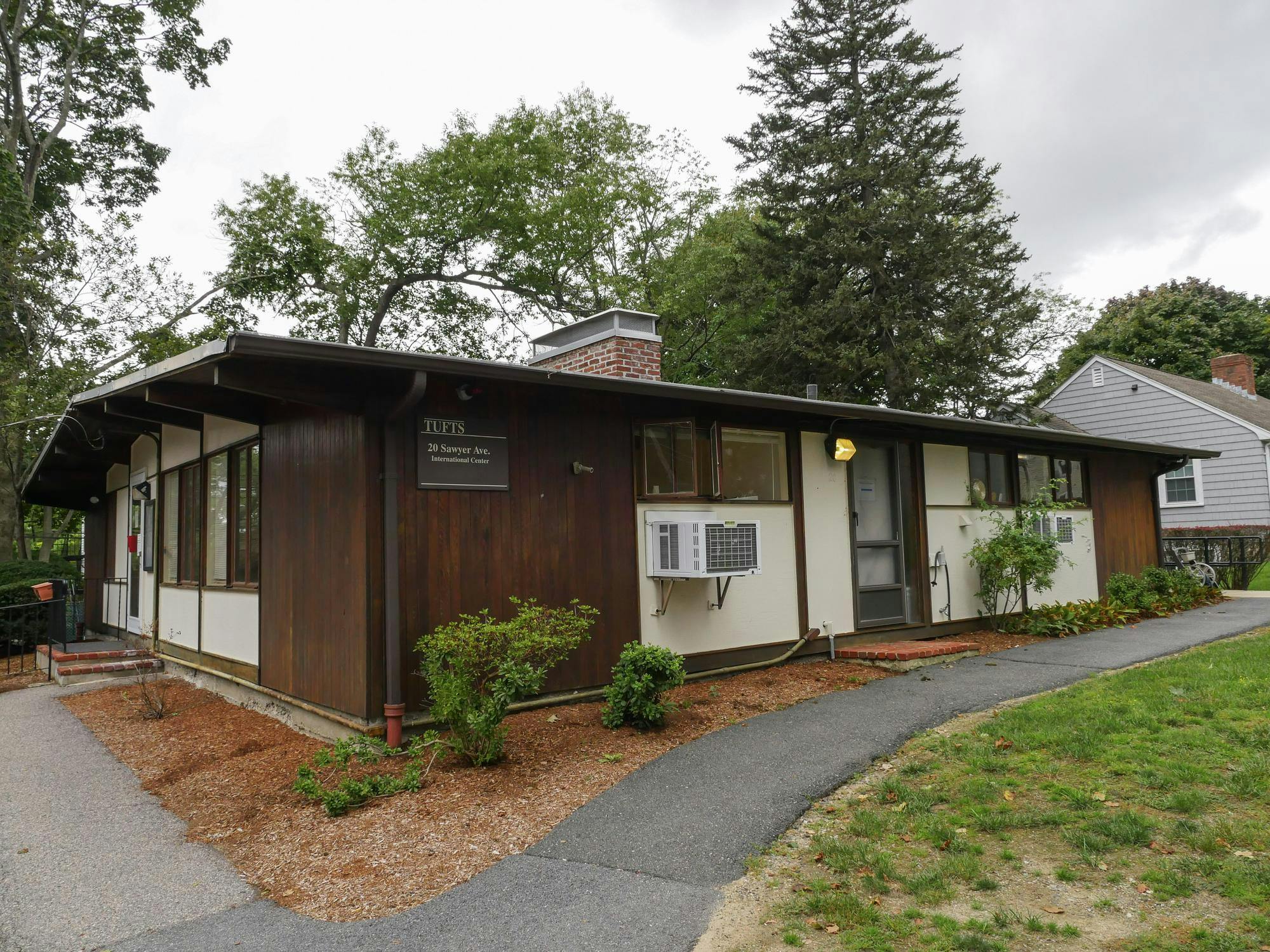
The Department of Homeland Security announced new regulations on July 17 for the F-1 student visa, establishing fixed periods of admission into the United States for international students. Formerly, F-1 visa holders were admitted for unspecified periods of time, allowing students’ stay to exceed their exact duration of study. This new policy, known as the “final rule” and set to take effect on Sept. 15, creates significant uncertainty for current and prospective international students at Tufts.
“The [new regulation] has a direct impact on enrollment in that it restricts academic mobility and will prohibit certain prospective students, like those with prior degrees earned at the same level or transfer students, from matriculating,” Anna Garson, director of the international center, wrote in a statement to the Daily. “The final rule also adds costs, processes, and introduces new uncertainties into an international student’s trajectory that may impact their decision to pursue a program in the U.S. at all.”
Garson also commented on the tightening of restrictions around F-1 Curricular Practical Training, which allows international students to do internships, cooperative education or fieldwork off-campus.
“Similarly, changing policies around internships (CPT) and announcements about changes to permanent residence processes serve as further deterrents to students who are considering their long-term plans when deciding where in the world to study,” Garson wrote.
Sophomore Flora Yang, an international student at Tufts, expressed concern over the restrictions on CPT programs.
“CPT usually enables students to find internships off campus during their school years,” Yang said. “You could accumulate work experience before you have to actually find a job. Now that this program has been revoked, students are basically unable to work off campus without the permission of the school.”
She noted that this would complicate international students’ efforts to find work while still in school, which in turn will make it difficult for them to find work immediately following graduation.
“I feel like that makes students, international students, even less competitive, and there’s more hindrance to finding a job after graduation because you are not able to get any work experience, especially in fields … that require a lot of work to actually find work,” Yang said.
Yang remarked that this difficulty, along with ongoing and increasing immigration tensions this past year, has made the U.S. a hostile environment for international students.
“Attending school this year and also last year in the U.S. has made me feel very much less hopeful about continuing my education after graduation or continuing my life in this country,” she said. “I feel like it has not become an accepting environment for international students or workers who want to continue their journeys in this country.”
At Tufts, the International Center supports international students with visa acquisition, arrival, enrollment and securing post-graduation work. In light of recent policy changes, Tufts Office of Undergraduate Admissions has been working with the International Center to provide continued, up-to-date support for students.
“Admissions works closely with The International Center and has been working on creating FAQs and resources for incoming international students regarding regulatory and policy changes,” Garson wrote. “[W]e remain dedicated to helping our international students understand their options, access available resources, and pursue their academic and professional goals with confidence.”
Yang, however, contended that the support she has received from the university has been lacking, and that students could benefit from having a more direct forum for voicing their concerns.
“I feel like the only help or support I’ve gotten is from the [International] Center emails, and they sent us a lot of emails about the updates on visa regulations, on CPT and stuff,” Yang said, “I guess we could go seek out help at the [International] Center ourselves, but I wish there could be a seminar hosted … so that we could all have a place to discuss this.”
J.T. Duck, dean of admissions and enrollment management, stated that interest in studying at Tufts remains strong around the world, despite current challenges.
"Tufts and U.S. higher education remain of strong interest to students around the world as we are seeing in our recruitment travels and conversations with students, even as there are these evolving challenges to consider,” Duck wrote in an email to the Daily. “Tufts remains committed to supporting its international students as they navigate these policies.”
Despite Duck’s statement, Yang said that she has seen growing uncertainty among international students about their futures in the U.S.
“I think a lot of us feel a sort of frustration and also confusion and just general loss of direction, because I believe a lot of us would want to pursue a life in this country after graduation,” she said. “But now I think more people are looking outward to Europe, maybe other countries in Asia, other [more immigration-friendly] countries to see how their lives could play out there.”



