At Tufts University, the future of food may not begin on a farm, but instead in a laboratory. From meat cultivated directly from animal cells to chocolate produced without traditional agriculture, emerging technologies are redefining everyday products. With the establishment of the Innovation Hub for Food and Materials, Tufts aims to bridge the gap between scientific discovery and commercial application.
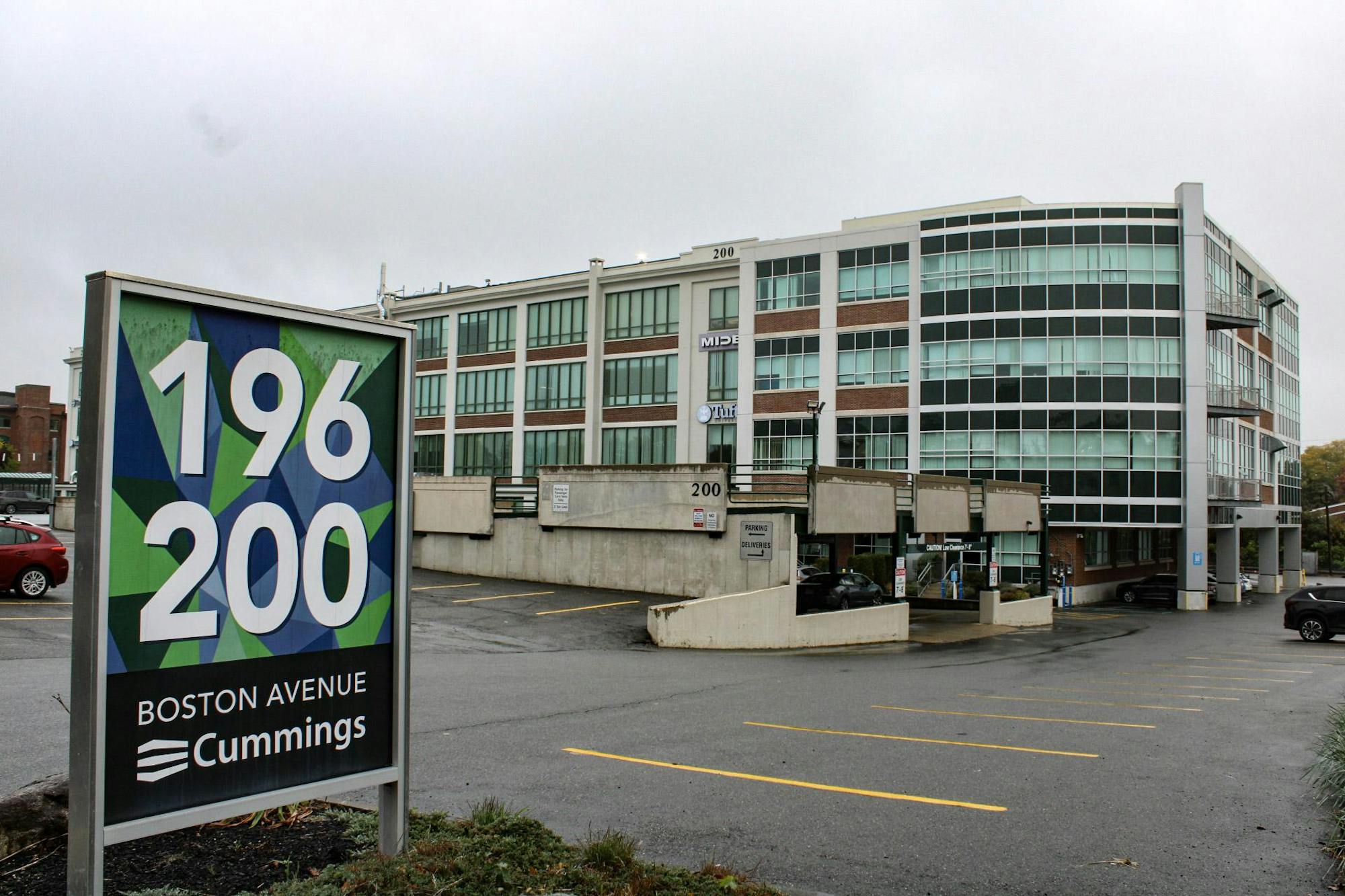
Located at 200 Boston Avenue in Medford, the hub brings together researchers, entrepreneurs and industry partners, offering specialized equipment, shared laboratory spaces and commercialization resources to support emerging food and materials technologies.
“The innovation hub for food and materials is a one-stop shop [research and development] center. Really, it’s all about putting innovation into context,” Matt McNulty, associate director of the Tufts University Center for Cellular Agriculture and a key figure in the hub’s development, said.
The initiative builds upon nearly a decade of research through the Tufts University Center for Cellular Agriculture, directed by David Kaplan, a professor of biomedical engineering whose pioneering work helped inspire the hub’s creation. Emerging from growing student interest in issues ranging from animal welfare to food equity and security, the initiative sought to answer a new question: How can tissue engineering techniques traditionally used in medicine be applied to food production?
As the program expanded, however, translating scientific breakthroughs into commercially viable products presented a new challenge.
“[The hub was created] with the idea of being like a segue between the research that we do in the labs here to industry and commercialization,” Kaplan explained.
For startups, this transition requires expensive equipment, specialized expertise and resources beyond traditional academic laboratories.
“Having the infrastructure around you means you don’t have to do it all yourself,” Kaplan said.
To combat these barriers, the hub houses approximately $5 million in specialized equipment supporting cell culture, fermentation, food processing, materials processing and advanced characterization work. Its facilities also include a startup incubator professionally managed by BioLabs, extending an existing partnership with Tufts.
Among its most distinctive resources is an open-access cell bank, providing researchers and companies with established cell lines for scientific development.
According to McNulty, the hub offers animal cell lines developed at Tufts, alongside the world’s largest plant cell culture collection, comprising more than 1,000 cell lines and the only collection of its kind in North America.
For startups, accessing these biological resources can significantly shorten the early stages of development.
“It can take years to go from a cell isolation to a cell line ready for scale up,” Kaplan said. “[Startups] don’t have to start from step one. They can start from step five because we can give them the cells to get started.”
The hub also enables researchers to test their technologies at scales beyond those available in academic settings.
McNulty described how researchers develop projects using cell culture equipment capable of supporting volumes ranging from half a liter to 50 liters.
Yet, producing a commercially viable food product involves more than successfully growing cells. Consumer acceptance remains a significant challenge for emerging food technologies.
“If you don’t know if consumers like it, what’s the point?” Kaplan asked, emphasizing the importance of integrating product development with consumer feedback.
To address this, the hub’s test kitchen connects scientific development with the practical experience of preparing and consuming food.
McNulty highlighted the involvement of Suzannah Gerber, a research scientist and faculty fellow at the Auster Center, whose culinary expertise will help guide the facility’s operations. The kitchen is intended to provide opportunities for chefs and researchers to evaluate new ingredients, assess cooking characteristics and conduct small-scale sensory testing as the necessary approvals are obtained.
When thinking about the biggest challenges facing the food cultivation industry, two priorities came to mind for Kaplan: flavor and taste, and scaling production while lowering costs.
Beyond technological development, the hub also aims to create opportunities for Tufts students to engage directly with emerging technologies and entrepreneurship.
McNulty explained that the hub is developing programming to connect students with startups through networking, research collaborations and hands-on training.
Kaplan similarly hopes the facility will expand access to internships, co-ops and career exploration.
“My hope is [that] with this hub, not only will they have their research work, but they can also find opportunities for internships and co-ops with the companies,” Kaplan said.
As the next chapter of food innovation takes shape, Kaplan envisions the hub becoming a thriving center for emerging companies, with successful startups eventually moving beyond Tufts and making room for future innovators.
“My goal is [that] in five years, Tufts and Boston are now known as the center for food innovation moving forward,” Kaplan said.
By bringing scientific research, industrial infrastructure and entrepreneurship into one space, the Innovation Hub for Food and Materials seeks to turn today’s discoveries into tomorrow’s innovations, equipping researchers and entrepreneurs to shape the next generation of food and materials technologies.