On Oct. 5, the Nobel Assembly at Karolinska Institute awarded the 2026 Nobel Prize in Physiology or Medicine to Karl Deisseroth, Peter Hegemann and Georg Nagel for their groundbreaking work in optogenetics, a technology that uses light to map and control cells in the brain.
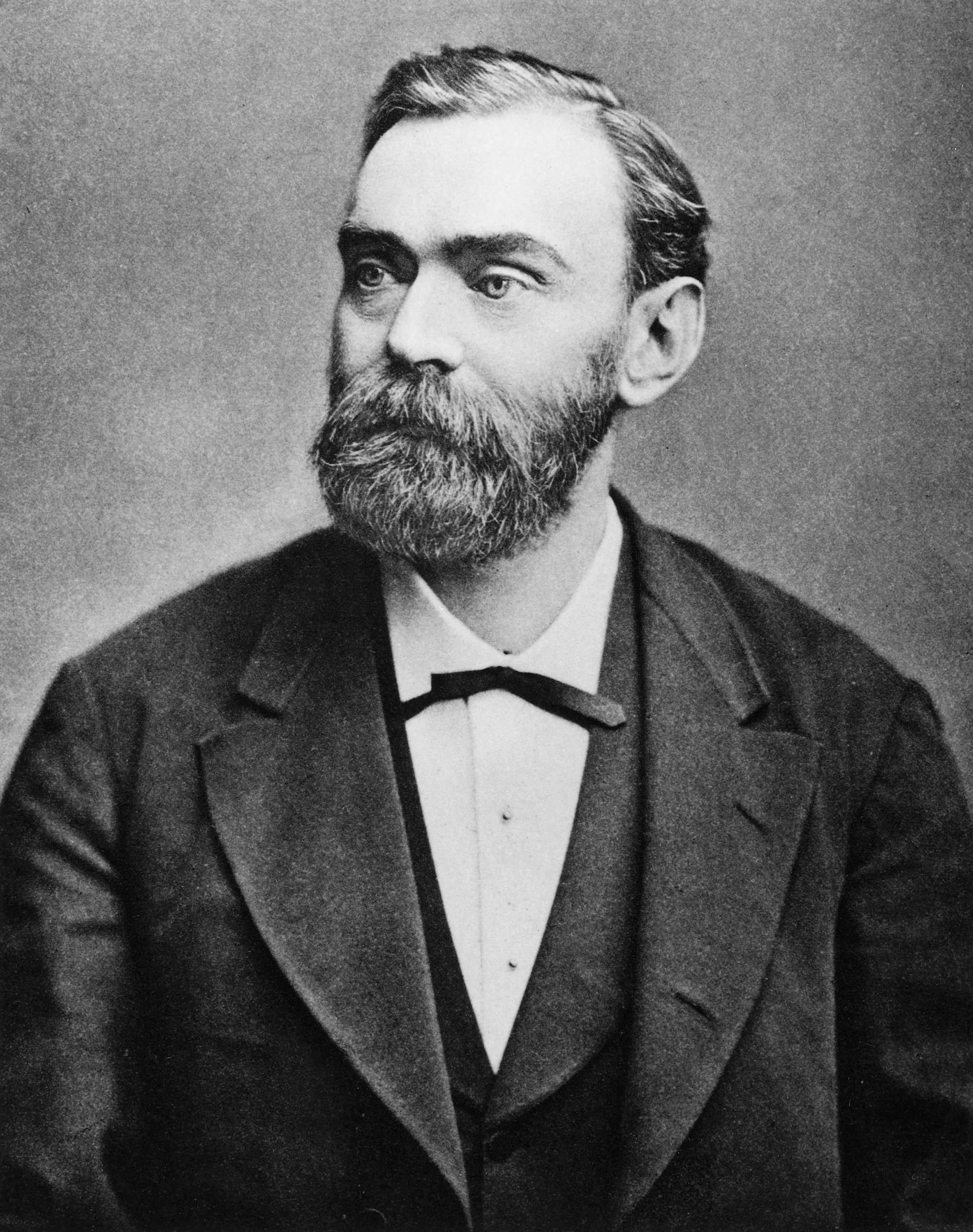
Each year, the Nobel Foundation awards prizes for six categories: Physics, Chemistry, Physiology or Medicine, Literature, Peace and Economic Sciences. These categories, the first five specified by Alfred Nobel in his will and the final added in 1968 by the Swedish Central Bank, represent the life and work of Nobel.
Nobel was born in Stockholm in 1833; that same year, his father, Immanuel Nobel, went bankrupt. In an attempt to restart his career, Immanuel moved to St. Petersburg, where he found success designing equipment for the Russian army. Immanuel moved his family to Russia in 1842, where he provided his sons a world-class education.
During this time, Nobel developed a love for English literature and poetry. His father, who wanted Nobel to work for his business, sent him abroad to study chemical engineering. This period of Nobel’s life, in which he traveled to Sweden, Germany, France and the United States, laid the groundwork for his later success. While working at Professor T. J. Pelouze’s lab in Paris, France, Nobel met Ascanio Sobrero, an Italian chemist who had synthesized nitroglycerin three years earlier.
Though now used to treat chest pain, nitroglycerin is a highly energetic and unstable molecule prone to powerful and uncontrolled explosions. Sobrero, horrified at the deadly possibilities of his invention, destroyed his notes on its synthesis. It was too late, though. Word of nitroglycerin’s explosive power had already gotten out to the public.
Nobel was interested in how nitroglycerin could be used for construction and therefore dedicated his early career to its research. By 1867, he had a patent for dynamite, which combined nitroglycerin with the silica stabilizer kieselguhr to form a much safer product. This patent, combined with the other 354 he earned across his career, built Nobel’s fortune. This fortune was used to create the Nobel Foundation, an organization meant to use Nobel’s assets “to constitute a fund, the interest on which is to be distributed annually as prizes to those who, during the preceding year, have conferred the greatest benefit to humankind” according to Nobel’s will.
Deissroth, Hegemann and Nagel’s discoveries within optogenetics, leading to this year’s prize win, offer scientists the opportunity to better understand the brain. This is particularly notable given that the brain remains one of the least understood parts of the human body. Developments in our knowledge of where and how it works offer tremendous potential for understanding the pathophysiology of and creating treatments for neurologic and psychiatric disorders.
Hegemann, a biophysicist at the Humboldt University of Berlin, and Nagel, a biophysicist at the University of Würzburg, built the foundation of this work. In 2003, the pair discovered that under blue light, the protein channel channelrhodopsin opened to allow charged ions into the cell.
Deisseroth, a bioengineer and psychiatrist at Stanford University, applied this research to create the field of optogenetics. He inserted the gene for channelrhodopsin into cultured rodent neurons. The modified neurons responded to light instantly, precisely and completely on command. This type of control allows neuroscientists and engineers to map specific brain circuits, including those implicated in disease, and switch on and off specific cells.
Since its inception, optogenetics has been primarily used for basic science research. Slowly, however, it has moved into the clinical space. In a recent clinical trial, researchers José-Alain Sahel and Botond Roska led the intraocular injection of Adeno-Associated Virus into patients with retinitis pigmentosa, a group of diseases that cause progressive vision loss and eventual blindness through the breakdown of light-sensitive cells in the retina.
The AAV that Sahel and Roska used encoded for ChrimsonR, a type of channelrhodopsin. Four and a half months after the injection of the ChrimsonR AAV, once the patient’s ganglion cells had time to produce the protein, the researchers used light-stimulating goggles to provide visual training to the patient.
Seven months later, the patient reported visual improvements. The patient was able to use the goggles to orient toward and reach for objects, including identifying the white stripes of a crosswalk.
Scientists are attempting to apply optogenetics to other diseases, too. Viviana Gradinaru, now a professor of neuroscience and bioengineering at the California Institute of Technology, worked with Deisseroth to study the use of optogenetics in parkinsonism and depression. Across the world, optogenetics is being applied to oral and craniofacial research, epilepsy treatment, Alzheimer’s disease and more. More than 20 years after its inception, optogenetics has been recognized as one of the most important discoveries for humankind.