Skip to Content, Navigation, or Footer.

News

The Setonian
News

Vet school supports local non-profits

Each year, Tufts’ Cummings School of Veterinary Medicine distributes a number of small grants, ranging between $200 and $500, to local non-profits. Started in 2010 by Cummings’ Dean Deborah Kochivar, the Cummings School Service Fund provides grants to groups based in both Westborough and Grafton, Mass. The program is modeled on the Tufts Neighborhood Service Fund (TNSF), which was created in 1995 and funds local community service projects.“The way it differs from the Tufts Neighborhood Service Fund is that we don’t require that a Tufts employee ... necessarily be involved in the non-profit,” Jean Poteete, the Cummings School’s senior campus planner and manager of the service fund, said.The Cummings School grants typically fund education-related programs, though groups of any type, size or need, can apply.“We’ve had requests from local churches [that] sponsor English as a Second Language programs,” Poteete, who has worked with the grant program since its inception, said. “... We had a request from the Westborough High School robotics team for some funding, so they got a grant last year. We’ve had summer enrichment programs that are sponsored at libraries ... support services available locally for elderly folks.”According to Poteete, Tufts wants to offer financial support to non-profits to expand their relationships within the community.“They’re all very worthwhile programs,” she said. “[The grants are] really to acknowledge that these other non-profits are our friends and partners in our host communities.”The Cummings School grants, unlike those of the TNSF, rely on contributions from outside sources.“The [Cummings] school gets its funding from philanthropic sources, so you could say it’s a philanthropic donation that is leveraged by the school ... whereas the Tufts Neighborhood Service Fund [runs on] donations from employees,” Poteete said.Community Harvest, a Grafton-based non-profit that grows and distributes fresh fruits and vegetables to local hunger relief organizations, received two $500 Cummings grants in the last two years. According to Community Harvest employee Kristen Bafaro, the institution grew and donated 324,000 pounds — or 1.1 million servings — of produce last year alone.“We typically ask for money ... for harvesting baskets for our volunteers,” Bafaro said. “The number of volunteers that are coming to our farms and helping out, and the number of acres that we’re farming has increased over the last few years, and so we need a lot of farm supplies to support all of that.”Last year, Community Harvest brought about 9,500 volunteers to its farm in North Grafton to grow produce, according to Bafaro. Volunteers perform various activities, such as seeding in the spring, harvesting, washing, boxing and preparing for delivery. Community Harvest then partners with local food banks to distribute their produce, Bafaro explained.“At [Tufts] events, we usually come out and set up a table, and we’re able to spread the word to students and hopefully recruit some volunteers,” she said. “We’re always looking for ways to make connections to students.”A second non-profit that has received grants from the Cummings School Service Fund is Apple Tree Arts, a non-profit community school for the arts that aims to bring music, theater and visual arts to people of all ages, but particularly children, in the greater Grafton area.“We do early childhood music [and] keyboard classes for youth,” Apple Tree Arts employee Donna Blanchard said. “We have about 13 productions throughout the year, [we have a] community chorus and we reach about 25 preschools.”Apple Tree received a $500 grant in 2012 to help support their Head Start music classes, according to Blanchard. The organization offers 10 music classes to children in underserved communities.“We go to them ... once a week, which is a wonderful relationship that we have with them — to bring music into their lives,” Blanchard said. “Many of the skills of music are like language: If you reach children early, they get a better head start ... Early childhood music is the core of what we do. It’s really important to us and [is] the reason why we started 24 years ago.”Both Apple Tree Arts and Community Harvest have been able to maintain a steady partnership with Tufts, according to their employees.“I think Tufts has helped us so much,” Blanchard said. “... Any time they have an event, they support [us]. They donate money to us. We truly appreciate Tufts, for all that they do in the community.”Bafaro echoed Blanchard’s sentiment.“[We’re so] thankful for the relationship that we have with the Cummings School and for all of their support over the years,” Bafaro said.12


The Setonian
News

Halligan renovations advance collaboration, ignore outdated technology

Each semester, hundreds of Tufts students embark on study abroad programs across the world. Some Jumbos adventure to semesters in cities like Paris or Hong Kong, but others studying computer science or electrical engineering may end up choosing a location closer to campus: Halligan Hall.Neighboring Cousens Gym, Halligan Hall is the central workplace of fervent computer science students, electrical and computer engineers, teaching assistants and faculty alike. The building underwent renovations last summer to create quality collaboration spaces for students and faculty, as well as to improve energy efficiency and accessibility, according to a statement issued by the School of Engineering. This semester, students and faculty have reflected on the renovations, expressing how such improvements have facilitated better group-based computer science work in Halligan.“It’s funny, you think about programming as a solitary experience: ‘It’s me and my computer, and I program it,’” Department of Computer Science Chair Soha Hassoun said. “I think that maybe was one of the reasons people didn’t want to come into computing ... But we’re really changing that.”Contradicting the anti-social stereotype, a number of students who spend long hours in Halligan have described their experiences as highly collaborative. Sophomore Colin Watts, majoring in electrical engineering, discussed the importance of student collaboration for Machine Structure and Assembly Language Programming (COMP 40), which he said is one of the department’s most challenging courses.“All of the COMP 40 people know each other because they’re in the labs working all the time,” Watts said. “If anybody has a problem or an issue, they can basically just stand up and shout, ‘Who else has this problem?’ and they’re bound to get a reply.”Even non-majors, such as sophomore Kira Ambrose who is taking Introduction to Computer Science to complement her quantitative economics major, have experienced the Halligan Hall camaraderie.“I feel like we work a lot with the TAs, because when you start out, everyone is pretty lost,” Ambrose said. “We’re not really much help for each other except for further confusion.”The renovations also created new work spaces and multipurpose rooms, according to Chair of the Department of Electrical and Computer Engineering Eric Miller.“The reconfigurable rooms are certainly amongst the shared spaces that we went for,” Miller said. “The tables and chairs can be easily moved so that the room can go from a classroom to a lecture hall to a seminar with very little effort. I think in that sense, we have [promoted] this ergonomic trend.”In several of the classrooms in Halligan, traditional indoor lighting systems were replaced with light tubes, which use natural sunlight for energy efficiency and vitalize windowless workspaces, according to Miller. Although the large-scale infrastructural changes have made significant improvements to the building, Hassoun emphasized the importance of smaller additions that promote group collaboration, like a new coffee maker that allows students to customize their choices.“I see students and faculty just sitting there sipping coffee sometimes ... It gives them more of a chance to interact and run into each other,” she said. “You know, they talk about the water cooler effect in the industry, where people just learn about what’s going on in their workplaces by the water cooler. We’ve sort of created that in the kitchen, believe it or not. It’s the coffee machine effect.”Sophomore Alex Daniels, a computer engineering major, said that renovations have improved his study routine. Like many other students, Daniels will sometimes arrive at Halligan in the evening and leave past sunrise the next morning.“What keeps me motivated once it’s 5 a.m. is going to Google, typing in ‘when is the sunrise today?’” he said. “It’ll tell me, ‘6:27 in Medford.’ Well, that’s motivation to keep me going for another hour and a half.” While some students raved about the renovations, others said better plans for the computer labs could have been implemented. Sophomore Brian Cefali, a computer science major and a teaching assistant for COMP 40, said he would have preferred a focus on purchasing new equipment.“The labs are basically the same, so that didn’t change too much,” Cefali said. “Giving people offices upstairs was definitely pretty nice, but I feel like the faculty like the renovation way more than the students do. Maybe the labs are a little bit nicer, but in the end, we do the same work on the same machines.”12


The Setonian
News

Activist, former Black Panther Party leader delivers lecture

Dhoruba Bin Wahad, an activist and author who organized Black Panther Party chapters in New York City, gave a lecture yesterday during which he spoke about modern racism and social justice.Wahad began his lecture, “"The Rise of Democratic Fascism: Post ’60s Revision of Black Radicalism in America ...


The Setonian
News

Symphony Orchestra looks to expand horizons

This year, the Tufts Symphony Orchestra (TSO) is exploring new opportunities by expanding its program on campus, as well as off. The TSO is one of the Department of Music’s 23 performing music ensembles that Tufts students can partake in. As a full orchestra of about 50 students, TSO offers members an opportunity to continue their interests in orchestral music regardless of their major.“Most of the students in the orchestra aren’t music majors, so it’s an opportunity for the department to connect to students who play music, but aren’t music major[s],” Tamara Win, a senior and TSO violist who is double majoring in child development and music, said.TSO is unique as it is not only a student performance group, but also a half-credit course for Tufts students. Auditions are held for interested students at the beginning of each semester and, for those who are accepted, rehearsals are held twice a week under the direction of Tufts Director of Orchestral Activities and Lecturer of Music John Page, who is assisted by Orchestra Manager and Tufts Community Music Instructor Will Meyers. Page was appointed as the director of the orchestra in 2012 and, according to Win, has contributed greatly to the orchestra’s recent expansion.An award-winning conductor, Page simultaneously directs the TSO and serves as the director of the Portsmouth Symphony in New Hampshire. Page has brought exciting new pieces to the TSO’s repertoire and has begun to pursue avenues for the TSO that have not been explored in recent years.“I think the best thing about him is that he understands where we are coming from as an orchestra that is not created [from] music majors,” Win said. “He understands the workload we are under, but also ... continues to hold us to a standard of performance and ability.”One example of the TSO’s expansion this year is its involvement with the Tufts Youth Philharmonic (TYP), which began this past September. Organized by the Tufts Community Music Program, the TYP, conducted by Page, consists of high school-aged musicians in the area who must audition to be accepted. Students practice each week alongside faculty, who act as sectional coaches, and Tufts students, who act as mentors, in order to gain experience in orchestral rehearsal and performance instruction.“As a student mentor, not only do we just play with them because it’s helpful to have strong players backing you, but it also gives us an opportunity to help students individually,” Win said. “For example, while the coach is working with all the strings, we can take out students who are struggling or need help, which was always the vision of the Philharmonic: to have that type of capability and teaching available all the time.”Not only is the TSO eager to expand its impact on high school musicians in the local community, but it also plans to expand performances beyond Tufts’ campus, according to Myers.“One thing we are looking into ... is, at the end of this year, we are planning on performing in New York City,” Myers said. “I’ve been in the orchestra now for six years. We’ve never gone and performed somewhere outside of the Tufts community in the time I’ve been with the orchestra, and we are looking into doing that now. In the future, we are looking into doing a full-blown tour.”The TSO usually performs once per semester, but this year the addition of another performance in New York — possibly in late April — has allowed the orchestra to take on Shostakovich’s difficult “Symphony No. 5,” which lasts around 45 minutes through four movements. In the TSO’s last fall concert, it performed the first and fourth movements of the piece and plans to possibly perform the second and third movements in the spring concert.“It’s exciting for me because that is probably my favorite symphony,” sophomore Samuel Duncan, a TSO violist, said. “There are a few people who really like that composer and piece, so it’s fun to perform.”Written in 1937, “Symphony No. 5” reflects the dark undertones of a repressive period during Soviet history.“At the time, it was [thought] that it was a pro-Communist, pro-Soviet piece,” Duncan said. “But more recently people have questioned [that interpretation] or whether it was a veiled attack on Stalinism. It’s a very interesting piece to me.”Beginning to learn Shostakovich’s symphony last semester has helped TSO members to achieve their long-term goal of performing the entire piece in one performance. As an ensemble that usually performs only twice a year, an additional opportunity to play has not only given members something to look forward to, but it also symbolizes all the hard work and time they have committed to TSO this year.12


The Setonian
News

Notre Dame professor discusses climate change

Debra Javeline, an associate professor of political science at the University of Notre Dame, spoke yesterday afternoon on the urgency with which social and political scientists should study responses to global warming impacts. The talk, titled “The Most Important Topic Political Scientists are Not Studying: Adapting to Climate Change,” was sponsored by Pi Sigma Alpha, the Tufts Political Science Honor Society, according to the website for the Department of Political Science. Javeline spoke primarily about why and how adaptation is as significant as mitigation when it comes to the climate crisis, and how political scientists can act as valuable contributors in those efforts.“My goal is to offer you an information shortcut to understanding climate change and this concept of adapting to climate change, and to convince you that that is a social science topic,” she said. “I want to convince you that the topic is urgent and maybe you personally can make a contribution.”Associate Professor of Political Science Oxana Shevel brought Javeline to Tufts, Pi Sigma Alpha president Caroline Sherrard, a senior, said. Javeline was going on a Boston-area speaking circuit, talking earlier in the day at Harvard, where she received her Ph.D, and heading to Boston University in the afternoon, according to Sherrard.Javeline said that her talk was non-traditional because political scientists do not typically discuss climate change. She explained that she wanted the audience to ultimately consider how they could link themselves personally to the topic at hand. “I want the political scientists in the room to be thinking the entire time about your own research and your own expertise,” she said. “I want you to embrace your inner narcissism and to think about how this topic of climate adaptation could relate to you in your scholarship and your studies.”Javeline started off the talk by providing a “Climate Change 101” to communicate the severity of the situation.“It’s a game changer for everything in the human experience,” she said. “And that’s not an exaggeration.”In 2014, climate change experts will have to decide how much time they will spend on climate change deniers who are misrepresenting scientific knowledge that is proven as fact, Javeline said. “The climate has changed and the climate is changing,” she said. “Notice the verb tense I’m using. One reason to emphasize impacts is to hit home to you that this is our climate reality.”Javeline described the negative effects that climate change is having in the world, including droughts, loss in soil moisture, severe flooding, melting glaciers, rising sea levels and contaminated water.“What is mind boggling to me is that it does not take all that much warming to have devastating effects,” she said. “No region on Earth is spared. This is the single most urgent issue we face.”Javeline said that in the last century, the sea level already has risen 15-20 centimeters. If conditions continue on their current path, we will see coastal areas like Bangladesh and New Orleans underwater in the near future, according to Javeline.Rising temperatures are also responsible for wildfires, intense mold problems, insect migrations, biodiversity loss, coral bleaching and damage to infrastructures including railroads and asphalt, Javeline said.“This is insanity,” she said. “If this doesn’t bring out the truck driver language in all of us, I don’t know what will.”Javeline also explained the difference between mitigation and adaptation, adding that adaptation, which was previously seen as a defeatist strategy, is now essential.“Greenhouse gases emitted already have committed the planet to warming,” Javeline said. “The world must adapt. We are in this ‘we have no choice’ phase.”Most, if not all, of the adaptation strategies, such as controlling forest burning to prevent wildfires, urban farming and the relocation of coastal communities, are controversial and costly, but the costs of not adapting to climate change are far higher, Javeline said.According to Javeline, there is a familiar national narrative that pits Republicans, as climate change deniers, against Democrats who seek climate change action. She added that this might not be the case when it comes to protecting regions from the high risks of further warming.“There’s a very different partisan dynamic when it comes to adaptation than when it comes to mitigation,” she said. Javeline concluded the talk by explaining that there are two hypotheses that explain why people may not feel the sense of urgency that they should in the current crisis: a finite capacity for worry and the concept of “well-informed futility,” that people become overwhelmed when they receive too much demoralizing information at once.12


The Setonian
News

Interview: Alan Solomont | New dean of Tisch College discusses political activism, Tisch progress

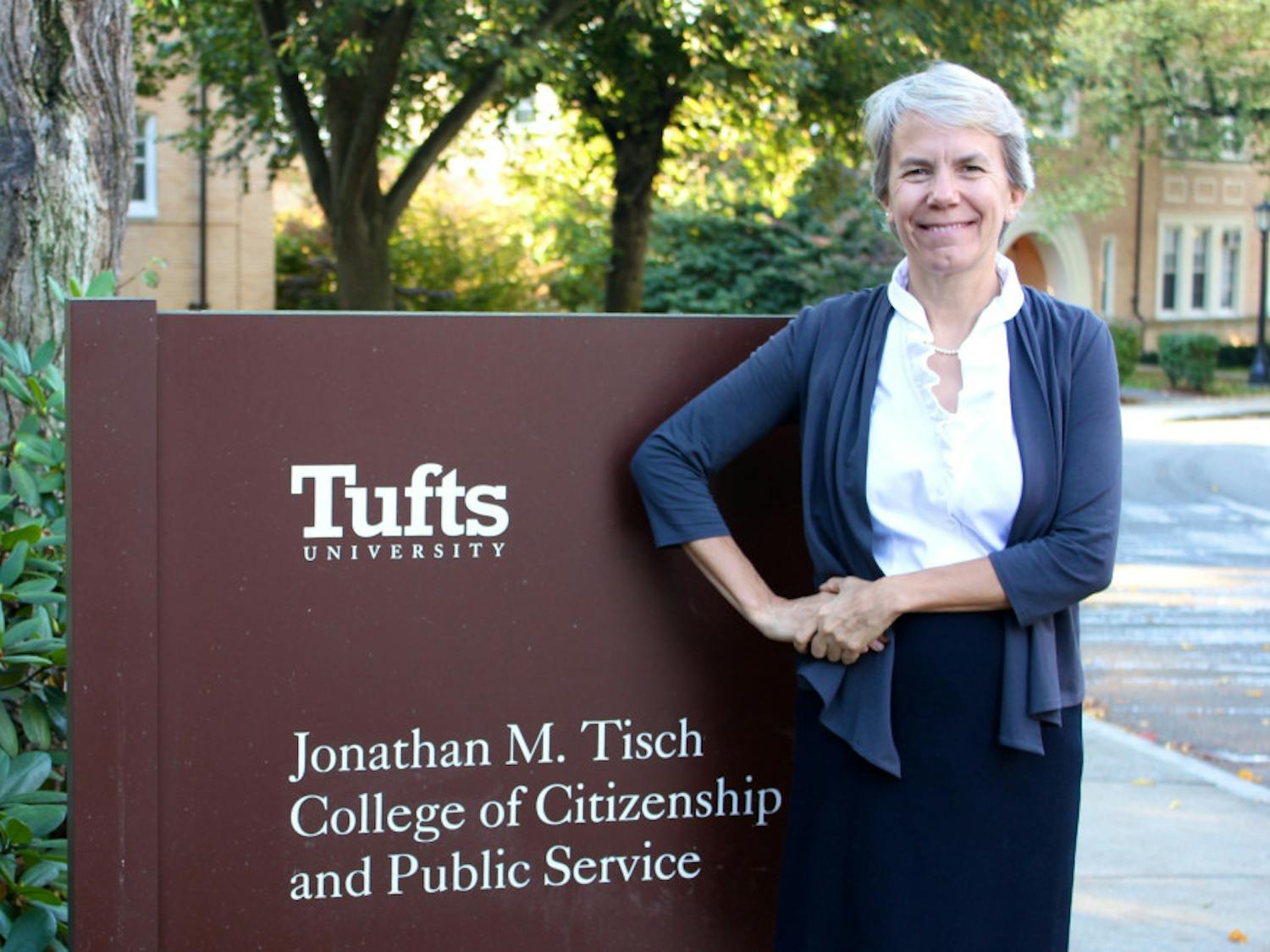
Alan Solomont (A ’70), the newest Pierre and Pamela Omidyar Dean of the Jonathan M. Tisch College of Citizenship and Public Service, sat down with the Daily to discuss political activism, his experiences with Tisch College as an undergraduate and the future of civic involvement. The Tufts Daily: How did your experience as a Tufts student inspire or deepen your interest in political activism? Alan Solomont: I arrived here in the fall of 1966, a sheltered and suburban kid from Brookline, Mass. ... The sixties were a politically charged time on college campuses. Students were opposing the war in Vietnam, students were supporting the civil rights struggles, and I got deeply impacted by that. I had a professor who introduced me to this whole field of urban studies and so I started to think about what was happening in America’s cities.I was a page [for] the Massachusetts delegation at the 1968 Democratic Convention in Chicago, and I was on the floor of the convention the night that the anti-war candidate Gene McCarthy was defeated by the nominee Hubert Humphrey. It was also the day of the disturbances in Grant Park ... The next time I was in Grant Park was 40 years later on election night in 2008 when Barack Obama was elected president, so it was a pretty intense set of bookends ... I have spent my life politically [active] and as an engaged citizen, and it all is a result of my experiences here at Tufts as a student. TD: How have you been connected to the university as an alumnus? AS: There was a period when I was relatively unconnected ... I graduated in 1970, I traveled overseas for a year and then I moved to Lowell, Mass., [where] I was a community organizer for the better part of the ‘70s. But when then [University] President [John] DiBiaggio and founding Dean of Tisch [College] Rob Hollister had this idea of creating a new college at the university to promote active citizenship, they approached me about whether I’d be interested in helping assemble what was then the first national advisory committee, which eventually became the Board of Advisors.That’s really what reengaged me here at the university some fifteen years ago. And then I became a trustee and then my daughter came here and then I taught a course for four years ... on the American presidency. I tell my friends I bleed brown and blue.  TD: In what ways have you seen political activism on campus evolve since your time spent here as a student? AS: I would say that I’ve observed two things, one that is somewhat discouraging and one that is much more heartening. There has been an erosion over the years in people’s confidence in our political institutions, [and] there has been some decline in political involvement by young people. I think for a variety of reasons, [such as] Vietnam, Watergate, the rise of the influence of money ... people have lost some confidence in the whole process.[But] I think [this] generation, the data indicates, is interested in being involved in things larger than [themselves]. I was part of the baby boomer generation, some people call it the “me” generation. Although we were idealistic, we were also sometimes narcissistic. I think [this] generation is the hope for the future ... Young people are looking to do national community service at unprecedented numbers. I really do believe that [this] generation is going to solve a lot of these problems that my generation neglected or caused. TD: To what extent has the presence of the Tisch College amplified student interest in public service? AS: It’s an odd reality that Tufts has always produced people who are interested in being active citizens or who are interested in public service. I’m probably a reasonably good example of that. So that’s the mission of Tisch College, to spread the importance of educating students to be lifelong active citizens and to be civically engaged. If this is part of the DNA of the university, then we’re the gene that has to be its engine ... I think that we have a really important mission to maintain, to keep that important distinctive quality about this university not only alive, but [also to] keep heightening it. And I happen to believe the need for that is more pronounced today than ever before because I do think that some of the most important issues we face as a country and in the world have to do with rebuilding civil society, rebuilding civic institutions [and] reengaging the people in their communities. TD: What changes or developments would you like to see in Tisch College? AS: I’m exceedingly proud of what Tisch has accomplished. I think that founding Dean Rob Hollister, Nancy Wilson, who has been the dean for the last couple years and the board of advisors have really established a solid foundation. But I think my job is now to take that to the next level.12


The Setonian
News

New indoor garden installed at Boston campus

The Jean Mayer USDA Human Nutrition Research Center on Aging at Tufts University (USDA HNRCA), in collaboration with the Massachusetts’ Horticultural Society, installed a new indoor garden on the Boston/Chinatown campus.


The Setonian
News

Reverend McGonigle discusses chaplaincy

The Tufts Daily: What made you want to become a University chaplain? Was it something you always knew you wanted to do?  Reverend Greg McGonigle: It’s been a journey. I grew up in the Boston area, and my family is Catholic. I’ve been interested in spirituality my whole life, and so I decided I wanted to go to a Catholic high school. It was, in fact, studying religion in school that raised a lot of questions for me about what I believe, and the relationship between facts and faith. It set me on a journey of exploring different faiths beyond Christianity.At the same time, I was taking literature classes that introduced me to the Transcendentalist period. I was studying beautiful writings about nature, and how we can connect with the divine through our own minds and through our experiences in nature. That was very appealing to me. When I got to college — I ended up going to Brown University because I wanted to study world religions and because I liked the progressive atmosphere — I found Unitarian Universalism, which is the tradition I now belong to myself. It’s a tradition that has strong progressive ethical beliefs but is open theologically to a lot of different ways of understanding life and the universe. I found a home in Unitarian Universalism, and ended up going to Harvard Divinity School to continue studying religions. I had initially considered becoming a professor, but I started thinking of ministry as a way to bring together my interests in religion with my interests in caring for people and social justice. I knew I wanted to be in higher education, so I realized chaplaincy would allow me to combine all of my interests.  TD: How did your family react to your change in faith? GM: My decision to move into a different faith tradition was not an easy one for my family at the beginning. It was difficult for all of us because they’re very committed to their faith and I’m committed to mine. I never saw my becoming Unitarian Universalist as necessarily leaving Catholicism. Like languages, Catholicism was my first language in faith, and then I took on another — but you never really lose the first one you learned. That’s why it wasn’t a rejection; it was an embracing, an expansion for me. It was still very hard nonetheless, and I believe that process of both becoming confident in my own identity, as well as working through that with my family, taught me a lot, not only about myself, but also about how those sorts of situations can go — an important lesson, especially working now with those in a university setting who are also experiencing big transitions in their lives, about studies, careers, loves, and beliefs. Q: What kind of work are chaplains engaged in? What is your role here at Tufts and what kinds of programs do you offer on campus? GM: We do four main things. First, we support religious and philosophical communities. Tufts has about 20 of them, and part of the work of the chaplains is supporting those groups, advising them and helping them to do the things they do. We work with the Freethought Society [and] nonreligious students as well. Second, we educate about religions in society and the world; we offer educational and cultural programming for the whole university. Third, we promote interfaith engagement. I work with the Interfaith Student Council, encouraging dialogue across traditions, mutual learning, and engagement on social justice issues people care about. The fourth piece is pastoral care; we do direct counseling, we provide support for people when unfortunate events occur, we do memorial services on campus, and we do weddings as well. We do some work in campus and community relations too, and collaborative programming with various academic departments and programs. We’re hoping to do more with The Fletcher School around international issues, and with Tisch College around active citizenship. Those are some of the relationships we’re hoping to build in the next five to 10 years.  Q: What have you seen this semester at Tufts that you would like to change? What would you like to accomplish in the coming years? GM: I would definitely like to grow some of the resources around the communities we have. We have amazing, vibrant, spiritual and philosophical communities and leaders doing amazing things. In addition to their 20 or so weekly gatherings, all of them offer many one-time programs — speakers, retreats, service projects and musical opportunities. We’re thinking about how we can better support and be a resource for those initiatives. We’re also trying to cultivate the Interfaith Student Council, and help them to take the lead in getting the university engaged in religious pluralism and religious literacy. A very important part of my vision is that we adopt a collaborative, intersectional, and student empowerment approach — seeing where the energy is for students and focusing our resources in those directions. At the same time we’re increasing resources for faculty and staff — through collaborations with the new Wellness Center [for faculty and staff] — and looking to provide more spiritual resources on Tufts’ Boston and Grafton campuses. We also need to explore support for the spiritual but not religious.12


The Setonian
News

Over 100 students participate in Tufts’ latest hackathon

About 130 students participated in Tufts’ latest, 24-hour hackathon, TuftsHack, which began Saturday afternoon.During the event that juniors Marcella Hastings and Will Clarkson organized, students worked in teams to develop and code software projects. Through the hackathon, students learned practical ...


The Setonian
News

Tufts Mock Trial team has successful weekend

The Tufts Mock Trial team qualified two delegations for next month’s American Mock Trial Association’s Opening Round Championship Series (ORCS) where the teams will compete to participate in the National Championship Tournament.


The Setonian
News

TCU Senate update

The Tufts Community Union Senate at its meeting yesterday unanimously passed a resolution calling on the administration to reform Tufts’ on-campus voter registration process.