Skip to Content, Navigation, or Footer.

Henry Max


Henry is a deputy opinion editor at the Daily. He is a junior studying English and can be reached at henry.max@tufts.edu.

read-book-kids-reading-open-book-preview.jpg
Opinion

The boogeyman of the performative reader

When you think of the term ‘performative reading,’ what do you picture? If you’re like me, it’s probably someone sitting in a coffee shop, wearing a chunky sweater, boots and wiry glasses, reading “The Bell Jar,” “Infinite Jest” or “The Metamorphosis, sipping matcha. The connotation is certainly not a positive one. The term “performative reading” has popped up in the last five or so years with the growth of celebrity book clubs and the influence of ‘BookTok.’ People are becoming inclined to signal that they read, and more importantly, have good taste, in the hopes of accruing social capital. This has gamified the practice of reading and, specifically, reading for pleasure, which is already precipitously declining among America’s youth.

Hollywood Theatre (1935) Entrance
Viewpoint

Examining the summer’s box office successes

Moviegoers, critics and even casual fans often think that the coronavirus pandemic’s disastrous box office effects, coupled with the rapid increase in movies available to stream at home — even new releases — fundamentally altered the storied practice of theatergoing. This summer, though, the 2026 box office grossed a record of $4.67 billion.

Humanities and Social Science Grants.jpg
Viewpoint

The humanities, the education crisis in the Information Age

The frantic pace of modern life has revolutionized not only the communication landscape, but the academic landscape as well. In the epoch of smartphones and personal computers, it is all too obvious how pervasive technology is in each and every one of our lives. When generative AI and large language models, such as ChatGPT, intermingle with the existing technologies in our everyday lives, the problem is only exacerbated.

Theatre in London.

More:

 Original public domain image from Flickr
Viewpoint

The corporatization of nostalgia in American mass media

A major trend in Hollywood filmmaking that emerged in the 2000s and continues today is the legacy sequel. In 2015, the true renaissance of the legacy sequel era began, with “Mad Max: Fury Road” (2015), “Star Wars: The Force Awakens” (2015), “Jurassic World” (2015) and “Creed” (2015) all released in the same year. Quality disparities aside, the huge successes of these films proved that the legacy sequel was poised to become the future of filmmaking. Now, over 10 years later in the post-“Avengers: Endgame” (2019) era, the legacy sequel has become so naturalized that it seems inevitable.

More articles »

The Tufts Daily Crossword with an image of a crossword puzzle
The Print Edition
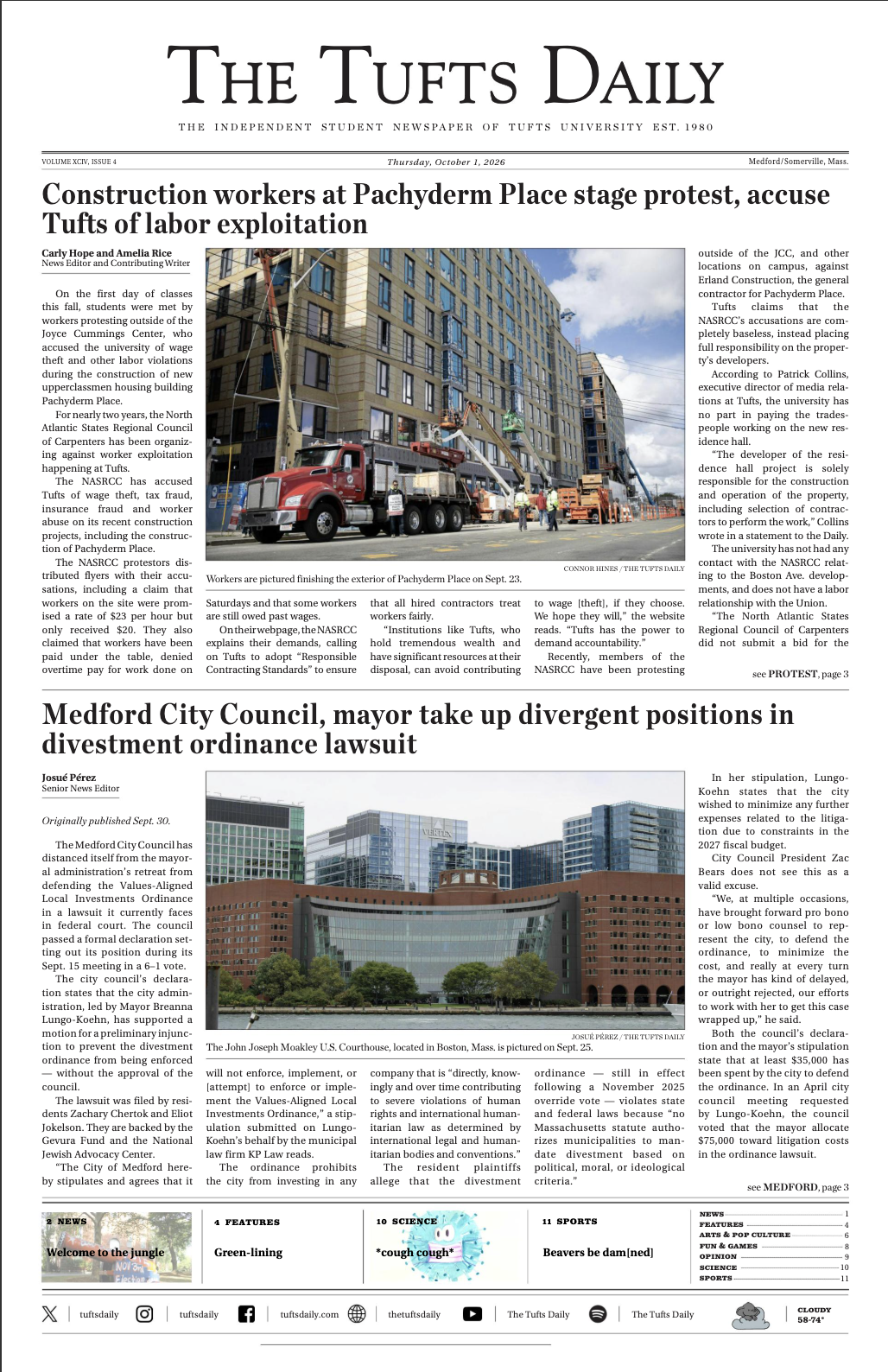
Tufts Daily front page