What I'm about to say might get me labeled as a Jumbo−hater, but I promise I'm not. I love Jumbo and think our pachyderm poster−child is a wonderful mascot. I just think, well, there have been numerous times in Tufts' history where he has been really overhyped.
Trust me, it was devastating when Jumbo's stuffed hide burned in the Barnum Hall fire of 1975. A photograph of Jumbo's remains after the fire shows only a large pile of rubble and ashes that will bring a tear to the eye of any Tufts student with a heart (or some dust in their eye from spending extended periods of time in the archives). And while the loss of Jumbo certainly sent shockwaves through the Tufts community, it's important to remember that Barnum Hall used to be the Barnum Museum of Natural History, and Jumbo's stuffed hide was just one of many biological specimens and natural wonders once housed at Tufts.
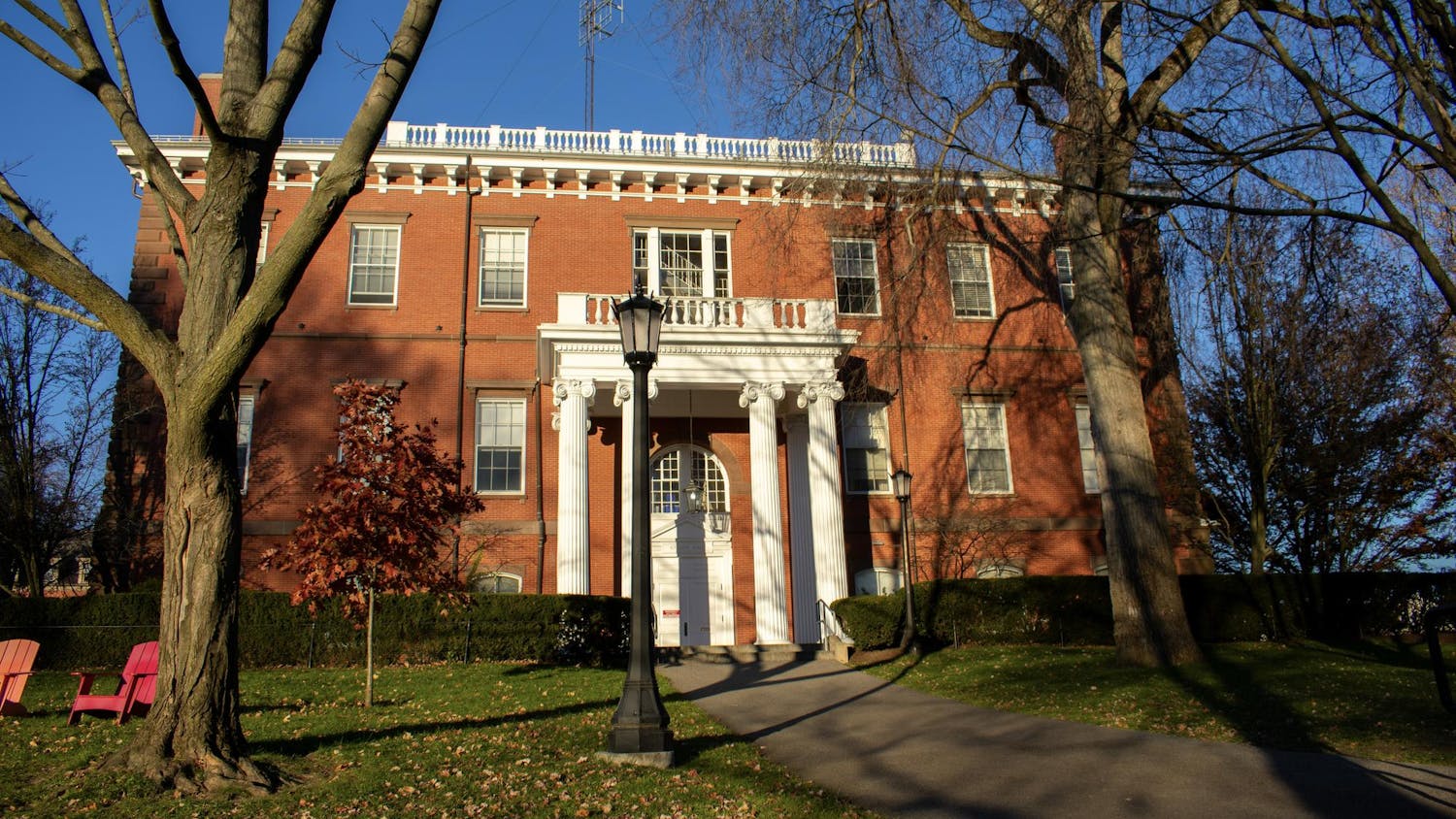
Barnum Hall's history dates back to 1883 when P.T. Barnum, circus showman and Tufts College trustee, donated the funds for a museum of natural history. Construction was completed in 1884 and quite soon after, the museum held an eclectic collection of minerals, fossils and biological oddities spread over three floors. As usual, Jumbo was the main attraction, overshadowing a veritable menagerie of other specimens.
One of the first notable non−Jumbo acquisitions arrived in 1888, taking the form of a two−horned "rhinostrich" skeleton. Believing I had stumbled upon a new class of vertebrates, I was disappointed to find out this was just an alternate spelling of rhinoceros, but a rhino was a notable specimen nonetheless. In the same year the museum also received a collection of meteorites, rumored to be the finest in New England. Displays of butterflies and beetles poured in as well, and 1902 saw the arrival of a stuffed camel affectionately known as "Holy Moses."
Barnum also negotiated with the Smithsonian Institution in 1890 for a group of specimens which included a full−grown whale and the plaster casts of various "marine fauna" from New England. His ties to a circus full of exotic animals also provided "a steady, ever−expanding supply of specimens," as noted rather morbidly by one astute reporter from the Tufts Weekly.
In spite of these fine specimens, I still wonder if our collections were on par with those of other museums nearby. For example, the museum acquired in 1928 plaster casts of "the remains of fossil men," a perfectly museum−worthy set of specimens, right? But in that same year one Bruce Wetmore of Boston "donated finely mounted heads of Bull Elk and Mountain Sheep recently shot by him in Wyoming," which leads me to believe we had more of a museum−hunting lodge hybrid.
All kidding aside, it appears the museum actually wasn't the most organized collection in the Greater Boston area. By 1938, University President Leonard Carmichael and Professor of Zoology Bud Carpenter declared the collection a "hodge−podge" of specimens and proceeded to convert the museum into a shrine for Jumbo and P.T. Barnum, dispersing the rest of the collection to other institutions like the Museum of Comparative Zoology at Harvard University. Although rejected by the Jumbo cult, the rest of the Barnum collection was actually able to evade the 1975 fire that ravaged Jumbo and Barnum Hall.
Though my research gave me a general notion of what the museum was like, I'm still dying to know what other taxidermied critters used to populate Barnum Hall. Personally, I think it's about time we storm Harvard's museum and reclaim what's rightfully ours. And I promise this isn't because I want to replace Jumbo — far from it!
I just think Holy Moses or an occasional elk head mounted on the wall could really spruce up some of Barnum's classrooms.