The Tufts Community Union (TCU) Senate this month approved a project to address handicap accessibility on campus by improving the program currently in place for Tufts community members with disabilities.
TCU senators Darien Headen, a freshman, and Meredith Goldberg, a junior, formulated the project earlier this semester.
"Handicap accessibility right now is being dealt with on a case?by?case basis," Goldberg said. "The specific goal is to make an overarching handicap accessibility plan beyond just a case?by?case basis."
Improvements on campus will include adding sidewalk curb cuts, making roads easier to cross by wheelchair, planting more street signs and expanding the number of handicap?accessible dorms, Headen said.
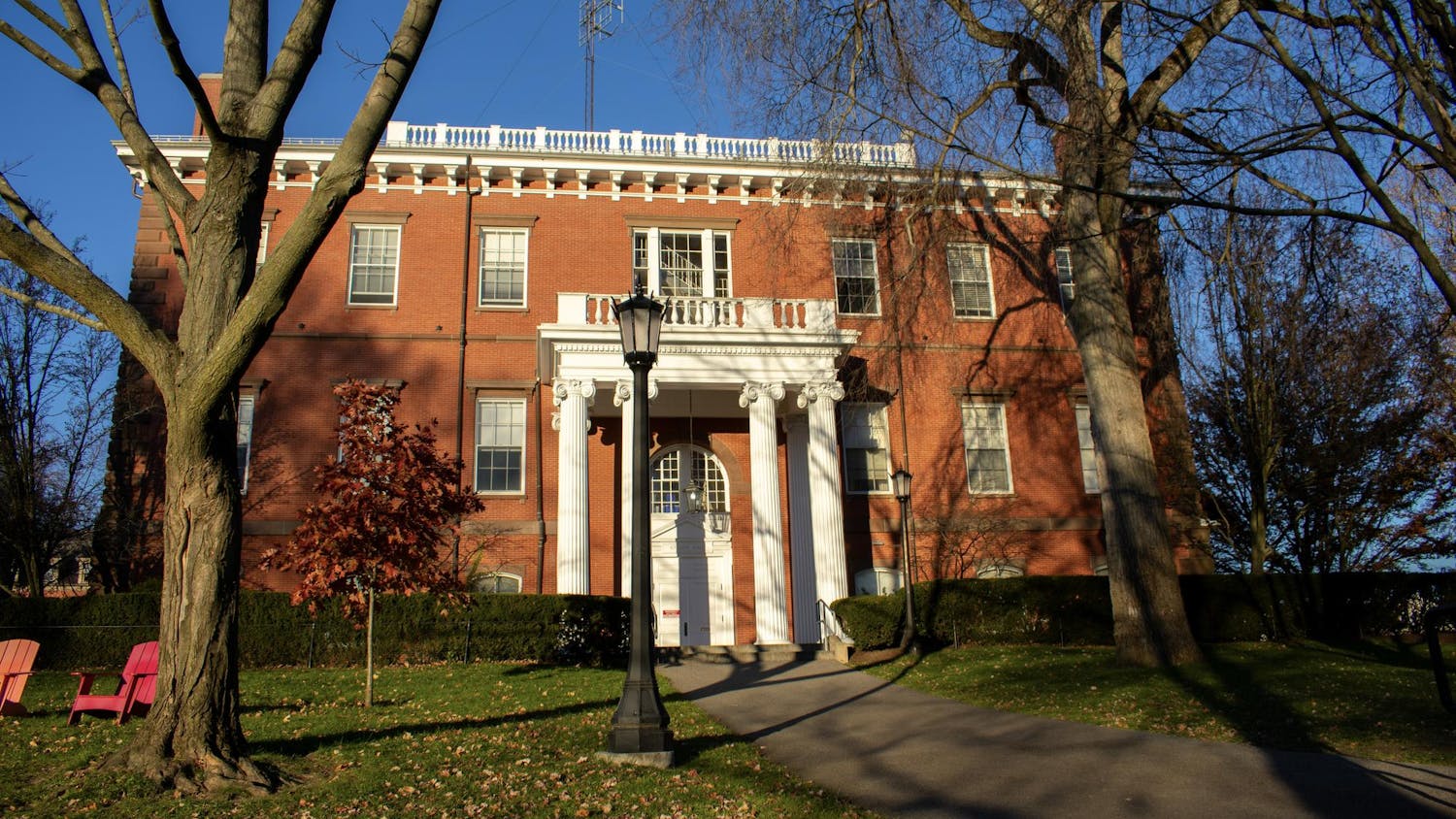
Currently, the lack of handicap?accessible pathways on campus necessitates a 20?minute journey for someone in a wheelchair planning to travel from Tisch Library to Eaton Hall, Goldberg said.
"That shouldn't be the case," Headen said. "There should be a better system set in place. I want to make sure there's a better connection between the lower, middle and upper campus."
Headen presented his project idea to the Senate after meeting with several Tufts staff members to discuss how the university handles campus handicap accessibility.
"We have the Joey and all these other means of transportation around campus, but we don't ever talk about our community members who are in wheelchairs or on crutches who are going to have a hard time getting up and down the hill and to and from classes," he said.
But handicap accessibility is a complex issue, especially given Tufts' location on a hill, he said.
"We go to a school where the buildings are already established and have been around a long time," Headen said. "You can't just go in, rip out a staircase and put in an elevator."
The matter could potentially deter handicapped students who are considering applying to or enrolling at Tufts, Goldberg said.
"It really does turn them off," she said. "There isn't overarching handicap accessibility on campus. That's why it really needed to be addressed."
Although the campus' layout poses many challenges, staff members have already established a solid foundation for their project by catering to the needs of handicapped students, Headen said.
"We comply with the Americans with Disabilities Act," Senior Director of Health and Wellness Service Michelle Bowdler said. "We have worked with a number of students over the last several years on assuring that their needs are met should they have some requirements for room accommodations. If a student requires multiple accommodations in a number of areas, we work together as a team to ensure that that happens."
A central objective of the project is to ensure that the issue of handicap accessibility stays at the forefront of the university's agenda, Headen said.
"I don't want this to be something that'll get talked about just for a year or two, but something that'll get talked about year after year," he said. "Our handicap population may be small on this campus, but it shouldn't have to take a back seat."
Headen and Goldberg said they hope to finalize plans for a fully handicap accessibility program and campus construction by the end of this academic year.
Alterations to the campus, including those to academic, dining and residential buildings, are expected to occur within the next five to ten years, Goldberg said.
"I came up with this project because it is something that's important to me," Headen said. "I'm going to continue working on it until I see some concrete change that is satisfying to me."