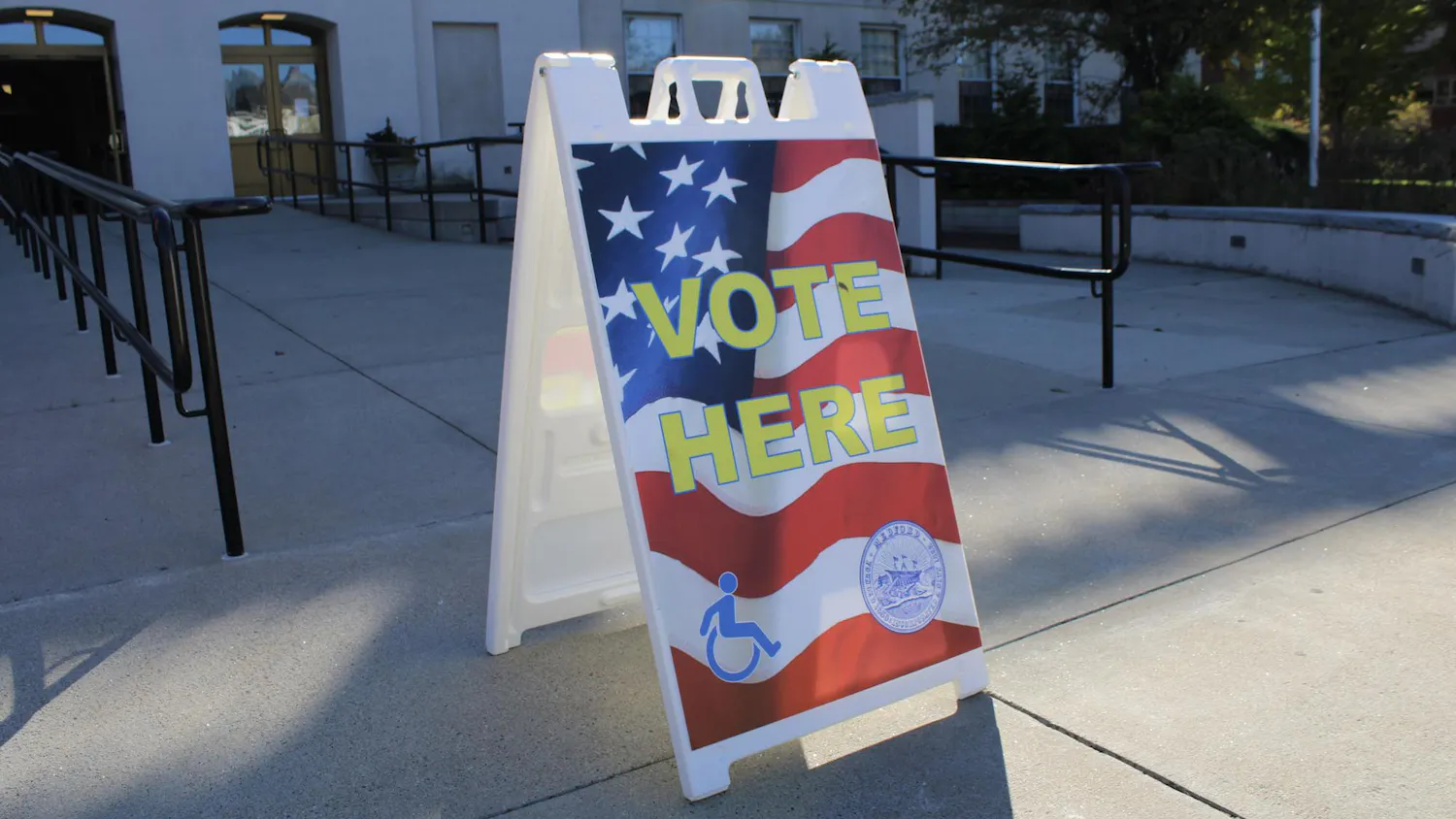
Tufts Votes, a non?partisan, student?run organization, has concluded its voter registration campaign and is moving into the final stages of the get?out?the?vote effort.
The group registered over 1,000 students through approximately 50 voting drives in the first seven weeks of the academic year, according to junior Jacob Wessel, who heads Tufts Votes.
Tufts Votes acts as an umbrella organization for multiple groups involved in voter registration and information drives, including Tufts Democrats, Tufts Republicans, the Lesbian Gay Bisexual Transgender (LGBT) Center and local leaders for the Scott Brown and Elizabeth Warren campaigns. Tufts Votes coordinated the groups' efforts and ensured that all were following the proper registration procedures.
Bronwen Raff, president of Tufts Democrats, said Tufts Votes' rationale for registering students goes beyond promoting a political agenda.
"What's important to keep in mind is that all that we're doing is non partisan," Raff, a senior, said. "I [think] that it's much more important that our campus is aware, knowledgeable and registered to vote than it is to push for a single candidate."
Though the Tufts Republicans were involved in the registration coalition, their participation was limited due to the graduation of much of their leadership and the small size of the group, Institute for Political Citizenship (IPC) President Eric Peckham, a senior, said.
The different organizations believe that assisting students with registering is important because the process is often complicated by obscure rules, according to Wessel.
"Voter registration can be quite a tricky process," he said. "[There are] bureaucratic, paperwork rules that can get in the way of someone registering to vote. We wanted to make sure that the first time around we've filled out the information completely."
Students who change their address frequently can complicate the registration process for themselves, Wessel said, explaining that this requires them to reregister every year and know both their mailing and street addresses to avoid bureaucratic difficulties.
He added that Tufts' location on the Somerville/Medford border and the borders of three separate Somerville precincts means that students are split among four different polling locations.
"If you live in Medford, your polling place is in [the Gantcher Center], but downhill it's much more complicated," Wessel said. "Generally, the downhill dorms will vote at the Holy Bible Baptist Church. If you live across from the tennis courts, or if you live in a house across from Fletcher Field, those peoples' polling place is somewhere that no one's ever heard of before, that doesn't seem like it's part of the Tufts environment."
Wessel hopes that Tufts Votes can put pressure on the City of Somerville to consolidate the campus into fewer precincts and find polling places more accessible to the large student population.
Tufts Votes and its coalition of voter?activist groups are now using the last few days before the election to encourage as much voter participation as possible among Tufts students, Wessel said.
To boost voter turnout among students, the organization has reserved vans to shuttle students from the Mayer Campus Center to various polling places on Election Day. The IPC will fund the shuttle service, according to Wessel.
Run under the purview of the Tisch College of Citizenship and Public Service, the IPC sees itself as representing the political aspect of "active citizenship," Peckham said.
Peckham said that the funding for Tufts Votes came jointly out of the IPC's normal budget and a $1,000 grant from the Massachusetts Campus Compact, part of a nationwide organization that promotes civic engagement on college campuses. Money will also go towards fliers and other awareness efforts in the next week, he said.
Tufts Votes is an organization that comes together every two to four years around election season but then rapidly dissipates, Peckham said.
After Election Day, Wessel hopes to make Tufts Votes a more permanent fixture on campus, registering and reregistering students at the beginning of each year rather than waiting until the election.