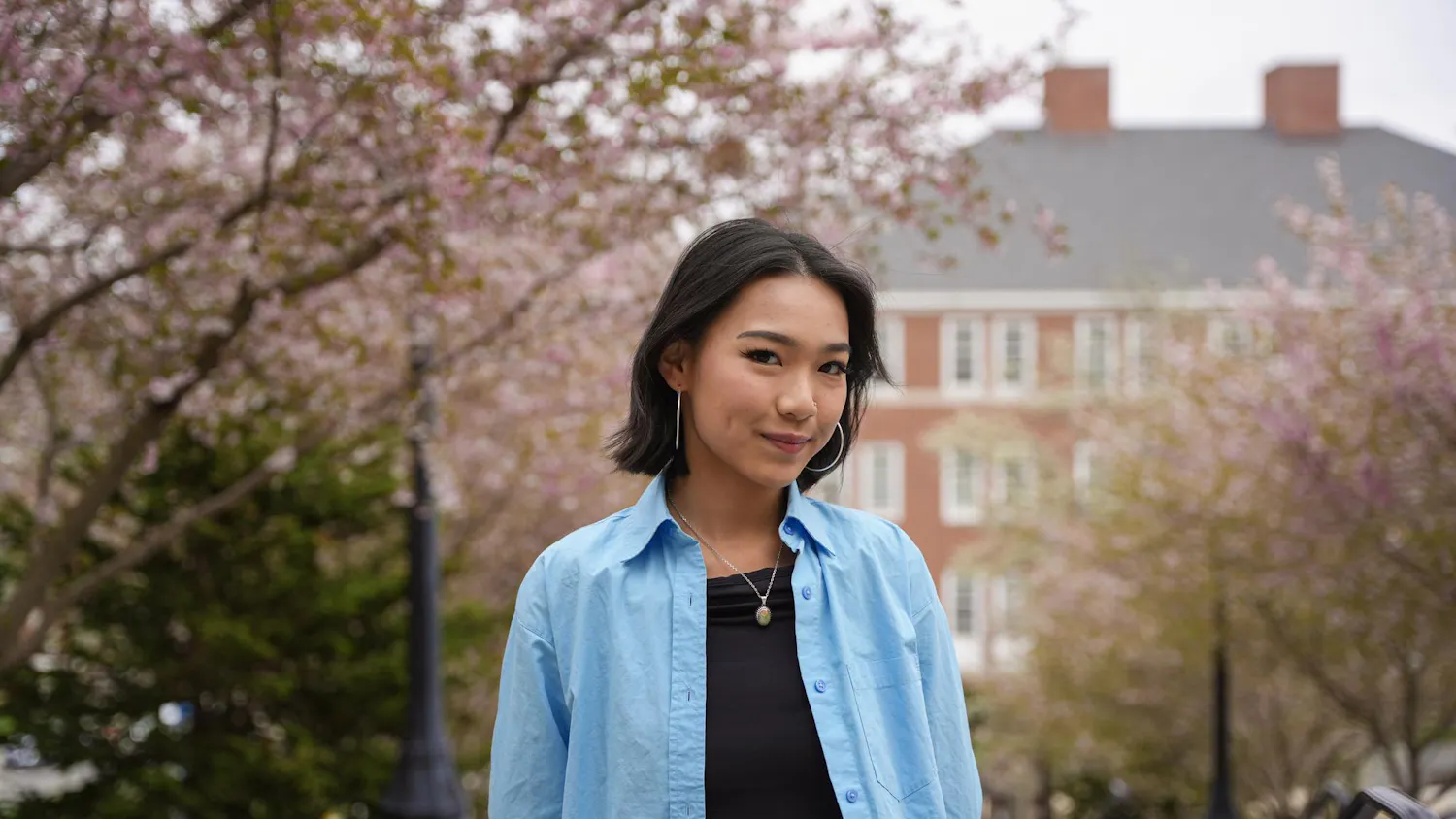
After an extended absence from Tufts, I am especially excited to watch campus repopulate with fellow students. At the beginning of the semester I returned from a gap year spent abroad, and subletting a room on the rather quiet campus didn't sate my desire to see the Tufts community in its element. Welcome back.
One of the aspects of my college experience that I deeply missed while I was away was the collective activist, academic and social justice consciousness that can be found in certain communities on campus. During my first year at Tufts, I was immersed in the ideologies of progressive and intersectional thinking. I cherished the fact that my schoolwork and my extracurriculars overlapped, giving me various entry points for thinking about the current political and social climate, and the role that I played in shaping it. The resulting lens was one that I carried with me throughout my time away from Tufts.
I missed being a part of the safe and conscious spaces at Tufts in a psychological sense; however, I also missed them quite literally. It's been over a year since I attended a weekly meeting, formally discussed current events with my peers, organized an event, tabled or met with a university dean on behalf of a student group. I was eager to jump back into my work as a student, an advocate and an active member of campus, but the task proves easier said than done. Today's concerns can materialize in a moment (think recent VMA performances), and the ensuing discussions multiply and move at high speed.
Though changes to the social justice landscape seem painstakingly minute, the devices that we use to analyze the setting are in constant flux. News of political decisions, campus happenings and pop culture updates, for example, are often spread and digested quickly amongst the student population. In response, our vocabulary, action items and awareness evolve accordingly. Critique and commentary are vital to gauging and making progress, and those duties don't rest. While my lens was carefully crafted and well-cared for during my absence, it is now in need of polishing.
Many experiences during my travels offered an exceptional look at the issues we currently face. I was in Delhi during protests following a rape in December, and witnessed some of the backlash I would have only read about otherwise. This and other events forced me to assimilate a new and vivid perspective into my understanding of human rights. Experiences like this are incredibly powerful, and do not automatically translate into the framework and lingo of our social justice initiatives on campus.
This became immediately apparent during my first official day back. I was involved with Orientation Week planning for one of the centers in the Group of Six, and the agenda included debriefing the events of the summer and previous school year, and strategizing programs for the upcoming semester. I felt rather embarrassed and uninformed as I navigated the day's activities: acronyms had escaped me, the past year's administrative restructuring had to be explained and some of the current events we debriefed hadn't been picked up by my radar. I found myself at several impasses - the desire to learn without forcing others to educate, presenting solidarity while admitting unawareness and contributing in the midst of uncertainty.
I'm writing this op-ed because I suspect that other Tufts students are in a similar boat. Seniors are returning from a year or semester abroad. A new class of first-years has arrived. Some students have taken personal or medical leaves. The summer may have switched the focus for others. I'm willing to bet that I'm not the only one that feels out of the loop.
Perhaps this is a tired reminder, but it's an important one. The balance we strike between the conflicting items listed above is critical. The activist community, at Tufts and at large, is not a matter of "are you in or are you out." The processes of [self-]educating, community building and outreach require constant upkeep. Everyone will find themselves somewhere along the path, with certain issues that are nearest to their hearts, and determine their own level of engagement. As fellow Jumbos, we have the opportunity to help direct each other and give voice to more experiences.
This is what I hope for Tufts as we ring in a new academic year: that we have the patience to learn and to teach, and the flexibility to collaborate. I hope we allow the knowledge of others to be inspiring, rather than intimidating or deterring. I hope that we can accept constructive commentary and correction to become more informed and inclusive. I hope that we can have the confidence and trust to ask and answer our questions. In acknowledging that everyone is on their own road to greater education and awareness, let's encourage each other to do better.
Alexis O'Connell is a sophomore who has not yet declared a major. She can be reached at alexis.o_connell@tufts.edu.